
The Grapes That Almost Disappeared
There is a category of wine that most stores don't carry. Not because the wines are bad — in many cases they are extraordinary — but because most stores have never heard of the grapes they're made from.
These are the rescued varieties. Grapes that came within a generation of disappearing entirely. In several cases, it was a single winemaker, searching through abandoned Riojan hillsides or old Galician farms, who found the last surviving vines and decided the world should taste what they produced.
We found these wines the same way their makers found the grapes: by going looking for them, in places most people don't think to look.
Here is what we found.
Some grapes almost didn't make it. Not because of bad weather. Because the world forgot them.
Why do grape varieties disappear?
Wine history is full of gaps. The phylloxera crisis of the late 19th century — when an American aphid destroyed most of Europe's vineyards — wiped out thousands of indigenous varieties that had evolved over centuries. Replanting happened fast, and it happened with whatever rootstock worked best commercially, not what was most interesting.
The 20th century made things worse. Industrial wine production favoured a handful of internationally recognised grapes: Cabernet Sauvignon, Merlot, Chardonnay, Tempranillo. Varieties that were difficult to grow, low-yielding, or unfamiliar to export markets were quietly abandoned. Vineyards were grubbed up. Old winemaking families moved to cities. The knowledge of how to work with these grapes began to die with the people who held it.
By the 1980s and 1990s, a few ampelographers — grape variety scientists — began to realise the scale of what had been lost. Some began the painstaking work of cataloguing what survived. A smaller number of winemakers went further, actually sourcing cuttings from the last surviving ancient vines and trying to coax them back into commercial production.
The bottles that resulted from that work are some of the most singular wines on earth. Not because they are made from obscure grapes — but because they almost weren't made at all.
— Maturana Tinta · Rioja
Juan Carlos Sancha is a wine professor at the University of La Rioja who spent years with a specific obsession: finding a grape called Maturana Tinta, which appeared in historical documents as a Riojan variety but had essentially vanished from commercial production.
He found it. In old, abandoned vineyards in the hills above Rioja Alta — plants that had survived for decades without anyone paying attention to them. He took cuttings, worked out how to vinify the variety, and made a wine that has no real comparison in the modern world. Maturana Tinta is grown nowhere else on earth in any commercial quantity. It produces wines of unusual depth and spice — structured and dark, with a complexity that comes from the fact that nobody has yet figured out how to industrialise it.
Ad Libitum Maturana Tinta 2019 is that wine. One harvest. One winemaker. The only bottle of its kind available outside specialist importers in Rioja itself.
Ad Libitum Maturana Tinta 2019 · €21 · Rioja · Shop this wine →
— Garnacha Peluda · Spain
The name translates as "Hairy Grenache" — a reference to the distinctive downy fuzz on the underside of the leaves. Garnacha Peluda is an ancient mutation of Garnacha (Grenache) that evolved to grow in the harsh, wind-scoured terroirs of Catalunya and Aragón, where its hairiness protects it from desiccation in ways the standard Garnacha cannot manage.
For most of the 20th century it was considered inferior to conventional Garnacha and was systematically replaced. By the 1990s only a handful of very old plots survived, mostly tended by elderly farmers growing for their own consumption. The variety produces wines of extraordinary texture — silky but substantial, with the iron and mineral character of the ancient schist soils it grows in.
La Pilosa — "the Hairy One" — is made from old Garnacha Peluda vines in small quantities. Only around 6,000 bottles exist per vintage. It carries the same €21 price tag as the Maturana Tinta, which will one day seem absurd.
La Pilosa · Garnacha Peluda · €21 · Shop this wine →
These wines cost €21. They carry no famous appellation. They will one day be impossible to find.
— Garnacha de Toro · Toro
Not all rescued varieties are obscure even by specialist standards. The Garnacha de Toro is closely related to the standard Garnacha but adapted over centuries to the extreme continental climate of Toro — where summers are brutally hot and dry, and winters plunge below freezing. It produces wines of enormous concentration and structure.
What makes Barranco del San Ginés remarkable is that it is the only 100% Garnacha de Toro in commercial existence. The vines are pre-phylloxera — they survived on their own roots — and have been hand-tended on the property since at least 1935. The wine is something you drink once and think about for a long time.
Barranco del San Ginés · Garnacha de Toro · Toro · Shop this wine →
— Hondarrabi Beltza · Basque Country
Most wine drinkers who know Txakoli know it as a white wine — the high-acid, low-alcohol, slightly sparkling white made from Hondarrabi Zuri on the coast of the Basque Country. Far fewer know that Txakoli can also be made as a red, from the closely related variety Hondarrabi Beltza.
Hondarrabi Beltza nearly disappeared in the 20th century as the Txakoli wine tradition itself went into near-total decline. The coastal vineyards were abandoned as younger generations left for industrial work in Bilbao and San Sebastián. By the 1980s only a few elderly producers were still making Txakoli at all. The recovery has been remarkable — but most producers focus on the more commercially viable white. Hondarrabi Beltza remains genuinely rare.
The wines it produces are unlike anything else in Spain: light in colour, intensely aromatic, with the saline, Atlantic freshness of the Basque coast. They are wines that taste like where they come from in a way that is almost impossible to replicate.
Txakoli with Hondarrabi Beltza · Basque Country · Shop this wine →
— Caíño Blanco · Galicia
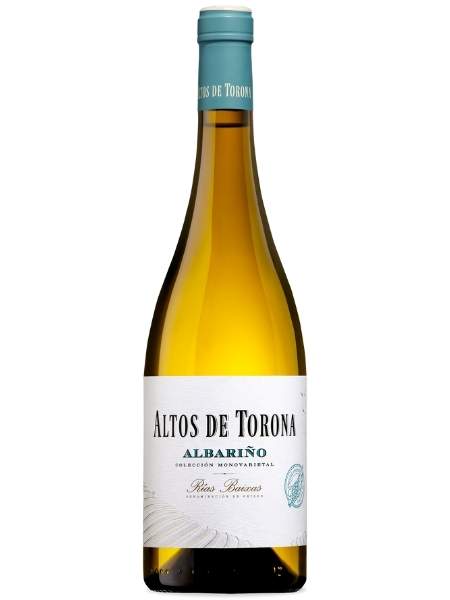
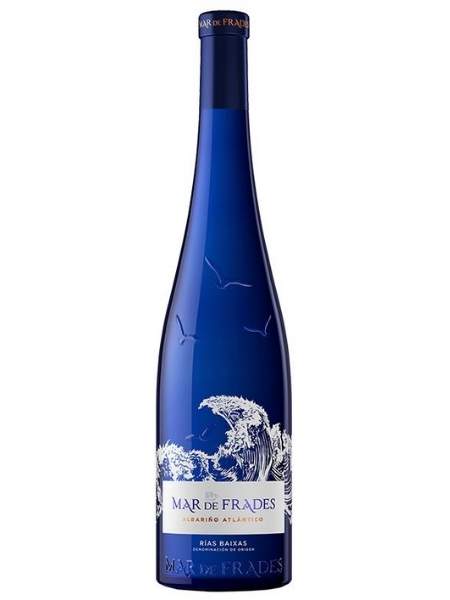
Beyond Albariño — which is Galicia's gift to the world's wine lists — lie a dozen native varieties that almost nobody outside the region can name. Caíño Blanco is one of the oldest of these, a white grape that has been grown in the Galician rias for centuries but was almost entirely replaced in the 20th century by the more productive and commercially successful Albariño.
Its survival is largely thanks to the smallholding culture of rural Galicia, where old farmers kept growing what they'd always grown without much concern for what the market wanted. It is one of the defining varieties in our Beyond Albariño collection — and it produces wines of unusual aromatic complexity, with stone fruit and a mineral salinity that reflects the granite and Atlantic influence of the region.
If you only know Galicia through Albariño, Caíño Blanco is the next step.
Caíño Blanco · Galician Wines Collection · Shop this wine →
What these wines have in common
None of them are made in large quantities. None of them will ever be made in large quantities — the nature of rescued varieties is that the surviving vine stock is old, and old vines produce small yields. That is also why they taste the way they do.
None of them carry famous appellations. Rioja yes, technically — but this is not the Rioja of multinational producers. These are small production wines from winemakers who made unusual choices for reasons that had nothing to do with commercial logic.
And none of them, to our knowledge, are available as a single curated collection on any other European ecommerce site. We have looked.
Every bottle you open from this collection is an act of discovery — and a small act of preservation.
A word about price
You will notice that several of these wines cost between €19 and €22. This will not last. As awareness of rescued varieties grows — and it is growing, slowly but consistently among the wine community — prices will rise. The Maturana Tinta is still produced in tiny quantities by an academic turned winemaker. The Garnacha Peluda exists in only a few thousand bottles per vintage.
We are not saying buy them now as an investment. We are saying buy them now because they are extraordinary wines at accessible prices, and because the story behind each bottle is one you will want to tell at the table.
That is what we look for.
Discover the full Rare & Rescued collection at disndis.com
Related reading: Ancient Vines Collection · Beyond Albariño: Galicia's Native Whites · Award Winners Under €25
Related post
16
Sep