
Ancient Vines: Why the Age of a Vine Changes Everything in the Glass
There are vineyards in Spain where the vines were planted before the First World War. In Bierzo, in Toro, in Navarra, in Ribera del Duero — old, gnarled, low-growing bushes that have survived phylloxera, civil war, agricultural industrialisation, and the relentless economics of replanting with something higher-yielding and easier to manage.
The growers who kept them did so for one reason: these vines produce something that nothing younger can replicate.
Here's why — and here's where to find it in a glass.
What Actually Happens as a Vine Gets Older
A vine behaves differently at different stages of its life. In its first five to ten years it produces prolifically — lots of fruit, little complexity, the vine putting its energy into establishing itself rather than expressing where it grows. Most serious producers don't use fruit from young vines in their best wines. Some declassify anything under ten years old entirely.
Between ten and twenty-five years, the vine settles. Yields become more predictable, character begins to emerge, and the wine starts to reflect its terroir in a meaningful way. This is where the majority of good commercial wine comes from.
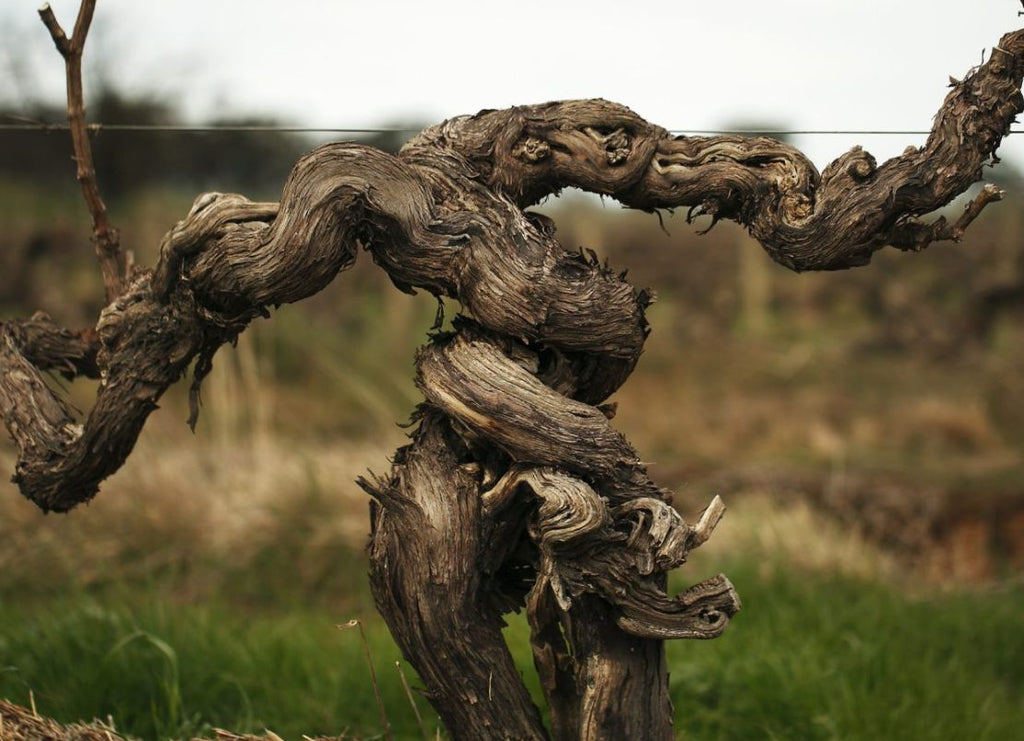
After forty or fifty years, something shifts. The vine's root system has pushed deep into the subsoil — sometimes ten, fifteen, twenty metres — accessing water and mineral reserves at depths that younger, shallower roots cannot reach. Yields drop significantly, because an older vine doesn't have the vigour of a young one, but what it does produce carries greater concentration and complexity. The vine has, over decades, reached an equilibrium with its environment: it no longer fights the soil, it expresses it.
Beyond eighty years, the yields become very low indeed. In some of the oldest vineyards we carry, a single vine produces only one or two clusters per harvest — what would fill a single bottle might require the combined production of dozens of plants. The economics of this are almost impossible to justify in a world optimised for volume. And yet the quality is irreplaceable.
Why Old Vines Can't Be Recreated
This is the most important thing to understand about old-vine wine: you cannot fast-track it.
You can plant a new vineyard on the same soil, with the same variety, managed with the most careful attention available. In ten years you will have a decent wine. In twenty-five, a good one. But in fifty years — when those vines reach the age that the old ones are now — you will still be fifty years behind the vineyard that was never replanted.
Old vine character is accumulated, not manufactured. It exists in the root depth, in the vine's relationship with the specific microbial community in its soil, in the stress adaptations that only decades of seasonal variation can build. When a century-old Mencía vine in Bierzo produces a cluster of grapes, it is drawing on a hundred years of memory of that particular piece of ground. There is no winemaking technique that substitutes for that.
This is why, when an old vineyard is pulled out, it is genuinely lost. Not just for a generation — permanently.
The Bottles in Our Ancient Vines Collection
Finca Cascorrales 2015, Ribera del Duero — centuries-old vines
The most extreme example in our collection. Centuries-old Tempranillo vines on a specific parcel in La Aguilera, one of Ribera del Duero's most historically significant wine villages, at nearly 1,000 metres altitude. 951 bottles. 91 Parker points. Made by Toni Sarrión — the winemaker behind Bodegas Mustiguillo and one of Spain's foremost voices on the value of irreplaceable terroir. The Cubillo Solano family has farmed this parcel across generations with the quiet conviction of people who understand what centuries of viticulture in a single place actually means. Once these bottles are gone, the 2015 vintage of this wine no longer exists.
De los Abuelos Viñas Centenarias Godello 2019, Bierzo — century-old vines
The name says everything: of the grandparents. Nacho Álvarez founded Pago de los Abuelos as an act of oenological rescue — identifying century-old Godello vines in Bierzo that had survived decades of neglect, and making wine from them that demonstrates why they were worth saving. Six months on the lees. 3,000 bottles. Golden, savoury, deeply persistent. The kind of white wine that doesn't behave like any other white wine, because century-old vines on Bierzo's ancient slate soils don't behave like any other vineyard.
El Teso Alto, Toro — 115-year-old vines
Toro has built its reputation on power. El Teso Alto is what the appellation looks like when that power comes from 115-year-old ungrafted Tinta de Toro vines rather than from extraction technique. 95 Parker points. 98 Guía Peñín points. Two of the world's most respected wine authorities reaching the same conclusion about the same wine — which is the clearest possible signal that what's in the glass is genuinely exceptional. The pre-phylloxera vines that survived because Toro's sandy soils kept the louse away are the reason this wine exists at all.
Pago de Valdoneje Viñas Viejas 2017, Bierzo — 100-year-old vines
Named Best Spanish Wine at competition and carrying seven years of bottle development, this Mencía from century-old vines in Valtuille de Abajo opens with violet, blackberry, and the earthy mineral quality that only old Bierzo slate produces. The tannin structure here — silky rather than grippy, persistent rather than aggressive — is the direct result of vine age. Old Mencía tannins are different from young Mencía tannins in the same way old Barolo tannins differ from young ones: they've had time to integrate in the vine itself before the winemaker does anything.
Emilio Valerio San Martin Organic 2013, Navarra — ancient Garnacha vines
A biodynamic Garnacha from ancient Navarra vines in Dicastillo, on land with a documented winemaking history stretching to the 14th century. A 2013 that still drinks beautifully — the longevity is not accidental. Old vine Garnacha in Navarra produces wines of extraordinary ageing potential precisely because the vine's deep root system buffers against the vintage variation that catches younger vines unprepared.
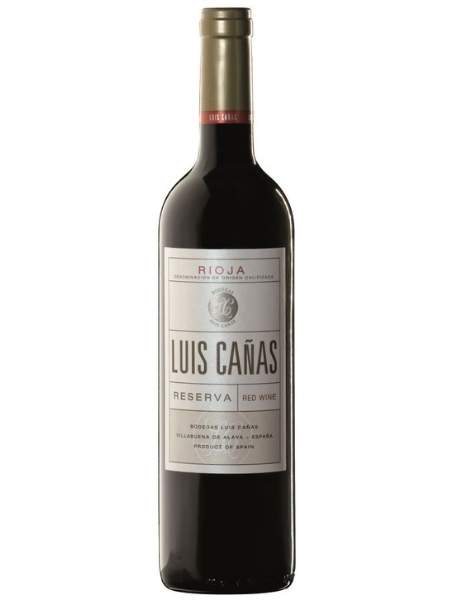
Luis Cañas Reserva 2016, Rioja — 40-50 year old vines
The youngest vines in this collection and a useful reference point for what forty to fifty years looks like against the older benchmarks: 95% Tempranillo from vines planted in the 1970s, 18 months in French and American oak, structured and age-worthy in a way that the same grape from younger vines in the same appellation rarely achieves. A reminder that vine age is a spectrum, not a threshold — and that even mid-aged vines produce wine of considerably more character than the industry standard.
What to Look for on a Label
There is no legal definition of "old vine" in most wine-producing countries. "Vieilles Vignes" in France, "Viñas Viejas" or "Viñas Centenarias" in Spain — these terms appear on labels but carry no minimum age requirement and are used by some producers for vines as young as twenty-five years old.
The most reliable signal is not the label claim but the wine's other details: very low yields, very small production numbers, a named parcel rather than a broad appellation designation, and a producer with a demonstrable commitment to heritage viticulture. All five of these bottles carry at least three of those signals. The Finca Cascorrales and De los Abuelos carry all five.
Why These Wines Are Worth Understanding Before You Buy
Old vine wine is not inherently more enjoyable than young vine wine. It is more specific, more expressive of a particular place, more concentrated in ways that require food and attention to fully appreciate. A 115-year-old Tinta de Toro from ungrafted vines is not the same kind of pleasure as a fresh, easy-drinking Rioja Joven — and it shouldn't be compared to one.
What it is, is irreplaceable. When you open a bottle of Finca Cascorrales or Teso La Monja or De los Abuelos, you are drinking the product of a vine that has been in the same ground for longer than almost anyone alive has been living. That is not sentimentality. It is the most specific, most honest, most unrepeatable expression that winemaking produces. And it tastes like it.
Frequently Asked Questions
What counts as an "old vine"? There is no legal definition. In general use, vines over forty years are considered old, over eighty are considered very old, and over a hundred are century-old or centenarian vines. The term "Viñas Centenarias" on a Spanish label indicates the producer's claim of hundred-year-old vines, though no minimum age is legally regulated.
Why do old vines produce better wine? Old vines have deeper root systems that access more complex mineral and water reserves, naturally lower yields that concentrate flavour, and a long-established equilibrium with their specific terroir that younger vines haven't had time to develop.
Are old vines grafted? Most post-phylloxera vines are grafted onto phylloxera-resistant American rootstock. Some old vine vineyards — particularly in regions with sandy soils where phylloxera couldn't establish, like parts of Toro and some old Bierzo parcels — have survived ungrafted on their original roots, which is considered by many winemakers to produce an even more direct expression of the terroir.
Is old vine wine worth the premium? Yes, for buyers who appreciate specificity, concentration, and the genuine irreplaceability of what's in the glass. No, for buyers who primarily value freshness, easy drinkability, and approachability — for whom younger vine wines at lower prices will be more enjoyable.
Discover our Ancient Vines collection →
Related post

16
Sep