
0.0% Wine vs <0.5% Wine: What’s the Difference?
The language surrounding alcohol-free wine can be surprisingly difficult to understand. One bottle may display 0.0%, another may state 0%, while another is described as dealcoholized wine and carries an alcohol declaration of <0.5% ABV. All three may appear in the same alcohol-free section of a wine shop, even though the numbers on their labels are not identical.
For somebody simply looking for a glass of wine without the alcohol of conventional wine, those differences can seem unnecessarily technical. They become more important, however, when a shopper specifically wants 0.0%, is buying for somebody else, or wants to understand how a wine that has been dealcoholized can still contain a very small amount of alcohol.
The first thing to understand is that 0.0% and <0.5% do not mean the same thing. The second is that terminology is not identical everywhere in the world. European Union wine rules, UK guidance and US rules do not use every term in exactly the same way, which is why the number stated for the individual bottle is often more useful to an international shopper than relying on the words “alcohol-free” or “non-alcoholic” alone.
What does ABV mean?
ABV stands for alcohol by volume. It expresses the proportion of a beverage's total volume that consists of ethanol, and it is the standard measurement consumers encounter on wine, beer and spirits.
A conventional wine might contain approximately 12% or 13% ABV, although wine can of course fall below or above those figures. An alcohol-free or dealcoholized wine may instead carry a declaration such as 0.0%, 0% or <0.5%. The numerical difference is considerable, but understanding the label still requires paying attention to what the number actually says.
A declaration of <0.5% ABV means less than 0.5% alcohol by volume; it does not mean 0.5% exactly. Likewise, a bottle specifically declared as 0.0% should not simply be rewritten by a retailer as <0.5%, even though 0.0 is mathematically below 0.5. At Dis&Dis, we believe the clearest approach is to preserve the producer's precise alcohol declaration rather than replacing different declarations with one generic description.
What does 0.0% wine mean?
For a shopper, 0.0% is the clearest numerical declaration that the product is being presented at zero-point-zero alcohol by volume. It is therefore particularly useful for customers who are specifically searching for 0.0% rather than the wider category of wines that may contain a small residual amount of alcohol.
This does not tell you everything about the wine. It does not indicate whether the wine is dry or sweet, whether it is red or white, whether it is made from Merlot or Chardonnay, or whether it will be good. Alcohol percentage is one characteristic of the product, not a quality rating.
That distinction is important because alcohol-free wine is increasingly being chosen in the same way as conventional wine. Once a shopper has established that a particular alcohol declaration meets their requirements, questions about grape variety, producer, origin, acidity, tannin, sweetness and style become much more useful for deciding which bottle they will actually enjoy.
What does <0.5% wine mean?
A wine marked <0.5% ABV contains less than half of one percent alcohol by volume. The less-than sign is important because the declaration describes a ceiling rather than saying that the wine necessarily contains exactly 0.5%.
This small residual amount can occur because many alcohol-free wines begin their lives as conventional fermented wine. Grapes are vinified and fermentation produces ethanol before a subsequent dealcoholization process removes alcohol from the wine. Depending on the process and the intended final product, a very small amount may remain.
Within the European Union's wine framework, grapevine products that have undergone the permitted dealcoholization treatment are designated “de-alcoholised” when their actual alcoholic strength is no more than 0.5% by volume. If the actual alcoholic strength remains above 0.5% but below the normal minimum for the original wine category, EU rules instead use the term “partially de-alcoholised.”
That makes 0.5% an important regulatory boundary in European wine, but it does not mean every country in the world uses the expression “alcohol-free” in exactly the same way.
Is <0.5% the same as alcohol-free?
This is where a simple global yes-or-no answer becomes misleading.
Within the EU wine rules, the formal category designation for wine that has undergone dealcoholization and has an actual alcoholic strength of no more than 0.5% is de-alcoholised wine. That provides an important legal framework for European wine, but everyday consumer language and retailer terminology can be broader than the precise category wording used in legislation.
The United States uses a different framework. Current US Alcohol and Tobacco Tax and Trade Bureau information states that finished beverages containing less than 0.5% ABV are not considered alcohol beverages under federal regulations; TTB materials distinguish “non-alcoholic” products below 0.5% from “alcohol free” products at 0.0% ABV.
The UK creates another distinction. Current government guidance recommends that “alcohol free” should apply to drinks from which alcohol has been extracted when they contain no more than 0.05% ABV, while “de-alcoholised” can be used for drinks from which alcohol has been extracted containing no more than 0.5% ABV. The UK government has previously consulted on changing these descriptors, which illustrates precisely why international shoppers should not assume terminology is universal.
For that reason, when the exact alcohol content matters, read the ABV declaration for the individual product rather than relying exclusively on a category name.
Why can dealcoholized wine contain a little alcohol?
To understand why a wine may contain <0.5% ABV, it helps to understand how wine becomes alcohol-free in the first place. Many premium alcohol-free wines are not made by simply pressing grapes and bottling the resulting juice. They begin with alcoholic fermentation, which is one of the fundamental processes that turns grape must into wine.
During fermentation, yeast consumes fermentable sugars and produces ethanol along with compounds that contribute to the wine's aromatic and sensory character. The producer then uses a dealcoholization process to reduce or remove the ethanol while attempting to preserve as much of the wine's character as possible.
Techniques can include processes operating under reduced pressure, membrane-based technologies and other methods designed to separate alcohol while limiting damage to the wine. The precise method varies between producers, and the objective is not simply to achieve the lowest possible number on the label. The producer also has to think about aroma, texture, acidity, tannin and the overall balance of the finished wine.
A very low residual alcohol level can therefore be a consequence of producing a fermented wine and subsequently removing most of its ethanol. It should not automatically be interpreted as evidence that the producer somehow failed to make the wine “properly alcohol-free”.
Why not remove every last trace of alcohol from every wine?
It is tempting to imagine dealcoholization as a simple dial: keep removing alcohol until the number reaches zero. Wine is considerably more complicated because ethanol is not isolated from everything else we smell and taste.
Alcohol contributes weight and warmth to conventional wine and influences the way volatile aromatic compounds behave. Removing it changes the balance of the liquid, which is why alcohol-free winemaking involves more than reducing an ABV number. A producer has to consider what happens to aroma, texture, acidity, tannin and sweetness as alcohol disappears.
Different producers therefore pursue different approaches and different final specifications. A wine at <0.5% should not automatically be considered technically inferior to a wine at 0.0%, just as 0.0% does not automatically tell us anything about the quality of the grapes or the balance of the finished wine.
For the consumer, the sensible order is to decide first whether a particular ABV range is acceptable for their needs and then evaluate the wine as wine.
Does 0.0% wine taste better than <0.5% wine?
There is no reliable reason to use those numbers as a quality ranking.
A difference of a few tenths of a percentage point does not tell you which wine has better fruit, more balanced acidity, greater aromatic complexity or a more convincing texture. Those qualities depend on the starting wine, grape variety, producer, production method and decisions made before, during and after dealcoholization.
This is particularly important because shoppers sometimes interpret 0.0% as meaning “more advanced” or “more premium”. A producer achieving 0.0% may indeed be making an excellent wine, but the number itself is not evidence of that quality. Conversely, a carefully made <0.5% Pinot Noir or Sauvignon Blanc should not be dismissed merely because a small residual amount remains.
The most useful question is therefore not whether 0.0% is better than <0.5%, but whether you specifically require 0.0%. If you do, the label makes that choice relatively straightforward. If you do not, you can concentrate more heavily on the wine's style.
Does <0.5% mean the wine is sweet?
No. Alcohol content and sweetness are different measurements.
Wine tastes sweet primarily because of sugars remaining in the finished product, while perceived sweetness is also influenced by acidity, fruit character, temperature and other structural elements. Removing alcohol can make balancing a wine more difficult because ethanol normally contributes body, but that does not mean every wine below 0.5% ABV must be sweet.
This distinction is particularly useful when shopping for dry non-alcoholic wine. A customer who wants a dry style should look at the wine's description, grape variety, sugar information where available and the producer's intended style rather than assuming that the lowest ABV will produce the driest wine.
The reverse is also true. A 0.0% wine is not automatically sweet simply because it contains no declared alcohol. ABV and sweetness answer two completely different questions about the bottle.
Does 0.0% tell you how the wine was made?
Not by itself.
The number on the bottle tells you about the finished alcohol declaration, but it does not necessarily explain the complete production process. To understand whether a product began as fermented wine and was subsequently dealcoholized, you need information about how that individual product was produced.
This matters because the wider alcohol-free drinks market contains different types of products. Dealcoholized wine, wine-based beverages and sparkling grape drinks should not all be assumed to have followed the same production route merely because their finished alcohol levels are very low.
For wine enthusiasts, production method can be just as interesting as the final ABV. Fermentation followed by dealcoholization creates a fundamentally different starting point from unfermented grape juice, even when both finished products contain little or no alcohol.
Is dealcoholized wine the same as grape juice?
No. A genuine dealcoholized wine has first undergone fermentation before alcohol is subsequently reduced or removed. Grape juice has not gone through that same alcoholic fermentation.
That difference matters because fermentation does much more than create ethanol. Yeast metabolism and other winemaking processes contribute to the aromas, flavours and structure associated with wine, while red-wine production can also extract tannins and colour from grape skins. Dealcoholization then changes that fermented wine again by removing a component that had become part of its structure.
This is why a good alcohol-free wine should not be judged simply by asking whether it tastes like grape juice. The more interesting question is how much of the grape variety, fermentation character and original wine structure has survived the dealcoholization process.
What is the difference between “dealcoholized” and “alcohol-free”?
The answer depends partly on where the wine is being sold.
In the European Union, “de-alcoholised” has a specific regulatory meaning for the relevant grapevine products. When the permitted dealcoholization treatment has been used and the finished product contains no more than 0.5% ABV, EU wine rules require the category designation to be accompanied by the term “de-alcoholised.”
In the UK, current government guidance distinguishes between “alcohol free” at no more than 0.05% ABV and “de-alcoholised” at no more than 0.5% ABV for drinks from which alcohol has been extracted. The guidance is therefore considerably stricter about the use of “alcohol free” than the way many consumers encounter the term internationally.
US federal treatment is different again. TTB's current materials state that finished beverages under 0.5% ABV are not considered alcohol beverages under federal regulations and distinguish non-alcoholic products below 0.5% from alcohol-free products at 0.0%.
This is why Dis&Dis should not try to force every bottle into one universal vocabulary. The exact product declaration is more informative than assuming a marketing term means precisely the same thing in Barcelona, London and New York.
Why do different countries use different definitions?
Wine terminology develops through regulation as well as consumer language. Europe has a detailed legal framework governing wine categories and production, while the UK has its own descriptor guidance and the United States regulates low- and no-alcohol products through a different system.
These frameworks were also developed at different times and for different regulatory purposes. Some distinctions concern whether a beverage falls within alcohol regulation, others concern how it may be described to consumers, and European wine legislation also has to define what happens to an established grapevine-product category after dealcoholization.
This means that internet articles promising one universal definition of “alcohol-free wine” can easily oversimplify the subject. When shopping internationally, the safest approach is to separate two questions: what does the law or guidance in that market call the product, and what ABV does this particular bottle actually declare?
What does the European Union say about dealcoholized wine?
The EU wine framework was significantly developed to accommodate dealcoholized wine through Regulation (EU) 2021/2117, which amended the common market rules for agricultural products. Under the current consolidated rules, the designation of relevant grapevine products that have undergone permitted dealcoholization must be accompanied by “de-alcoholised” when actual alcoholic strength is no more than 0.5% by volume.
When the finished alcoholic strength remains above 0.5% but below the minimum alcoholic strength normally required for the original wine category, the designation becomes “partially de-alcoholised.” This is an important distinction because it shows that 0.5% is not merely an arbitrary figure commonly used by retailers; it has a defined place within EU wine regulation.
For European consumers, this also confirms that dealcoholized wine is now formally incorporated into the EU's wine framework rather than existing simply as an informal marketing category. That provides useful context for understanding why a bottle can legitimately remain connected to wine even after almost all of its alcohol has been removed.
What does the United States mean by non-alcoholic wine?
In the United States, the 0.5% threshold has another important regulatory role. Current TTB material states that finished beverages containing less than 0.5% ABV are not considered alcohol beverages under federal regulations, and identifies products at less than 0.5% as non-alcoholic while reserving alcohol-free for 0.0% ABV in its low/no-alcohol guidance.
The threshold also matters for federal warning requirements. TTB states that the government health warning required under the Alcoholic Beverage Labeling Act applies to alcohol beverages containing not less than 0.5% ABV.
For an American shopper, this helps explain why “non-alcoholic” does not necessarily mean 0.0%. If zero-point-zero is the specific requirement, the numerical declaration should therefore be checked rather than relying solely on the words “non-alcoholic wine”.
What about the United Kingdom?
The UK is an especially useful example of why terminology needs to be handled carefully. Current UK government guidance recommends “alcohol free” for products from which alcohol has been extracted containing no more than 0.05% ABV, while “de-alcoholised” applies at no more than 0.5% ABV. “Low alcohol” applies to drinks at 1.2% ABV or below under the guidance.
The UK government has also consulted on changing the alcohol-free threshold from 0.05% to 0.5%, partly because of confusion surrounding the existing descriptors. The consultation itself demonstrates that low/no-alcohol terminology continues to evolve as the market develops.
For an international retailer, this is another reason to be precise. A broad expression that consumers understand perfectly well in everyday conversation may have a narrower meaning in a particular jurisdiction's guidance, so product-specific ABV information should remain visible.
What about naturally occurring traces of alcohol in food and drinks?
Very small amounts of ethanol are not exclusive to alcohol-free wine. Fermentation can occur naturally in foods and beverages, which means trace amounts of alcohol can occur in products consumers do not normally think of as alcoholic.
That context can help explain why the distinction between 0.0% and a fraction of one percent exists, but it should not be used to dismiss somebody's preference for one over the other. A shopper who specifically wants 0.0% does not need to justify that decision by comparing wine with other foods.
For Dis&Dis, the better approach is transparency. If the bottle is declared 0.0%, we should say 0.0%. If it is 0%, we should preserve 0%. If the producer declares <0.5%, that is the information the customer should see.
Which should you choose: 0.0% or <0.5%?
If you specifically require a wine declared 0.0%, choose one carrying that declaration. There is little benefit in trying to reinterpret a <0.5% label when your requirement is already clear.
If a small residual amount below 0.5% is acceptable to you, the choice becomes much broader. At that point, grape variety, producer, country, sweetness, acidity, tannin, still versus sparkling style and the occasion for which you are buying the wine can become more important selection criteria.
This is particularly relevant for people coming to alcohol-free wine from conventional wine. Someone who loves Pinot Noir may reasonably care more about finding a convincing Pinot Noir at <0.5% than choosing an unrelated 0.0% red purely because its numerical alcohol declaration is lower. Another customer may have the opposite priority and choose 0.0% first, then select their preferred grape within that group.
Neither approach is inherently better. They simply begin with different requirements.
Why grape variety still matters more than many shoppers realise
Once the ABV question has been settled, alcohol-free wine becomes considerably easier to understand when it is approached through familiar wine varieties.
A non-alcoholic Sauvignon Blanc can use the grape's naturally prominent acidity and aromatic character to retain freshness, while non-alcoholic Riesling brings another combination of acidity and aroma. Chardonnay behaves differently again because its personality is particularly influenced by decisions made during winemaking.
The differences are equally important in red wine. Alcohol-free Merlot generally begins from a different structural position from Cabernet Sauvignon, while Syrah, Pinot Noir and Tempranillo each bring their own tannin, acidity, fruit and aromatic characteristics. Alcohol removal changes those wines, but it does not erase the identity of the grapes from which they were made.
This is why Dis&Dis increasingly organises the conversation around wine rather than around absence. Once you know whether 0.0%, 0% or <0.5% suits your requirements, the next question should often be the same question you would ask in any wine shop: what kind of wine do you actually like?
0.0% sparkling wine and <0.5% sparkling wine
Sparkling wine deserves particular attention because it is one of the styles in which alcohol-free wine can feel especially natural. Carbonation contributes texture and freshness, while acidity helps provide structure after ethanol has been removed.
The same ABV distinctions still apply. A sparkling wine declared 0.0% and one declared <0.5% should not be treated as numerically identical simply because both are served chilled and contain bubbles. If the alcohol declaration is important to you, check the individual bottle.
Once that requirement is satisfied, the grape becomes useful again. Chardonnay, Sauvignon Blanc, Colombard and Glera can all produce very different sparkling wines, which is why “alcohol-free sparkling” should be understood as a category rather than a single flavour.
Does <0.5% wine require the same decision for everyone?
No, and this is one area where retailers should be particularly careful about giving universal advice.
Some consumers simply want to reduce their alcohol intake and are comfortable with a product below 0.5%. Others specifically want a product declared 0.0%. Individual requirements can also be influenced by personal, religious, medical, professional or other considerations that a wine retailer is not in a position to decide on somebody else's behalf.
For medical questions, pregnancy, medication interactions or other health-specific situations, general wine information should not replace advice from an appropriate healthcare professional. Similarly, religious requirements can involve interpretations that go beyond a numerical ABV declaration, so the presence of 0.0% alone should not be presented as universal religious certification.
Our role as a wine retailer is therefore to make the product information as clear as possible. The customer can then make the decision appropriate to their circumstances.
Why precise alcohol labelling matters when buying wine as a gift
The difference becomes especially important when buying for another person. A corporate buyer, for example, may know that a client wants 0.0% but have no reason to know why. A friend buying a Christmas gift may similarly know that somebody prefers alcohol-free wine without knowing whether <0.5% is acceptable.
In those situations, it is better not to make assumptions. If the recipient has specifically requested 0.0%, select a bottle explicitly declared 0.0%. If their preference is simply for alcohol-free wine and you are uncertain whether a residual amount matters, giving them accurate product information allows them to make that decision themselves.
This is one reason precise product pages are so important as the alcohol-free wine category grows. “Zero”, “alcohol-free” and “non-alcoholic” may sound straightforward, but an international customer deserves to know what the individual bottle actually says.
How to read an alcohol-free wine product page
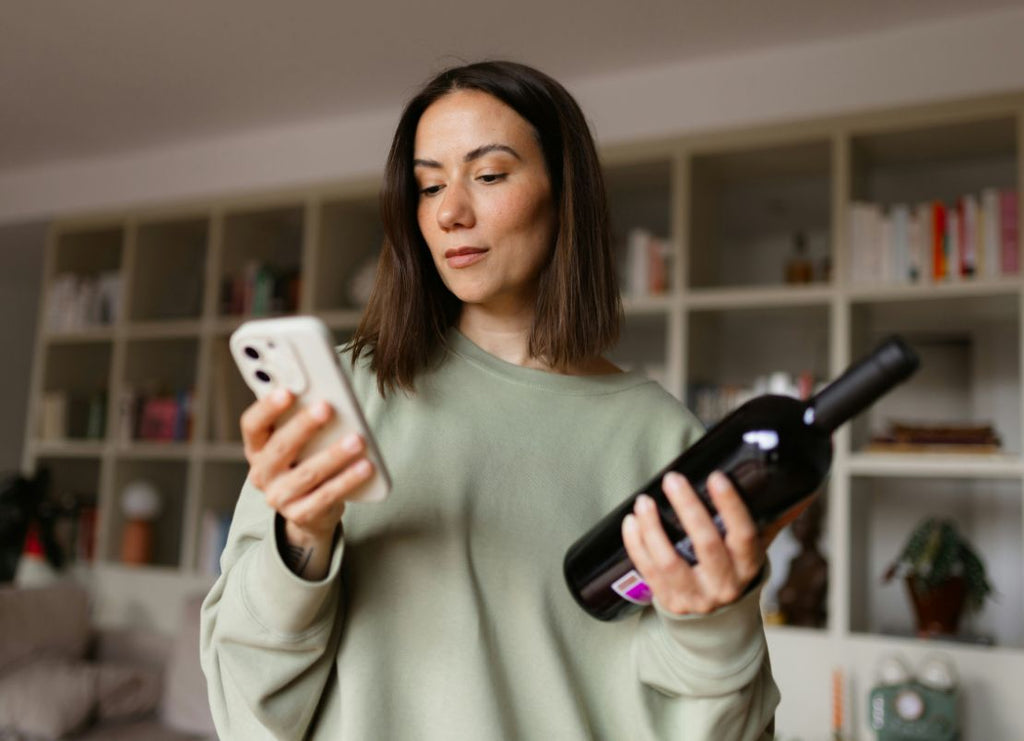
Begin with the alcohol declaration rather than the marketing language. Look for a precise statement such as 0.0%, 0% or <0.5% ABV and treat that as separate from broader descriptions of the wine.
Next, look at the grape variety or blend. A bottle made from 100% Riesling tells you considerably more about the likely style than the words “alcohol-free white wine” alone, just as a Merlot and a Syrah should not be expected to taste identical simply because both are red.
Then consider country, producer, sweetness or dryness, production information and serving recommendations. These are the details that turn the search from “finding something without alcohol” into choosing a bottle of wine.
Frequently asked questions about 0.0% and <0.5% wine
Is 0.0% wine completely different from <0.5% wine?
The alcohol declarations are different. A 0.0% declaration indicates zero-point-zero percent ABV, while <0.5% means the finished product contains less than 0.5% ABV. The difference does not by itself tell you which wine is better, drier or more complex.
Does <0.5% mean exactly 0.5% alcohol?
No. The < symbol means “less than”, so <0.5% does not mean the product necessarily contains exactly 0.5% ABV.
Can dealcoholized wine contain alcohol?
Yes. Under EU wine rules, relevant dealcoholized grapevine products can contain no more than 0.5% ABV and still carry the “de-alcoholised” category designation. The precise amount should be checked from the individual product information.
Is non-alcoholic wine always 0.0%?
No. The terminology depends partly on the market. In the United States, for example, current TTB guidance distinguishes non-alcoholic products below 0.5% ABV from alcohol-free products at 0.0% ABV.
Is alcohol-free wine always 0.0%?
You should not assume so internationally because terminology and regulatory frameworks differ between countries. If 0.0% is important to you, check the numerical alcohol declaration on the individual product rather than relying solely on the words “alcohol-free”.
Is <0.5% wine sweeter than 0.0% wine?
Not necessarily. ABV and sweetness measure different things, and perceived sweetness also depends on acidity, fruit character and overall balance. A <0.5% wine can be dry, while a 0.0% wine can be dry or sweet depending on how it was made.
Is 0.0% wine higher quality than <0.5% wine?
Not inherently. Alcohol percentage does not measure grape quality, winemaking skill, aromatic complexity or balance. A well-made <0.5% wine can be more compelling than a poorly made 0.0% wine, and vice versa.
Why would a producer leave less than 0.5% alcohol in wine?
Dealcoholization changes wine's aroma, body and balance as ethanol is removed. Producers use different technologies and aim for different finished specifications, so a small residual amount may remain in some wines. The final ABV should therefore be considered alongside the quality and intended style of the wine.
Is dealcoholized wine just grape juice?
No. Dealcoholized wine has undergone fermentation before alcohol is subsequently reduced or removed, whereas ordinary grape juice has not first become alcoholic wine. That fermentation history is one of the reasons dealcoholized wine can retain characteristics that ordinary grape juice does not have.
Should I choose 0.0% or <0.5%?
Choose 0.0% when that specific declaration is important to you. If <0.5% is acceptable, you can widen the decision to include grape variety, producer, origin, dryness, style and the food or occasion for which you are buying the wine.
The number matters, but it is only the beginning
Understanding the difference between 0.0% and <0.5% wine is useful because it allows shoppers to make a more precise decision. The numbers are not interchangeable, and the terminology surrounding them becomes more complicated when wines cross borders because the European Union, United Kingdom and United States do not describe every part of the category in exactly the same way.
Once that distinction is understood, however, alcohol percentage should not become the only thing we talk about. A bottle at 0.0% can be red, white, rosé or sparkling; it can be made from Chardonnay, Tempranillo or a blend of several varieties. A wine at <0.5% can likewise have its own producer, region, grape variety, production method and style.
For Dis&Dis, this is ultimately where the alcohol-free category becomes most interesting. The ABV tells you whether a wine fits your requirements; the wine itself tells you whether you will want another glass.