
Alcohol-Free Corporate Gifts: A Better Way to Send Wine This Christmas
Wine has been part of corporate gifting for generations, and there are good reasons why the tradition has lasted. A bottle of wine is relatively easy to send, it can be shared rather than stored indefinitely, and it carries associations with craftsmanship, place and celebration that are difficult to reproduce with ordinary promotional merchandise. At Christmas in particular, wine also has a natural connection with the table, which makes it an understandable gift even between people who may not know each other particularly well outside their professional relationship.
There is, however, an increasingly obvious complication. Sending somebody conventional wine assumes that alcohol is something the recipient wants, and that is not always information a company has about its clients, employees or business partners. Even when somebody does drink conventional wine, it does not necessarily follow that they want alcohol on every occasion.
This is one reason alcohol-free wine deserves more attention in corporate gifting. It allows companies to retain much of what made wine attractive as a gift in the first place—the bottle, the grape varieties, the producer, the origin and the ritual of opening and sharing wine—while reducing the need to make assumptions about the recipient's drinking habits.
The important distinction is that alcohol-free wine should not be treated as the lesser version of the corporate wine gift. If it is selected carefully, it can be approached in exactly the way a good wine merchant would approach any other gift: by considering who will receive it, what style of wine is appropriate, where it comes from and whether there is an interesting story behind the bottle.
Why wine became such a successful corporate gift
The enduring popularity of wine in business gifting is partly practical, but wine also occupies an unusual position between a product and an experience. A bottle may be consumed at Christmas dinner, opened when friends visit, saved for New Year's Eve or shared with somebody else. The recipient decides what occasion eventually becomes associated with the gift.
Wine also provides considerable variety without making the basic concept difficult to understand. A company can send Bordeaux to one client, Riesling to another and sparkling wine to a third, while all three gifts still belong to the familiar category of wine. Grape variety, region, vintage, producer and style give the sender ways to make a relatively simple gift considerably more personal.
Alcohol-free wine is beginning to offer some of the same possibilities. The category now extends well beyond a small number of generic red and white alternatives, with producers working with recognisable varieties including Merlot, Cabernet Sauvignon, Pinot Noir, Syrah, Tempranillo, Sauvignon Blanc, Chardonnay and Riesling. For corporate buyers, that means the decision can increasingly be based on wine preferences rather than simply on whether a bottle contains alcohol.
Why alcohol-free wine makes sense when you do not know the recipient's drinking habits
Companies frequently know surprisingly little about the drinking preferences of the people on their Christmas lists. A sales director may know a client extremely well professionally without knowing what that person drinks at home, while an HR department buying gifts for employees may have no reason to collect that information at all. In an international company, differences in culture and personal habits can make assumptions even less useful.
Alcohol-free wine provides an interesting solution because choosing it does not require the company to determine why somebody might prefer not to drink alcohol. A person may drink conventional wine but choose alcohol-free wine when driving, during the working week, while training for sport or simply because they feel like drinking something different. Another recipient may avoid alcohol entirely, but the reason for that choice is not information a business needs in order to select a thoughtful gift.
This distinction is important because alcohol-free wine does not have to be positioned as a special product for a separate group of people. It can simply be presented as wine that offers another drinking option. That is a much more natural approach for a corporate gift than trying to divide a recipient list into people who supposedly drink and people who supposedly do not.
Alcohol-free wine is not necessarily grape juice
For companies unfamiliar with the category, it is worth understanding what they are actually buying. Many alcohol-free wines begin as fermented wine: grapes are vinified, yeast converts sugar into alcohol during fermentation, and the resulting wine subsequently undergoes a process designed to remove some or essentially all of that alcohol. The exact method varies between producers, and the finished alcohol declaration can also vary from one product to another.
This is fundamentally different from ordinary grape juice, which has not first undergone alcoholic fermentation to become wine. Fermentation creates numerous compounds that contribute to wine's aroma and flavour, while red-wine production can also extract tannins and other components from grape skins. Dealcoholization then presents the producer with the difficult task of removing ethanol while preserving as much of the wine's character and balance as possible.
That distinction matters for corporate gifting because the appeal of a wine gift has traditionally involved more than the appearance of the bottle. A recipient who is interested in wine can still explore grape variety, producer, fermentation, origin and style in a dealcoholized wine. In other words, an alcohol-free gift can still provide a genuine wine conversation.
The challenge of making good alcohol-free wine
Removing alcohol from wine is not as simple as taking out an unwanted ingredient without affecting anything else. Ethanol contributes body and warmth and influences how aromas are perceived, so dealcoholization changes the sensory balance of the finished wine. This can be particularly noticeable in red wine, where alcohol normally works alongside tannin, acidity and fruit to create structure.
Producers therefore have to consider the wine before as well as after dealcoholization. Grape variety, acidity, tannin, aromatic intensity and the original wine style all influence what remains once alcohol has been removed. Some producers also have considerably more experience with the category than others, which is one reason it is useful to look beyond the front label and understand who actually made the wine.
For a corporate buyer, this provides a useful quality filter. Instead of choosing a bottle simply because it says “alcohol-free”, look for information about the grapes, producer, origin and style. A gift becomes more interesting when there is something meaningful to tell the recipient about what is inside the bottle.
Sparkling wine is a particularly useful corporate gift
When a company needs to buy for a relatively large group without knowing everyone's individual wine preferences, alcohol-free sparkling wine is one of the most practical places to begin. Sparkling wine already has a strong association with celebration, which gives it an obvious context at Christmas, New Year's Eve, company anniversaries and other business milestones. The familiar ritual of chilling the bottle, opening it and pouring bubbles into a wine glass remains relevant even when the alcohol has been removed.
There is also a sensory reason sparkling wine works well in the alcohol-free category. Carbonation provides tactile sensation on the palate, while acidity contributes freshness, helping to provide structure when ethanol is no longer contributing the same weight. This does not mean bubbles literally replace alcohol, but they can help create a finished wine that feels complete in a different way.
The important point for a corporate buyer is that alcohol-free sparkling wine is not a single style. Chardonnay, Sauvignon Blanc, Colombard, Glera and other grapes can produce very different wines, while country of origin and producer decisions add further differences. A company can therefore choose a broadly appealing sparkling gift without abandoning the idea of selecting wine intelligently.
When you know the recipient, start with the grape
Corporate gifting becomes much more personal when the sender already knows what the recipient enjoys. A long-standing client who regularly orders Pinot Noir at business dinners gives you useful information, just as a business partner with an interest in German Riesling or Spanish red wine provides a natural direction for the gift. In those situations, there is little reason to ignore those preferences simply because the wine is alcohol-free.
A Merlot drinker, for example, can explore alcohol-free Merlot rather than receiving an arbitrary red. Someone who prefers structured Cabernet Sauvignon can look towards Cabernet or Cabernet-based blends, while a Syrah drinker may be interested in how the grape's fruit, savoury character and peppery aromatic identity translate after dealcoholization. Pinot Noir offers a lighter and generally less tannic direction, while Tempranillo provides a particularly relevant starting point for somebody interested in Spanish wine.
The same approach applies to white wine. Sauvignon Blanc, Chardonnay and Riesling are not interchangeable simply because all three can be made into alcohol-free white wine. Their acidity, aromatic character and response to winemaking are different, which means grape variety remains one of the most useful pieces of information when choosing a bottle.
Merlot for someone who prefers softer red wine
Merlot can be a useful starting point for an alcohol-free red gift because the variety is generally associated with a relatively supple tannic profile and generous fruit. That does not mean every Merlot is soft or that all alcohol-free examples will taste alike, because origin, ripeness, blending, winemaking and dealcoholization all affect the final result. Nevertheless, Merlot gives the buyer a recognisable reference point when choosing for somebody who normally prefers approachable red wine.
The Dis&Dis assortment includes different interpretations of the grape rather than a single generic Merlot. This allows a buyer to consider producer and country alongside grape variety, and Merlot also appears in blends with varieties such as Cabernet Franc and Cabernet Sauvignon. For a recipient interested in wine, those differences give the bottle considerably more substance as a gift than simply presenting it as “a red without alcohol”.
Merlot can also make sense during the Christmas period because its style can work naturally alongside many of the foods people serve at that time of year. Roast poultry, mushrooms, roasted vegetables, savoury pastries and moderately flavoured cheeses can all provide useful contexts for a softer red, making the bottle relatively easy for the recipient to incorporate into a meal.
Cabernet Sauvignon for someone who prefers more structure
Cabernet Sauvignon presents a different proposition. The variety is known for its tannic structure, and tannin becomes particularly interesting in alcohol-free red wine because the removal of ethanol changes the balance surrounding it. A successful alcohol-free Cabernet therefore needs to preserve enough structure to remain recognisable without becoming hard or thin.
For somebody who normally drinks Cabernet Sauvignon or structured Bordeaux-style blends, this makes the grape an interesting corporate gift rather than merely an alternative beverage. It gives the recipient an opportunity to compare what happens to a familiar variety when one of wine's major structural components has been removed. That is particularly relevant for wine enthusiasts, who may enjoy the comparison even if they continue to drink conventional wine as well.
Cabernet and Cabernet-based blends can also be useful with richer winter food. Roast beef, mushrooms, roasted vegetables and substantial sauces provide enough flavour and texture to interact with tannin, which means the recipient has an obvious occasion for opening the bottle during the Christmas period.
Syrah, Pinot Noir and Tempranillo create very different red-wine gifts
Syrah provides another direction because its identity is not based solely on body. The variety can display dark fruit, savoury characteristics and the peppery aroma associated with the compound rotundone, giving producers a distinctive aromatic profile to work with after dealcoholization. For somebody who already enjoys Syrah, an alcohol-free expression can therefore be genuinely interesting as a comparison rather than simply being a bottle selected because it contains no alcohol.
Pinot Noir approaches the problem differently. Its thinner skins, lighter colour and generally more delicate tannic structure make it very different from Cabernet Sauvignon, while its acidity can give it considerable versatility with food. Alcohol removal can be challenging precisely because Pinot Noir is delicate, but that delicacy may also appeal to a recipient who prefers lighter red wines.
Tempranillo introduces a Spanish dimension to the gift and can be particularly appropriate for someone who already enjoys Spanish wine. Alcohol-free Tempranillo may appear as part of a blend rather than always as a single-variety wine, which gives the buyer another reason to read the product information carefully. The fact that Syrah, Pinot Noir and Tempranillo can all exist within the alcohol-free category demonstrates why choosing simply by colour is no longer enough.
White wine can be just as personal
White wine offers similar opportunities for a thoughtful corporate gift. Sauvignon Blanc is often chosen for freshness and aromatic character, while Chardonnay is particularly responsive to decisions made in the winery and can appear in both still and sparkling styles. Riesling brings naturally prominent acidity and an aromatic identity that makes it especially interesting when considering how wine behaves after dealcoholization.
Other European varieties expand the possibilities further. Spanish grapes such as Albariño, Verdejo and Airén allow a company to choose something connected to Spanish wine culture, while French varieties such as Sémillon and Melon de Bourgogne provide completely different reference points. The result is that an alcohol-free white-wine gift can be selected with almost the same questions we would ask when buying conventional wine: what does the recipient normally drink, what will they eat with it, and which producer or region might interest them?
This is particularly useful for companies that want a gift to feel considered without becoming excessively personal. Knowing that a client enjoys Sauvignon Blanc is enough information to make a more informed selection; there is no need to know anything about why they may or may not want alcohol on a particular occasion.
Rosé should not automatically disappear from the Christmas list
Rosé is frequently treated as a summer product, but that is more a consequence of marketing and drinking habits than a rule of wine. Still rosé can work with aperitifs, seafood, vegetables, poultry and a range of lighter dishes, while sparkling rosé has an obvious celebratory role during Christmas and New Year's Eve. This makes rosé worth considering for corporate gifting even in the middle of winter.
The grape composition matters here too. Grenache-based rosé is not automatically equivalent to Cabernet Sauvignon rosé, and sparkling rosé made from Glera represents yet another style. Colour alone tells the buyer very little about sweetness, structure or how the wine was produced.
For a recipient whose preferences are not strongly divided between red and white wine, rosé can therefore be an intelligent choice. It also offers companies another way to create a mixed gift selection without simply repeating red, white and sparkling versions of the same idea.
0%, 0.0% and <0.5% should be checked carefully when buying for somebody else
Alcohol declarations deserve particular attention in corporate gifting because the buyer is making a decision for another person. Products within the wider alcohol-free category can carry different declarations, including 0%, 0.0% and <0.5%, and those descriptions should not simply be treated as interchangeable. If the precise alcohol content matters to the recipient, the individual product information is the appropriate place to check it.
A company does not need to know why somebody might care about the distinction. The useful approach is simply to provide accurate information and allow the recipient to decide for themselves. If an organisation specifically wants gifts carrying a 0.0% declaration, it should select bottles explicitly labelled that way rather than assuming that every product marketed broadly as alcohol-free meets exactly the same specification.
It is also important not to interpret alcohol percentage as a measure of quality. A wine carrying a <0.5% declaration is not automatically better or worse than one carrying 0% or 0.0%. Grape quality, balance, producer skill, winemaking and the final sensory result are separate questions.
What does “premium alcohol-free wine” actually mean?
The word “premium” appears frequently in corporate gifting, but packaging alone does not make a wine premium. A heavy bottle, elegant label or expensive gift box may improve presentation, yet none of those things tells us whether the wine inside has been made thoughtfully. For alcohol-free wine in particular, production quality deserves more attention because dealcoholization introduces an additional technical challenge.
A more useful definition of premium begins with the wine itself. The quality and suitability of the grapes matter, as do fermentation, producer experience, the method used to reduce or remove alcohol and the work required to restore balance afterwards. Provenance also matters because an identifiable producer and origin give the recipient something meaningful to discover.
Presentation should support those qualities rather than replace them. A corporate gift can certainly be beautifully packaged, but the strongest gift is one where the bottle remains interesting after the wrapping has been removed.
The producer can be part of the gift
One of the easiest ways to make a wine gift more interesting is to explain who made it. The alcohol-free category now includes both producers who have entered the market relatively recently and companies with decades of experience in dealcoholized wine. That difference can become part of the story the recipient discovers when opening the bottle.
Producer history is particularly useful when gifting to somebody interested in wine because it gives context to the technical process. Alcohol-free wine is still evolving rapidly, and different producers have different ideas about which grape varieties, blends and production methods work best. Following those approaches is part of what makes the category worth exploring.
This also gives corporate buyers an alternative to choosing primarily on packaging. A bottle connected to a family winery, a particular region or a producer with a long history in alcohol-free winemaking can create a more memorable gift than a visually impressive bottle about which very little can actually be said.
French alcohol-free wine as a corporate gift
France provides a particularly broad range of possibilities because its established wine culture includes many of the varieties consumers already recognise. Merlot, Cabernet Sauvignon, Cabernet Franc, Pinot Noir, Syrah, Sauvignon Blanc and Sémillon can all provide familiar reference points for recipients who already drink French wine.
The value of a French alcohol-free wine gift is therefore not simply that “French wine sounds premium”. A bottle can connect the recipient with Bordeaux varieties, southern French Syrah, Sauvignon Blanc or another recognisable part of French wine culture. That gives the sender a reason for selecting the wine beyond the appearance of the label.
French sparkling wine can also work well when the recipient's preferences are unknown. It offers the celebratory character companies often want at Christmas while allowing the selection to be based on grape, producer and origin rather than simply trying to imitate Champagne.
Spanish alcohol-free wine as a corporate gift
Spain provides a different set of possibilities, particularly for companies or recipients already familiar with Spanish wine. Tempranillo is an obvious starting point for red wine, but varieties including Albariño, Verdejo and Airén give white-wine drinkers equally interesting options. Blends can introduce further varieties such as Mencía and Garnacha Tintorera.
This can make Spanish alcohol-free wine especially suitable when a company wants the gift to have a clear sense of origin. Rather than sending an anonymous “zero red”, a Tempranillo-based wine immediately connects the bottle with a wider Spanish wine story. The same is true of an Albariño or Verdejo-based white.
For Dis&Dis, this is an important part of how we think about alcohol-free wine generally. Removing alcohol should not require us to remove the identity of the grapes or countries that made the wine interesting in the first place.
German and Italian alcohol-free wines offer different stories again
Germany has an important relationship with dealcoholized wine and is particularly interesting for Riesling, where naturally prominent acidity provides a useful structural characteristic after alcohol removal. German alcohol-free wine is not limited to Riesling, however, and varietal reds such as Merlot and Syrah demonstrate that the country's alcohol-free category is broader than many consumers might expect.
Italy provides another direction, particularly through sparkling wine. Glera, the grape strongly associated with Prosecco, can also appear in alcohol-free sparkling wines, although the presence of Glera alone does not mean that every such wine should be called Prosecco. For a corporate gift, this gives the recipient a familiar grape reference while preserving accurate wine terminology.
A mixed European corporate selection can therefore become a genuine tasting experience. France, Spain, Germany and Italy do not simply represent four different labels; they bring different grapes, producer traditions and approaches to alcohol-free winemaking.
Should companies send the same bottle to everybody?
There are situations where sending one bottle to an entire recipient list makes practical sense. A company may be ordering for a large number of employees, or the buyer may know very little about the preferences of individual clients. In those cases, a carefully selected sparkling wine can provide consistency while remaining appropriate for the celebratory nature of Christmas.
For smaller lists or important long-term relationships, personalisation can make the gift much stronger. A client known to enjoy red wine does not necessarily need to receive the same sparkling bottle as everybody else, and somebody with a known interest in Riesling, Pinot Noir or Spanish wine gives the sender an obvious opportunity to make the selection more relevant.
There is also a middle ground. Companies can create two or three carefully chosen options—perhaps sparkling, red and white—and allow recipients to select their preference where the ordering process permits it. This preserves some operational simplicity while recognising that wine preferences are individual.
Corporate wine gifts for clients
Client gifting usually represents a relationship rather than simply an employment benefit. The bottle may be thanking somebody for a successful year, acknowledging a long-term partnership or marking the completion of a project. The wine therefore communicates something about the company that selected it.
For important clients, a little knowledge can go a long way. If previous dinners or conversations have revealed that someone enjoys Bordeaux varieties, Spanish reds or sparkling wine, that information can guide the gift without requiring intrusive questions. An alcohol-free expression of a familiar grape can also be an interesting surprise for someone who normally drinks conventional wine.
Where preferences are unknown, the safest approach is not necessarily the most generic-looking bottle. A well-selected sparkling wine with a clear producer and origin can remain broadly suitable while still giving the recipient something worth discovering.
Corporate wine gifts for employees
Employee gifting presents a different challenge because companies are often buying for a group whose individual drinking preferences are unknown. Offering only conventional wine assumes alcohol is appropriate for everyone, while offering a low-quality alcohol-free substitute beside a carefully selected conventional bottle creates an obvious difference in perceived value.
If employees are given a choice between alcoholic and alcohol-free wine, the two options should therefore be treated with comparable care. The alcohol-free bottle should be selected for its wine credentials, presentation and quality rather than simply because it fulfils a requirement. That allows employees to choose without feeling that one option is the “proper” gift and the other an accommodation.
Some companies may instead decide that alcohol-free sparkling wine works well as a single gift for the whole team. Whether that is the right approach depends on the organisation and recipients, but it has the advantage of avoiding assumptions about drinking habits altogether.
International corporate gifting requires more planning
Many businesses now have clients and employees spread across several countries, which makes Christmas gifting more complicated than placing a single domestic order. Delivery availability, transport times, local requirements and the practicalities of sending multiple parcels can vary considerably between destinations.
Alcohol-free wine can simplify some aspects of the gifting decision, but it does not remove logistical considerations. Companies should establish the destination countries and recipient addresses early, confirm which products can be shipped to those locations and allow enough time for delivery. International orders should not be based on the assumption that every product can be sent everywhere under identical conditions.
This is particularly important around Christmas, when parcel networks are already busy and there is less time to correct an incomplete address or resolve an unexpected delay. For a corporate buyer, early planning is part of the quality of the gift just as much as the wine itself.
When should companies order corporate Christmas wine?
There is no universal deadline because the appropriate lead time depends on the number of recipients, destination countries, stock availability and the complexity of the order. A company sending a small number of gifts domestically has a very different logistical task from a business sending dozens of bottles to recipients across several countries.
For larger orders, recipient information should be collected well in advance. Names and delivery addresses need to be checked, the wine selection needs to be confirmed, payment and invoicing may need internal approval, and sufficient stock needs to be available. International delivery adds further variables that make last-minute ordering unnecessarily risky.
The practical principle is therefore simple: the more recipients and destinations involved, the earlier the process should begin. A corporate gift is most effective when it arrives before the occasion it was intended to celebrate.
What should accompany the wine?
A corporate wine gift does not have to become an enormous hamper. A single carefully selected bottle can be sufficient when it is well presented and accompanied by a thoughtful message. Adding products simply to make a box look larger does not necessarily make the gift more valuable to the person receiving it.
When additional items are included, they should ideally relate to the wine or occasion. Savoury aperitif foods can accompany sparkling wine, while chocolate or other carefully chosen products may work with particular wine styles. A multi-bottle selection can also be more interesting than a traditional hamper if it gives the recipient an opportunity to compare different grapes, countries or colours of wine.
A three-bottle discovery set, for example, could introduce red, white and sparkling alcohol-free wine. Another selection could focus on one country or compare wines from several European regions. In that format, the gift becomes a small tasting experience rather than simply a collection of products.
The corporate gift message matters too
The message accompanying the bottle is an opportunity to explain the selection without overexplaining the recipient's choice to drink or not drink alcohol. There is usually no need to write a card focused on the fact that the bottle is alcohol-free. The more interesting information is why that particular wine was chosen.
A short explanation of the grape, producer or origin can make the bottle more engaging. If a Riesling was selected because of the grape's acidity and suitability for dealcoholization, or a French Merlot was chosen because the recipient enjoys softer red wines, that story can be included naturally alongside the company's Christmas wishes.
The tone should remain personal rather than sounding like a marketing campaign. Corporate gifts are most effective when they feel as though one person selected something for another person, even when the practical process involved a much larger order.
Alcohol-free wine can also be interesting for conventional wine drinkers
Corporate buyers should not assume that alcohol-free wine is relevant only to people who never drink alcohol. A conventional wine drinker may be one of the most interesting recipients because they already have the vocabulary and experience to compare grape varieties, structure, acidity and winemaking.
Someone who loves Cabernet Sauvignon can examine what happens to Cabernet's tannic structure when ethanol is removed. A Riesling enthusiast can consider how the grape's acidity and aromatic character translate into an alcohol-free wine, while a Pinot Noir drinker can explore how a delicate red variety behaves when one of wine's sources of body is taken away.
The gift therefore does not need to communicate a message about reducing alcohol consumption. It can simply offer a wine drinker something they may not yet have explored, which is particularly appropriate when the purpose of the gift is to be interesting rather than predictable.
Corporate alcohol-free wine gifts beyond Christmas
Although Christmas creates the largest concentration of corporate gifting, alcohol-free wine can work throughout the year. Client anniversaries, successful project completions, employee milestones, conferences, product launches and company celebrations all create occasions where a bottle of wine may traditionally have been considered.
The advantage of an alcohol-free option is similar in each case. The sender can offer something connected with wine culture and celebration without needing detailed knowledge of the recipient's drinking habits. Sparkling wine is particularly adaptable to milestone occasions, while more individual grape or producer selections can suit personal client gifts.
This makes corporate alcohol-free wine more than a seasonal category. Christmas may introduce companies to the idea, but the underlying reasons for choosing it remain relevant long after December.
How to choose an alcohol-free corporate wine gift
The most useful starting point is the amount of information you have about the recipient. If you know what they normally drink, use that knowledge and choose according to grape variety or style. If you know very little, a good sparkling wine provides a celebratory and relatively versatile starting point without requiring you to guess whether somebody prefers Cabernet Sauvignon to Chardonnay.
Next, examine the bottle itself. Check the producer, country, grape composition, wine style and exact alcohol declaration rather than relying only on the word “alcohol-free”. If you are buying specifically for recipients who require 0.0%, confirm that the individual product carries that declaration rather than assuming all products in the broader category are identical.
Finally, consider the context in which the gift will be received. A bottle for a long-standing client can be more individual than a large employee order, while an international gift requires more attention to delivery planning. Good corporate gifting is ultimately a combination of product selection and understanding the circumstances around the recipient.
Ordering corporate alcohol-free wine from Dis&Dis
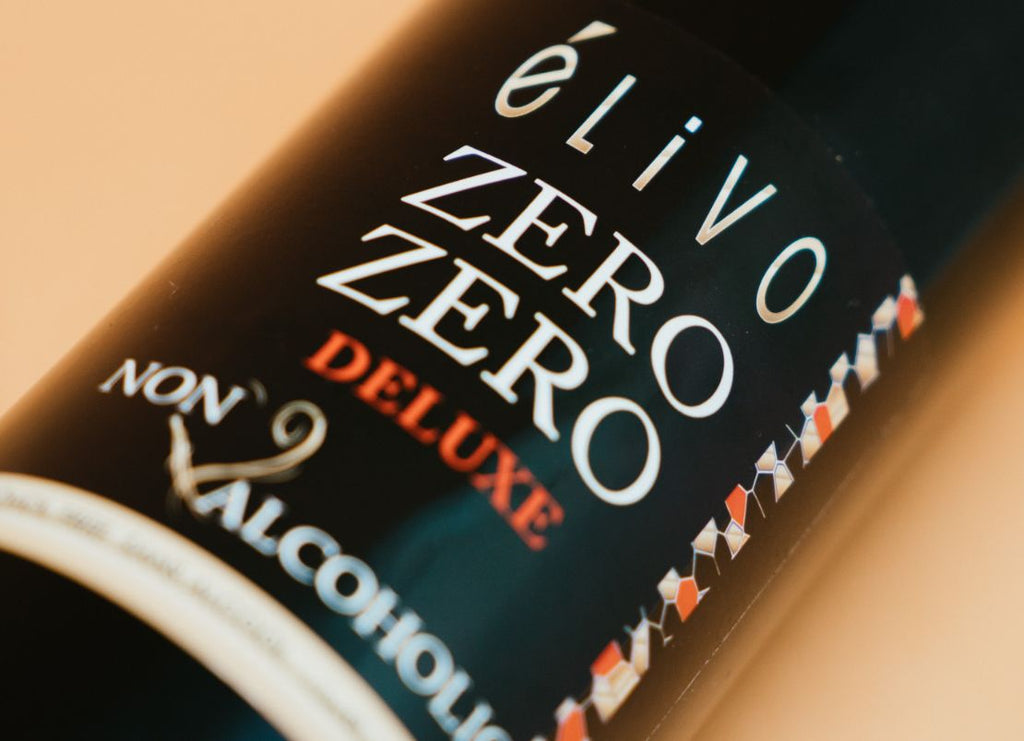
Dis&Dis is an independent European online wine business with a curated portfolio of European wines and a growing focus on premium alcohol-free wine. Our alcohol-free range includes red, white, rosé and sparkling styles, with wines from established European wine-producing countries and a broad selection of recognisable grape varieties.
For corporate buyers, this means the selection does not have to begin and end with the words “alcohol-free”. A company can look for sparkling wine for a larger Christmas list, explore red and white wines for more individual gifts, or choose bottles according to varieties such as Merlot, Cabernet Sauvignon, Syrah, Pinot Noir, Tempranillo, Sauvignon Blanc, Chardonnay and Riesling.
For larger corporate requirements, it is helpful to begin with three practical pieces of information: approximately how many gifts are required, the countries or destinations involved and the intended budget per recipient. Delivery possibilities and the appropriate selection can then be considered in relation to the actual order rather than assuming that one solution will work for every company and every destination.
Frequently asked questions about alcohol-free corporate gifts
Is alcohol-free wine a good corporate Christmas gift?
Alcohol-free wine can work particularly well as a corporate Christmas gift because it retains many of the characteristics that have traditionally made wine attractive for business gifting. It can have an identifiable grape variety, producer, country of origin and wine style, while allowing the recipient to enjoy the gift without the same assumption that alcohol is wanted. The quality and presentation of the bottle still matter, so the alcohol-free option should be chosen with the same care as conventional wine.
What alcohol-free wine should I give a client?
If you know the client's normal wine preferences, those preferences provide the most useful starting point. A Merlot drinker can explore alcohol-free Merlot, a Sauvignon Blanc drinker can receive Sauvignon Blanc, and somebody interested in Spanish wine may appreciate a Tempranillo-based bottle. When preferences are unknown, sparkling alcohol-free wine is often a practical choice because of its association with celebration and its suitability for aperitifs and festive occasions.
Is alcohol-free sparkling wine suitable for corporate gifts?
Sparkling wine is particularly suitable when companies are purchasing for a larger group and do not know every recipient's individual wine preferences. Carbonation and acidity can give alcohol-free sparkling wine useful structure, while the bottle-opening ritual remains strongly associated with celebration. Buyers should still look at the grape variety, producer, origin and precise alcohol declaration because sparkling alcohol-free wines can differ considerably.
Can alcohol-free wine be gifted to somebody who normally drinks conventional wine?
Yes. Alcohol-free wine does not need to be reserved for people who never consume alcohol, and conventional wine drinkers can actually be particularly interesting recipients because they have familiar grapes and styles against which to compare the bottle. A wine enthusiast may enjoy exploring what happens to Cabernet Sauvignon, Pinot Noir, Riesling or another familiar variety after dealcoholization.
Is alcohol-free wine the same as grape juice?
Not necessarily. Many alcohol-free wines begin as fermented wine and are subsequently dealcoholized, whereas ordinary grape juice has not first undergone alcoholic fermentation. Because different products can be made in different ways, buyers should check the individual product information rather than assuming every alcohol-free grape-based drink belongs to the same category.
Is 0.0% wine the same as wine containing less than 0.5% alcohol?
They are different alcohol declarations and should not automatically be treated as interchangeable. When the precise alcohol level matters for a corporate order, the declaration on the individual product should be checked. The percentage itself is not a measure of wine quality, sweetness or complexity.
Should a company give employees alcoholic and alcohol-free options?
Offering a choice can be a practical approach when individual preferences are unknown, but the alcohol-free option should be comparable in thought, quality and presentation. Providing a carefully selected conventional wine alongside an inexpensive substitute can make the difference between the two gifts unnecessarily obvious. Another approach is to choose a high-quality alcohol-free sparkling wine for the entire group when that is appropriate for the organisation.
Can companies send alcohol-free wine to international clients?
International delivery depends on destination, product and the practical details of the order, so companies should confirm delivery possibilities before promising a particular gift. Larger international orders should also be planned earlier because recipient addresses, stock availability, transport times and other requirements can vary between countries.
When should corporate Christmas wine be ordered?
The appropriate lead time depends on the size and complexity of the order. A small domestic order may require relatively little preparation, while a multi-recipient international order requires considerably more planning. Companies should therefore begin earlier as the number of recipients, destinations and internal approval steps increases.
What information should a company provide when enquiring about a larger wine order?
The most useful starting information is the approximate number of recipients, the destination countries or regions and the budget per gift. Any specific requirement concerning alcohol content, such as a preference for products explicitly carrying a 0.0% declaration, should also be mentioned at the beginning. This makes it easier to identify appropriate wines without making assumptions about the order.
A corporate wine gift can be inclusive without becoming generic
The growth of alcohol-free wine gives companies an opportunity to reconsider what a corporate wine gift can be. It is no longer necessary to choose between sending conventional wine to everybody or abandoning wine entirely because the sender does not know every recipient's drinking habits. A carefully selected alcohol-free bottle can preserve the aspects of wine that make it an interesting gift while giving the recipient greater freedom over when and how they enjoy it.
That does not mean grape variety, origin and producer become less important. In many ways, they become more important because a good alcohol-free wine needs something more to say than the fact that ethanol has been removed. A French Merlot, German Riesling, Spanish Tempranillo blend or Italian sparkling wine can each tell a different story and provide a different experience.
For corporate buyers, the most useful approach is therefore the same one we would recommend when choosing any good bottle of wine: consider the recipient, understand the style, read the product information and choose something with a reason behind it. When alcohol-free wine is selected that way, it does not need to feel like an alternative corporate gift. It is simply a thoughtfully chosen wine gift that happens to offer a different relationship with alcohol.
At Dis&Dis, that is the direction we believe alcohol-free wine should take: wine chosen for what it is, not only for what has been removed.