
Non-Alcoholic Cabernet Sauvignon: Can Cabernet Still Be Cabernet Without the Alcohol?
There is a reason Cabernet Sauvignon has become one of the world's most recognisable wine grapes. From Bordeaux to California, Chile, Australia and beyond, it has built its reputation on qualities that are difficult to miss in the glass: structure, tannin, acidity, dark fruit and, in many wines, considerable depth.
Which raises an interesting question.
What happens to Cabernet Sauvignon when you take the alcohol away?
It is a more complicated question than it first appears. Alcohol isn't simply an ingredient in wine that can be removed without changing anything else. It contributes to the sensation of weight and warmth on the palate, influences texture and changes the way we perceive aromas and flavours.
For a delicate white wine, losing that weight presents one kind of challenge. For Cabernet Sauvignon — a grape whose reputation has been built partly around structure — it presents another.
And that is precisely why Cabernet Sauvignon is such an interesting grape to follow as alcohol-free wine evolves.
The goal shouldn't be to create something that happens to be red, happens to contain no or very little alcohol, and happens to carry Cabernet Sauvignon on the label. The interesting question is whether enough of the grape's identity can remain for a Cabernet drinker to recognise something familiar.
To understand that, it helps to start in the vineyard.
What makes Cabernet Sauvignon taste like Cabernet Sauvignon?
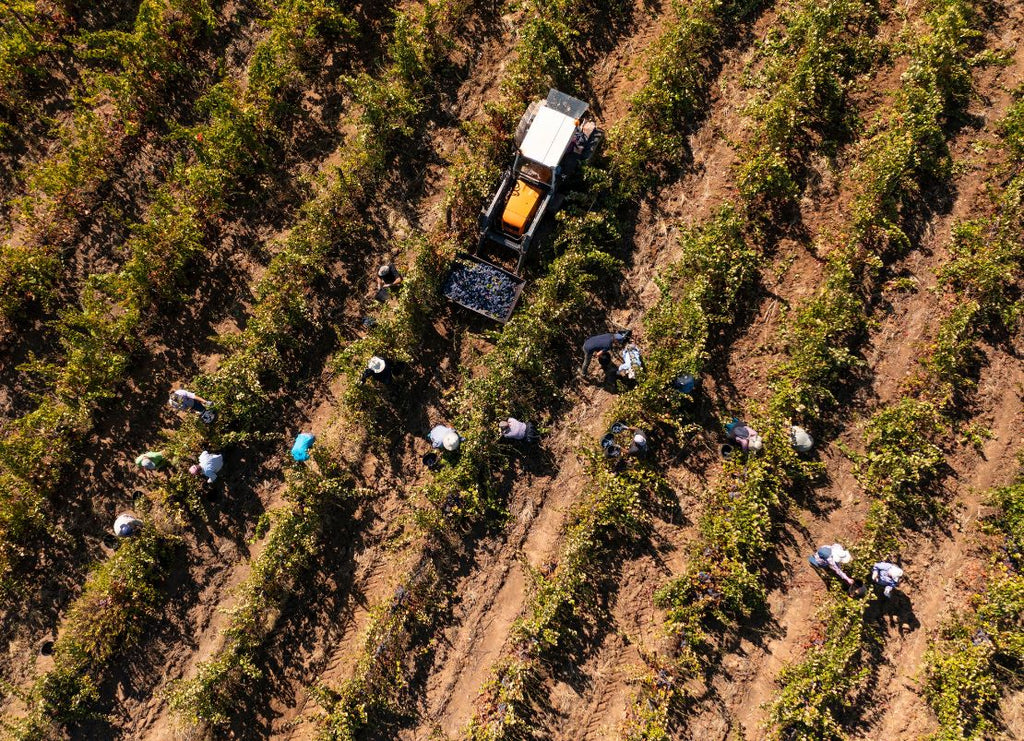
Cabernet Sauvignon is the result of a natural crossing between Cabernet Franc and Sauvignon Blanc, believed to have occurred in southwestern France centuries ago. Today it is planted across the wine world, but Bordeaux remains central to its history.
One reason for Cabernet Sauvignon's success is the grape itself.
Its relatively small berries and thick skins contribute colour, flavour compounds and tannins to the finished wine. Depending on climate, ripeness and winemaking, Cabernet Sauvignon can show characteristics ranging from blackcurrant and other dark fruits to herbal, savoury and sometimes cedar-like notes.
Tannin is particularly important.
Take a sip of a structured Cabernet and you may notice a drying sensation around your gums and the sides of your mouth. That is part of the architecture of the wine. Together with acidity, fruit, alcohol and, where relevant, oak, those tannins help determine how the wine feels rather than simply how it tastes.
This is important when we begin talking about alcohol-free Cabernet Sauvignon because removing alcohol changes one part of that architecture.
The rest of the wine has to find a new balance.
Why removing alcohol from Cabernet is more complicated than it sounds
Imagine tasting a conventional Cabernet Sauvignon and mentally separating everything in the glass.
There is aroma. There is fruit. There is acidity. There are tannins. There may be oak. There is also alcohol.
You don't taste each of these elements independently. They interact.
Alcohol contributes body and warmth, but it also influences the perception and delivery of aroma. Once it is removed, the relationship between fruit, acidity and tannin changes.
This explains one of the frustrations people sometimes experience when they first try alcohol-free red wine. They expect the exact physical sensation of a conventional 13 or 14% red and immediately notice that something is different.
Of course it is.
The more useful question isn't whether dealcoholized Cabernet can perfectly reproduce a conventional Cabernet. It is whether the producer can create a new balance in which the characteristics of the grape are still meaningful.
That is where the quality of the original wine, grape selection and dealcoholization process become so important.
And it is also where blends become fascinating.
Cabernet Sauvignon has never needed to stand alone
When we think about Cabernet Sauvignon, it is easy to think of a bottle labelled simply “Cabernet Sauvignon”. But some of the world's great Cabernet-based wines are blends.
Bordeaux provides the classic example.
Cabernet Sauvignon has traditionally shared the stage with varieties including Merlot and Cabernet Franc. Each grape contributes something different, and their proportions change depending on the vineyard, vintage and style the winemaker wants to create.
That principle becomes especially interesting in alcohol-free wine.
If removing alcohol reduces some of the wine's weight, could another grape help restore balance in a different way? Could Merlot provide roundness and fruit? Could Cabernet Franc bring another aromatic dimension? What happens when Cabernet Sauvignon leaves France altogether and meets Tempranillo in Spain?
Our alcohol-free red collection gives us the opportunity to explore exactly those questions.
Not through theory, but through the bottles themselves.
Start with Cabernet Sauvignon on its own
For someone who already drinks Cabernet Sauvignon, Born to Be Free Red is perhaps the clearest place to begin.
It is made in France from 100% Cabernet Sauvignon and is labelled 0% alcohol.
There is something useful about starting with a varietal wine. There are no other grapes in the blend to complicate the question. You can concentrate on Cabernet Sauvignon itself and see what happens to the variety when alcohol is taken out of the equation.
It also changes the way we think about shopping for alcohol-free wine.
For a long time, consumers were effectively asked to shop by one characteristic: alcohol or no alcohol.
That isn't how most wine lovers buy conventional wine.
A Cabernet drinker doesn't walk into a wine shop and ask simply for “red”. A Burgundy drinker isn't looking for “something alcoholic”. We think about grapes, regions, producers, vintages and styles.
Alcohol-free wine becomes much more interesting when we begin applying that same curiosity to it.
Born to Be Free therefore isn't simply an “alcohol-free red”. It gives someone who likes Cabernet Sauvignon a familiar point from which to start exploring.
Then see what happens when Cabernet meets Merlot and Cabernet Franc
From a varietal Cabernet, we can travel back towards a more recognisably French tradition.
Moderato Cuvée Originale Le Rouge combines Cabernet Sauvignon, Cabernet Franc and Merlot, using grapes from Gascony. The wine is labelled 0% alcohol.
The blend matters more than it might appear.
Merlot and Cabernet Sauvignon are often spoken about together, but they aren't interchangeable. Merlot can bring a different expression of fruit and texture, while Cabernet Franc adds its own aromatic character.
Put them together and the winemaker has more components with which to construct the final wine.
For someone exploring alcohol-free reds, tasting a varietal Cabernet alongside a blend such as Moderato can actually be more informative than simply asking which bottle is “better”.
You're tasting two different approaches to the same challenge.
One asks Cabernet Sauvignon to stand alone.
The other builds the wine through a blend.
In Saint-Émilion, Cabernet Sauvignon takes a supporting role
Then there is Prince Oscar, which turns the proportions around completely.
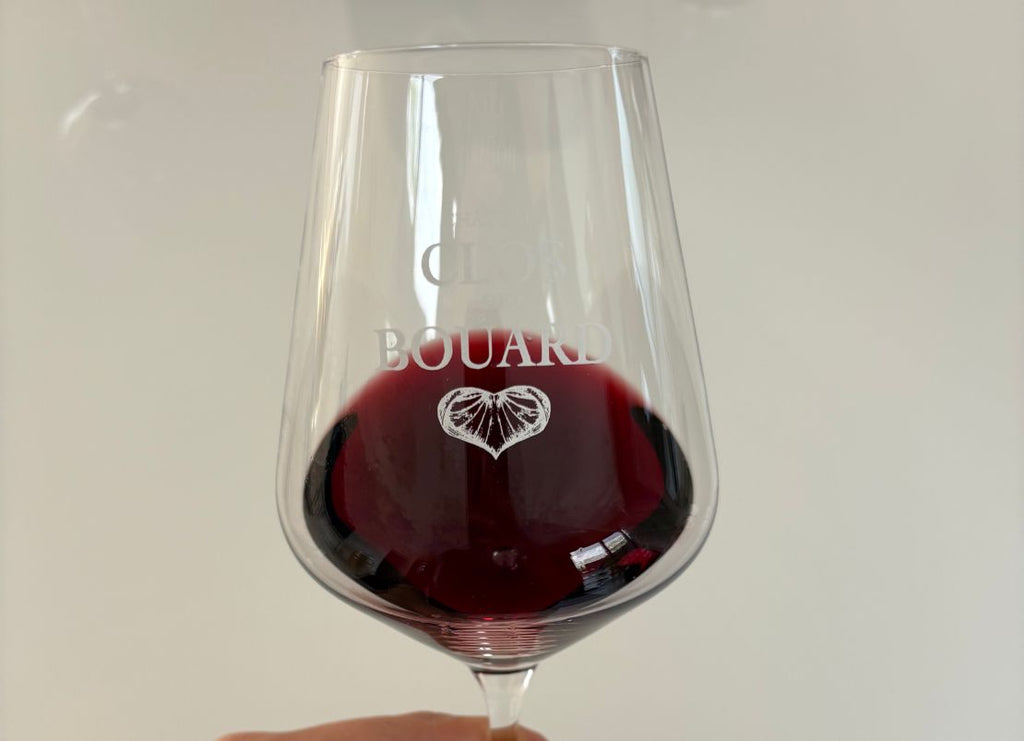
Prince Oscar comes from Château Clos de Boüard, in the Saint-Émilion wine landscape on Bordeaux's Right Bank. Its blend is 80% Merlot, 15% Cabernet Franc and 5% Cabernet Sauvignon.
Cabernet Sauvignon represents only a small part of the final blend.
And that is exactly why Prince Oscar belongs in this story.
Wine isn't always about the grape with the largest percentage. Blending is about deciding what each variety can contribute to the whole.
Here, Merlot is clearly the protagonist. Cabernet Franc and Cabernet Sauvignon play supporting roles.
For someone searching specifically for a bottle that expresses Cabernet Sauvignon above everything else, Prince Oscar wouldn't be our first recommendation. Born to Be Free makes far more sense.
But for a Bordeaux drinker trying alcohol-free wine, the opposite may be true.
The familiar language isn't “100% Cabernet”. It is Merlot, Cabernet Franc, Cabernet Sauvignon, vineyard and château.
That's a completely different route into alcohol-free wine.
And it demonstrates why we shouldn't reduce the category to a ranking of the “top five alcohol-free reds”. Wine is more interesting than that.
Cross the border into Spain and Cabernet changes again
Cabernet Sauvignon may have French origins, but it has travelled remarkably well.
In Elivo Zero-Zero Deluxe Red, we see it in a Spanish context, blended with Tempranillo.
The wine consists of 60% Tempranillo and 40% Cabernet Sauvignon and is labelled 0.0% alcohol.
This combination tells another story.
Tempranillo is deeply associated with Spanish wine. Cabernet Sauvignon is international. Put them together and neither has quite the same role it had in the previous wines.
For somebody accustomed to Spanish reds, this may be a much more intuitive introduction to alcohol-free Cabernet than a French varietal wine.
And this is where choosing alcohol-free wine becomes much more personal.
The question is no longer simply, Which alcohol-free red should I buy?
It becomes:
What do I normally drink?
If your answer is Bordeaux, look towards Bordeaux varieties.
If your answer is Spanish red, Tempranillo may provide the bridge.
If your answer is Cabernet Sauvignon, start with Cabernet Sauvignon itself.
That's how we'd help somebody choose a bottle in a wine shop, and we see no reason alcohol-free wine should be treated differently.
And then there is the question of 0%, 0.0% and less than 0.5%
There is another detail that deserves proper explanation, because the terminology surrounding alcohol-free wine can be confusing.
Not every bottle within the broader alcohol-free category carries exactly the same alcohol declaration.
In our collection, you'll see wines marked 0%, wines marked 0.0%, and wines marked <0.5%.
We don't use those figures interchangeably.
For example, Born to Be Free and Moderato Le Rouge are labelled 0%, while Elivo Zero-Zero Deluxe Red is labelled 0.0%. Tip Top Alcohol Free Red, a Bordeaux blend of Merlot and Cabernet Sauvignon, belongs to a different category and is labelled <0.5%.
That distinction can be very important depending on why somebody is choosing alcohol-free wine.
If you specifically require zero alcohol, don't assume that every bottle described broadly as alcohol-free necessarily has the same ABV. Look at the individual wine and its stated alcohol content.
For us, this is part of treating alcohol-free wine seriously.
A customer buying conventional wine expects us to tell them whether a bottle is 12.5% or 14%. Someone buying alcohol-free wine deserves the same precision.
Does alcohol-free Cabernet Sauvignon taste sweet?
This is probably one of the most important questions for traditional red-wine drinkers.
Many people who tell us they don't like alcohol-free red wine aren't actually objecting to the absence of alcohol. They're objecting to wines that feel too sweet or too juice-like.
There are several things happening here.
First, removing alcohol changes balance. Without the body and warmth alcohol normally provides, other components of the wine can become more noticeable.
Second, we need to distinguish fruit from sweetness.
Cabernet Sauvignon can smell and taste of blackcurrant and other dark fruits. That doesn't automatically make the wine sweet. Fruit character describes aroma and flavour; sweetness relates to the amount of sugar in the wine and how that sugar is perceived alongside acidity, tannin and the rest of the structure.
This is why tasting alcohol-free wine through the same lens as conventional wine is useful.
Don't ask only, “Is it alcohol-free?”
Ask what grapes are used. Where do they come from? Is it a varietal wine or a blend? What does the producer say about the style? What is the stated ABV?
The more information you have, the less likely you are to buy purely on the promise of “zero alcohol” and hope for the best.
Temperature can change the experience more than you might expect
There is another simple thing you can do at home to give an alcohol-free Cabernet a fair chance: don't serve it too warm.
“Room temperature” is one of wine's most persistent pieces of advice, but a modern heated room can easily be warmer than the conditions in which red wine traditionally would have been served.
With an alcohol-free red, too much warmth can make the fruit seem broader and can make any sweetness more noticeable.
We prefer to begin around 14–16°C for many alcohol-free reds and then let the wine develop naturally in the glass.
Use a proper wine glass, too.
Not because we're interested in ceremony for ceremony's sake, but because the shape of the glass gives the aromas room to develop.
Pour it. Swirl it. Smell it. Taste it. Leave it for several minutes and return to it.
In other words, give it the same attention you'd give any other bottle you're curious about.
Cabernet Sauvignon belongs at the table
One of Cabernet Sauvignon's great strengths has always been food.
Its acidity and tannic structure make it particularly comfortable alongside savoury dishes. An alcohol-free Cabernet may have less weight than its conventional counterpart, so the goal isn't necessarily to pair it with the biggest steak you can find.
Think instead about balance.
Mushrooms, roasted vegetables, lentil-based dishes, tomato-rich pasta, hard cheeses and savoury dishes can all provide interesting starting points.
With a Cabernet-Merlot blend, you may find the wine more versatile still.
And with Tempranillo and Cabernet Sauvignon together, Mediterranean flavours become an obvious direction to explore.
There is no need to invent an entirely separate universe of “alcohol-free food pairing”.
The basic principles of wine pairing still matter: acidity, tannin, sweetness, intensity, texture and flavour.
The wine has changed.
The conversation around the table hasn't.
So, which Cabernet should you begin with?
After all of this, the answer is less complicated than it might seem.
If you want to understand Cabernet Sauvignon without alcohol, begin with a wine where Cabernet stands alone, such as Born to Be Free.
Then try it in a French blend such as Moderato and notice what changes when Merlot and Cabernet Franc enter the picture.
If Bordeaux is your reference point, explore Prince Oscar and see how Cabernet Sauvignon behaves when Merlot becomes the dominant grape.
If you normally drink Spanish wine, move to Elivo Zero-Zero Deluxe Red and taste Cabernet alongside Tempranillo.
And if you're comfortable with a wine labelled less than 0.5%, Tip Top gives you another interpretation of the Merlot-Cabernet relationship from Bordeaux.
You don't need to decide which one is objectively “the best”.
Taste the differences.
That's what wine has always been about.
Frequently asked questions
Can Cabernet Sauvignon really be alcohol-free?
Yes. Cabernet Sauvignon can be used to make alcohol-free wine both as a single grape variety and as part of a blend. Depending on the individual product, the final alcohol declaration may be 0%, 0.0% or <0.5%, so always check the bottle rather than assuming all alcohol-free wines have identical ABV.
Is alcohol-free Cabernet Sauvignon the same as Cabernet grape juice?
No. Grape juice hasn't been fermented into wine. Dealcoholized wine undergoes fermentation before the alcohol is subsequently reduced or removed. That fermentation is fundamental to the aromas, flavours and structure we associate with wine.
Will it taste exactly like a normal Cabernet Sauvignon?
No, and we don't think it is useful to pretend that it will. Alcohol contributes body, warmth and texture, so removing it inevitably changes the wine. The more interesting question is how successfully the wine retains Cabernet Sauvignon's fruit, acidity, tannin and overall character.
Is non-alcoholic Cabernet Sauvignon always sweet?
No. Alcohol-free reds vary significantly, and fruitiness shouldn't be confused with sweetness. If you prefer dry red wine, look at the individual wine's style and technical information rather than assuming all alcohol-free Cabernet tastes the same.
Should alcohol-free Cabernet Sauvignon be chilled?
Slightly, in many cases. Around 14–16°C is a useful starting point for an alcohol-free red. From there, allow the wine to develop in the glass and adjust according to your preference and the individual bottle.
What should I eat with alcohol-free Cabernet Sauvignon?
Think savoury rather than automatically thinking heavy. Mushrooms, roasted vegetables, tomato-based pasta, cheeses and other savoury dishes are useful starting points. The precise pairing depends on whether you're drinking pure Cabernet Sauvignon or a blend with grapes such as Merlot, Cabernet Franc or Tempranillo.
Cabernet Sauvignon without alcohol is really a story about choice
Perhaps the most encouraging thing about alcohol-free Cabernet Sauvignon isn't that somebody has managed to remove the alcohol.
It's that we're finally beginning to have choices within the category.
We can compare a French 100% Cabernet Sauvignon with a Cabernet-Merlot-Cabernet Franc blend. We can travel to Saint-Émilion and see Cabernet play a supporting role behind Merlot. We can cross into Spain and discover what happens when Cabernet meets Tempranillo.
That's starting to look much more like the wine world we know.
And that's exactly where we believe alcohol-free wine needs to go.
At Dis&Dis, we don't want you to choose a bottle simply because you're not drinking alcohol. We want you to be able to choose according to grape, origin, producer and style — the same things that make conventional wine worth exploring.
Because taking alcohol out of the glass shouldn't take the story out of the wine.
Discover our collection of alcohol-free red wines and find the Cabernet style that speaks to you.
Related post
24
Sep