
Alcohol-Free Wine for Christmas Dinner: What to Pour with a Winter Feast
Christmas dinner is one of the hardest meals of the year for wine. A single table can contain roasted meat, gravy, potatoes, buttery vegetables, sweet sauces, herbs, cheese and desserts, sometimes all within a few hours. The wine is expected to move between flavours that would normally call for completely different bottles.
Remove alcohol from the equation and the challenge becomes even more interesting. Conventional Christmas wine often relies on alcoholic warmth and body to stand beside rich winter food. Alcohol-free wine has less of that weight, which means acidity, tannin, sweetness, aroma and carbonation have to do more of the work.
The solution is not simply to find the biggest alcohol-free red available. Christmas dinner becomes much easier to pair when we stop trying to reproduce alcoholic weight and instead use the structural qualities alcohol-free wine still possesses. Sparkling wine can refresh the palate, high-acid whites can cut through richness, structured reds can work with roasted flavours, and carefully chosen sweeter wines can take over when dessert arrives.
In other words, a Christmas table does not need an “alcohol-free option”. It deserves an alcohol-free wine sequence.
Start Christmas with bubbles
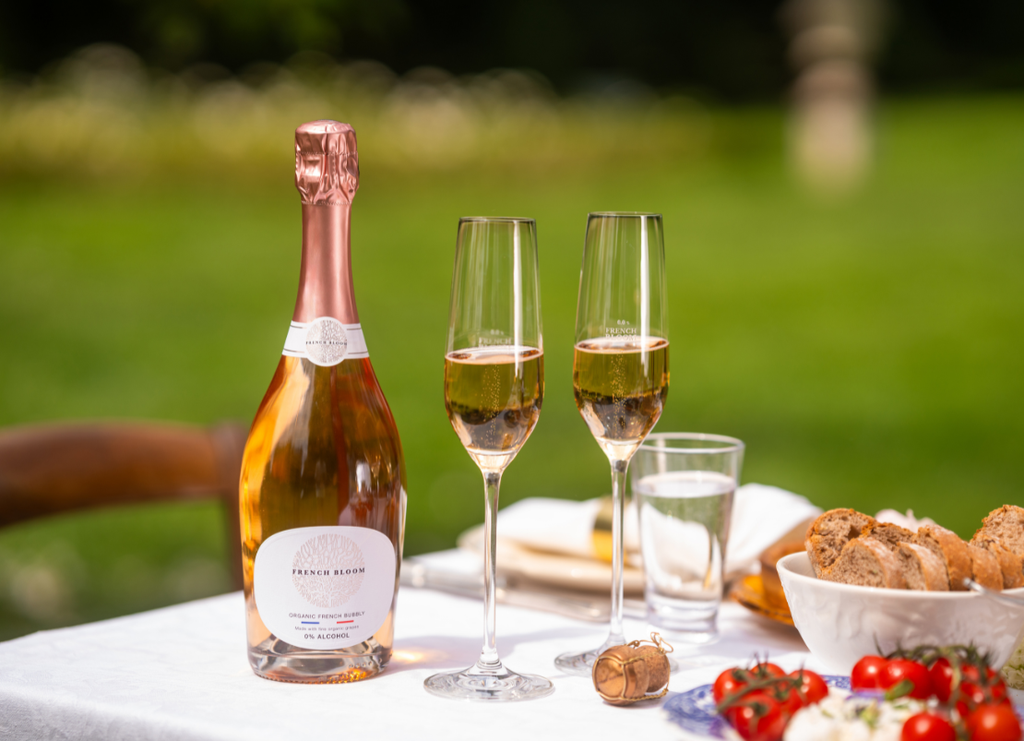
There is a reason sparkling wine feels natural at the beginning of a celebration. Bubbles immediately change the rhythm of a meal: they create freshness, stimulate the palate and work particularly well when guests are eating small, salty or savoury appetisers rather than sitting down to one substantial dish.
This becomes even more useful without alcohol. As we explored in our guide to non-alcoholic sparkling wine, carbonation provides physical sensation on the palate at precisely the moment ethanol is no longer providing its conventional warmth and weight. Combine that with sufficient acidity and sparkling wine can feel energetic rather than incomplete.
For Christmas, this makes alcohol-free sparkling wine an obvious starting point rather than a compromise reserved for the person who isn't drinking. Pour it for the table with olives, nuts, smoked fish, canapés, cheese pastries or other small appetisers and allow the wine to perform the same function a conventional aperitif would: preparing everyone for the meal ahead.
Chardonnay can take sparkling wine in a more vinous direction
Chardonnay is one of the world's classic sparkling-wine grapes, and its ability to combine acidity with texture makes it particularly interesting when alcohol is removed. Depending on origin and winemaking, Chardonnay can range from lean and citrus-driven to broader and more textural, which gives producers considerable freedom when constructing an alcohol-free sparkling wine.
Within the Dis&Dis collection, Spanish Elivo Zero Zero Deluxe Sparkling gives us a Chardonnay-based example at 0% alcohol. A bottle like this can make sense at the beginning of Christmas dinner because the bubbles provide freshness while Chardonnay gives the wine a recognisable varietal foundation.
It is also a useful reminder that Christmas sparkling wine does not need to be treated merely as something for the toast. When the base wine has enough acidity and character, it can continue through the first courses rather than disappearing the moment everyone sits down.
Smoked salmon needs freshness more than power
Smoked salmon is a Christmas classic in many European homes, but its richness and saltiness can make heavy wine feel clumsy. What the dish generally needs is freshness. Acidity helps counter the fatty texture of the fish, while a clean aromatic profile prevents the pairing from becoming overly rich.
This is where alcohol-free Sauvignon Blanc becomes particularly useful. The grape's naturally prominent acidity and aromatic character give it structural tools that remain valuable after dealcoholization. A fresh Sauvignon Blanc can provide contrast rather than trying to match the richness of the salmon.
Our collection includes BERTIC0%T White and No Limit Alcohol Free White, both made from Sauvignon Blanc and carrying 0% alcohol declarations, as well as DIVIN Vigneron Sauvignon Blanc at <0.5%. The precise bottle can be chosen according to the style you prefer, but the grape itself gives us a logical starting point.
Seafood gives Riesling another opportunity
Christmas tables vary enormously by country. Turkey may dominate one household while prawns, oysters, lobster or fish appear in another. In Spain especially, seafood can be central to the Christmas table rather than simply an appetiser.
Riesling is worth considering here because acidity is one of its great structural strengths. That freshness can work particularly well alongside seafood, while the grape's aromatic personality provides more interest than a completely neutral white. Depending on the dish and the sweetness of the particular wine, Riesling can also accommodate ingredients with spice or gentle sweetness.
Weinkönig Riesling Nr. 420 Organic, currently listed at 0% alcohol, gives the Dis&Dis collection a German expression of the grape. The important point is not that Riesling automatically pairs with every piece of seafood. It is that high acidity gives us a particularly useful tool when Christmas food becomes rich, salty or buttery.
What should you pour with turkey?
Turkey itself is actually not the most difficult part of Christmas dinner. The meat is relatively delicate. The challenge comes from everything surrounding it: gravy, stuffing, roast potatoes, herbs, cranberry sauce and whatever other family traditions arrive on the plate.
This makes the pairing a question of the entire dish rather than the protein. A very delicate alcohol-free white may disappear once gravy and roasted flavours are added, while an aggressively tannic red can overwhelm the meat. The sweet-savoury contrast created by cranberry sauce complicates matters further.
A moderately structured red or textural white can therefore be more useful than simply reaching for the darkest bottle. Pinot Noir, Merlot and certain Tempranillo blends become particularly interesting because they can provide red-wine character without necessarily requiring enormous weight.
Pinot Noir is made for the quieter side of Christmas dinner
Pinot Noir is one of the most useful red grapes when a meal contains both delicate meat and earthy accompaniments. Its generally higher acidity, aromatic character and finer tannic structure allow it to work with food without the sheer weight associated with more powerful red varieties.
That becomes particularly valuable after alcohol removal. As we explained in our non-alcoholic Pinot Noir guide, the grape already begins from a relatively delicate structural position. Dealcoholization makes the wine lighter still, but acidity and fine tannin can help retain definition.
DIVIN Vigneron Pinot Noir, from France and carrying a <0.5% declaration, gives us a particularly interesting Christmas-table option. Roast poultry, mushrooms and earthy vegetable dishes are exactly the kind of foods where Pinot Noir's restraint can be an advantage rather than a weakness.
Merlot can handle richer roasted flavours
If Pinot Noir represents delicacy, Merlot can move the table towards something rounder. The grape is generally associated with a softer tannic profile than Cabernet Sauvignon, which can make it easier to integrate with a mixed Christmas plate containing meat, sauce and vegetables.
The Dis&Dis alcohol-free collection gives us several different Merlot interpretations rather than one generic style. Claouset Zéro Degré is made from 100% Merlot in France and carries a 0% declaration, while Merlot Nr. 405 offers a German 100% Merlot at 0%. We also have Merlot appearing in blends such as No Limit and BERTIC0%T.
This is exactly why our grape guides matter at Christmas. Instead of asking for “an alcohol-free red”, we can ask what kind of red structure the meal actually needs. Merlot provides a different answer from Pinot Noir, Cabernet Sauvignon or Syrah.
What about roast beef?
Roast beef changes the equation because the meat can accommodate considerably more structure. In conventional wine pairing, this is where Cabernet Sauvignon and other tannic reds often appear. Tannin interacts particularly well with protein-rich foods, while the intensity of the wine can stand beside browned, roasted flavours.
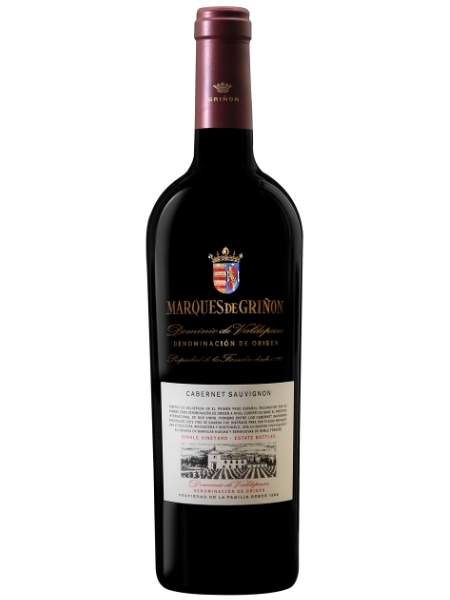
Alcohol-free Cabernet Sauvignon naturally has less alcoholic weight than its conventional counterpart, but tannin and acidity remain important. Born to Be Free Red Alcohol Free Wine, made from 100% Cabernet Sauvignon in France and carrying a 0% declaration, provides a varietal example within our collection.
For a richer Christmas roast, Cabernet Sauvignon can therefore make more sense than a very delicate alcohol-free red. The objective isn't to reproduce the warmth of a 14% Bordeaux-style wine. It is to use the structure that remains in the grape to meet the intensity of the food.
Tempranillo belongs naturally at a Spanish Christmas table
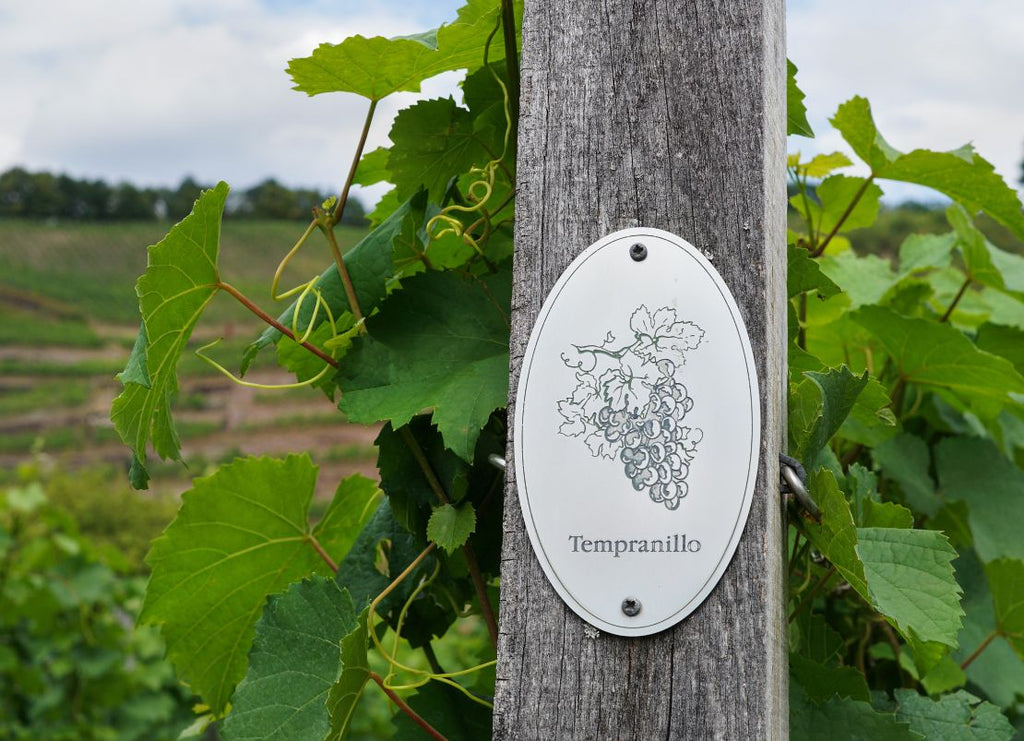
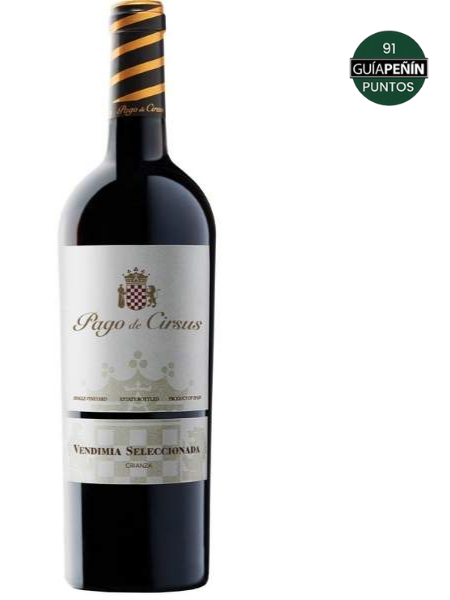
Christmas wine should also reflect where the meal is taking place. For a Spanish table, Tempranillo has an obvious cultural connection with winter meals, roasted meat and long family lunches. Its importance in Rioja, Ribera del Duero and elsewhere has made it one of the grapes most closely associated with Spanish red-wine culture.
The alcohol-free category allows that tradition to continue in a different form. Elivo Zero-Zero Deluxe Red 2025 combines 60% Tempranillo with 40% Cabernet Sauvignon and carries a 0.0% declaration. Cardio Zero Red takes another route, combining Tempranillo with Mencía and Garnacha Tintorera at 0%.
Neither should be treated as a direct sensory replacement for mature Rioja or Ribera del Duero. They have their own structure after dealcoholization. But they allow the Christmas table to remain connected to Spanish grape varieties rather than abandoning wine identity simply because alcohol is being avoided.
Mushrooms can be more interesting than meat
A Christmas wine guide shouldn't assume that the centre of every table is meat. Mushrooms, chestnuts, lentils, roasted root vegetables and savoury pastry can create deeply flavoured vegetarian dishes that deserve just as much thought when choosing wine.
Mushrooms are particularly interesting because their earthy character can work beautifully with lighter red wines. Pinot Noir is an obvious candidate, while softer Merlot can also make sense depending on the sauce and preparation. Roasted vegetables with herbs may accommodate either red or white wine according to their intensity.
This is where alcohol-free wine can be surprisingly liberating. Rather than following the old formula of “red with meat, white with fish”, we can think about acidity, sweetness, tannin, texture and flavour intensity. Those principles work regardless of whether the centre of the plate contains meat.
Christmas sauces are often harder to pair than Christmas meat
Cranberry sauce, apple, dried fruit, sweet glazes and other festive accompaniments introduce sweetness into otherwise savoury dishes. This matters because food containing noticeable sweetness can make a very dry wine appear sharper or thinner than it did on its own.
Alcohol-free wine requires particular care because perceived sweetness is already one of the category's most misunderstood characteristics. A slightly fruitier wine may actually integrate more naturally with a sweet-savoury Christmas plate than an extremely austere one.
That does not mean choosing a sugary wine. It means remembering the principle from our dry non-alcoholic wine guide: sweetness is experienced in context. Acidity, residual sugar, fruit and the food itself all influence what we perceive.
Cheese changes the mood of the meal
By the time the cheese arrives, Christmas dinner has usually moved into a different phase. Nobody is rushing, plates are smaller and the wine can become a subject of conversation rather than merely an accompaniment to the main course.
There is no universal cheese wine because Brie, aged Gouda, blue cheese and goat's cheese have very different levels of salt, fat, acidity and intensity. Fresh and soft cheeses can work with crisp whites or sparkling wine, while harder mature cheeses may accommodate more structured reds.
Alcohol-free sparkling wine is particularly worth keeping on the table. Its acidity and bubbles provide refreshment after rich food and can reset the palate between different cheeses. Sometimes the bottle opened at the beginning of dinner can make an unexpectedly good return before dessert.
Dessert is where dry wine should usually stop
One of the most common pairing mistakes is continuing with a dry table wine once a genuinely sweet dessert arrives. If the dessert is significantly sweeter than the wine, the wine can suddenly taste thin, sour or austere.
Christmas makes this especially relevant because desserts are rarely restrained. Christmas pudding, mince pies, panettone, nougat, chocolate, fruitcake and other traditional sweets combine sugar with dried fruit, spice, nuts or chocolate. A dry alcohol-free Sauvignon Blanc has very little reason to accompany them merely because it was already open.
There is nothing wrong with ending the wine sequence at this point and moving to coffee. Alternatively, a sweeter alcohol-free drink can be selected deliberately. The important thing is not to force one bottle through an entire Christmas dinner when the food has changed completely.
Chocolate is particularly unforgiving
Chocolate can overwhelm delicate wine because bitterness, sweetness and richness all appear simultaneously. Dark chocolate adds even more bitterness, while milk chocolate introduces additional sweetness and creaminess. A light, dry alcohol-free wine can quickly disappear.
If wine is being served, the accompanying bottle generally needs sufficient flavour intensity and sweetness to avoid being dominated. This is one area where checking the individual product's actual sweetness becomes far more useful than relying on broad categories such as red or white.
It is also perfectly acceptable not to pair wine with every course. Good wine service is not a competition to keep a glass filled from aperitif to coffee. Sometimes knowing when a wine no longer improves the food is part of pairing well.
The Christmas bottle doesn't need to be sweet just because it is alcohol-free
There is still a widespread assumption that alcohol-free wines are inevitably sweeter than conventional wines. Some are indeed sweet, but the category now encompasses a much broader range of styles. Fruit aroma should never be confused automatically with residual sugar.
For Christmas dinner, this distinction becomes especially important because rich food already contains plenty of sweetness and weight. A fresh, dry alcohol-free wine can provide contrast rather than adding another layer of sweetness to the plate.
Read the individual product description, consider the grape and look at how the producer describes the wine's balance. “Alcohol-free” is an alcohol category, not a flavour.
0%, 0.0% and <0.5% still matter at Christmas
A family Christmas table may contain people avoiding alcohol for very different reasons. One guest may simply be driving home, another may prefer not to drink, while another may specifically require a bottle carrying a particular alcohol declaration. We should not assume that the same product is appropriate for everyone.
That is why Dis&Dis preserves the distinction between wines listed at 0%, 0.0% and <0.5% rather than describing everything as 0.0%. A bottle such as Elivo Zero-Zero Deluxe Red is listed at 0.0%, while DIVIN Vigneron Pinot Noir is <0.5%. Those are not interchangeable descriptions.
The host does not need to make assumptions on behalf of guests. The easiest solution is to know what is being poured and, when relevant, leave the bottle visible so everyone can make their own informed choice.
How many alcohol-free wines do you need for Christmas dinner?
You do not need a different bottle for every plate. For most Christmas meals, three styles can cover an enormous amount of ground: a sparkling wine for the aperitif and starters, a white or lighter red for the early courses, and a more structured red for the main course.
The exact sequence depends on the menu. A seafood-heavy Christmas might stay predominantly with sparkling and white wine, while roast beef naturally moves towards structured red. A vegetarian menu could move from sparkling through a fresh white into Pinot Noir or Merlot.
Thinking in styles rather than bottle count also prevents the table becoming unnecessarily complicated. The purpose of wine is to make the meal more enjoyable, not to turn Christmas lunch into an examination.
How much should you serve?
A standard 750 ml bottle generally provides around five to six moderate wine servings, depending on pour size. Alcohol-free wine can be consumed differently from conventional wine, but that doesn't mean glasses need to be filled to the rim. Smaller pours allow guests to taste several styles throughout a long meal.
For a larger gathering, calculate according to the number of people who will actually drink each wine rather than assuming everyone will have every bottle. Sparkling wine often has broad appeal at the beginning of the meal, while red and white preferences may divide the table later.
And always chill enough bottles in advance. Christmas Day is not the ideal moment to discover that the sparkling wine is still sitting at room temperature.
Serve the wine properly
Alcohol-free wine deserves the same attention to temperature and glassware as conventional wine. Fresh whites generally benefit from chilling, sparkling wine should be properly cold, and alcohol-free reds can often show better slightly cooler than the overly warm “room temperature” at which red wine is sometimes served.
Temperature also changes sweetness perception and aroma. A white served too warm may appear broad and soft, while one served almost frozen may reveal very little aroma. Red wine served too warm can similarly lose freshness.
Use proper wine glasses where possible. Christmas is exactly the occasion when the ritual matters, and alcohol-free guests should not find their wine poured into a water tumbler while everyone else receives stemware.
Frequently asked questions about alcohol-free Christmas wine
What is the best alcohol-free wine for Christmas dinner?
There is no single bottle that works with every Christmas meal. Sparkling wine is particularly versatile for aperitifs and starters, Sauvignon Blanc or Riesling can work with seafood, Pinot Noir or Merlot can suit poultry and vegetables, while Cabernet Sauvignon or Tempranillo blends can handle richer roasted dishes.
What non-alcoholic wine goes with turkey?
Pinot Noir and softer Merlot styles can work well because turkey is relatively delicate while its traditional accompaniments are richer. A textural white can also work, particularly when the meal contains lighter sauces rather than heavy gravy.
What alcohol-free wine goes with roast beef?
A more structured red such as Cabernet Sauvignon can make sense because tannin and red-wine structure stand up better to the intensity of roast beef. The alcohol-free version will generally have less body than its conventional counterpart, so the richness of sauces and accompaniments should also be considered.
What should I serve with smoked salmon?
Freshness is particularly valuable with smoked salmon. Sauvignon Blanc, Riesling and dry sparkling wines are useful starting points because acidity can counter the richness and saltiness of the fish.
Can I serve alcohol-free sparkling wine throughout Christmas dinner?
Yes, particularly if the wine is sufficiently dry and fresh. Sparkling wine can move from aperitifs into seafood, starters and some cheese courses. There is no rule saying bubbles have to disappear after the toast.
Should alcohol-free red wine be served at room temperature?
Not necessarily. Many alcohol-free reds can benefit from being served slightly cool, often somewhere around 14–16°C as a general starting point, although the producer's recommendation should take priority.
Is alcohol-free Christmas wine always 0.0%?
No. Products may carry declarations including 0%, 0.0% or <0.5%. Check the individual bottle rather than assuming every product marketed within the broader alcohol-free category has precisely the same ABV.
Christmas dinner deserves more than an “alternative”
Perhaps the most important change in alcohol-free wine is not technological at all. It is the moment when we stop putting one bottle at the end of the table for “the people who aren't drinking” and start thinking about it as part of the meal.
Christmas makes that shift particularly visible. If considerable thought goes into the starter, roast, vegetables, sauces, cheese and dessert, there is no reason the alcohol-free wine should be selected as an afterthought. Different grapes and styles can perform different jobs throughout the dinner.
Start with bubbles. Use acidity with seafood and rich starters. Let Pinot Noir or Merlot accompany the more delicate roasted dishes, and bring Cabernet Sauvignon or Tempranillo towards the richer end of the table. Most importantly, choose according to the food and the person drinking it rather than according to the absence of alcohol alone.
The best alcohol-free Christmas table is not the one where nobody notices which wine contains alcohol. It is the one where nobody feels they were given the second-choice bottle.
At Dis&Dis, that is how we think Christmas wine should work.
Related post
03
Nov