
Best Non-Alcoholic Red Wine: How to Choose a 0.0% Red That Still Tastes Like Wine
Finding a good non-alcoholic red wine used to be difficult.
Red wine is particularly challenging to make without alcohol because alcohol does much more than create the alcoholic strength of a wine. It contributes body, texture, warmth and the way aromas are perceived. Remove it without care and a red wine can become thin, overly fruity or noticeably sweet.
Fortunately, alcohol-free winemaking has moved forward considerably.
Today, you can find 0.0% red wines made from Cabernet Sauvignon, Merlot, Syrah, Tempranillo and traditional red blends. The best examples don't try to disguise themselves as soft drinks. They start with wine, wine grapes and proper winemaking.
So how do you choose a non-alcoholic red wine that actually suits your taste?
At Dis&Dis, we think the answer is surprisingly simple:
Start with the kind of red wine you already enjoy.
What is non-alcoholic red wine?
Non-alcoholic red wine is made from wine grapes and goes through a winemaking process before the alcohol is reduced or removed.
This is an important distinction because non-alcoholic wine and grape juice are not the same thing.
Grape juice has not undergone alcoholic fermentation. With dealcoholized wine, grapes are fermented into wine first. The producer then removes the alcohol while trying to preserve as much of the wine's aroma, acidity, fruit and structure as possible.
Exactly how this is done depends on the producer. Modern dealcoholization techniques can include vacuum distillation and other processes designed to remove alcohol at lower temperatures, helping protect delicate aromas.
The challenge is particularly interesting with red wine.
Why is non-alcoholic red wine harder to make?
Think about what you experience when drinking a conventional red wine.
There is fruit, certainly. But there may also be tannin, acidity, weight, warmth and a long finish.
Alcohol contributes significantly to that sensation of body and warmth.
Remove the alcohol and the balance changes.
That's why making convincing alcohol-free red wine isn't simply about taking an ordinary bottle of wine and removing the ethanol. The producer needs to think about the entire wine: grape selection, ripeness, acidity, tannin, aroma, fermentation and the final balance after dealcoholization.
This also explains why two non-alcoholic reds can taste completely different.
The grape variety matters.
And that's exactly where we recommend beginning your search.
Which non-alcoholic red wine should you choose?
Instead of looking for one universal “best non-alcoholic red wine”, think about your usual preferences.
If you normally enjoy Bordeaux, start with Merlot and Cabernet-based blends.
If you're a Cabernet Sauvignon drinker, look for Cabernet.
If you love Spanish red wine, Tempranillo is an obvious place to begin.
If you prefer Syrah, there's no reason to abandon the grape simply because you're choosing 0.0%.
Here are some of the different styles you'll find in our alcohol-free red wine collection.
Prince Oscar — for Bordeaux lovers
France | Merlot, Cabernet Franc & Cabernet Sauvignon | 0.0%
Prince Oscar is an especially interesting bottle for traditional wine drinkers because of where it comes from.
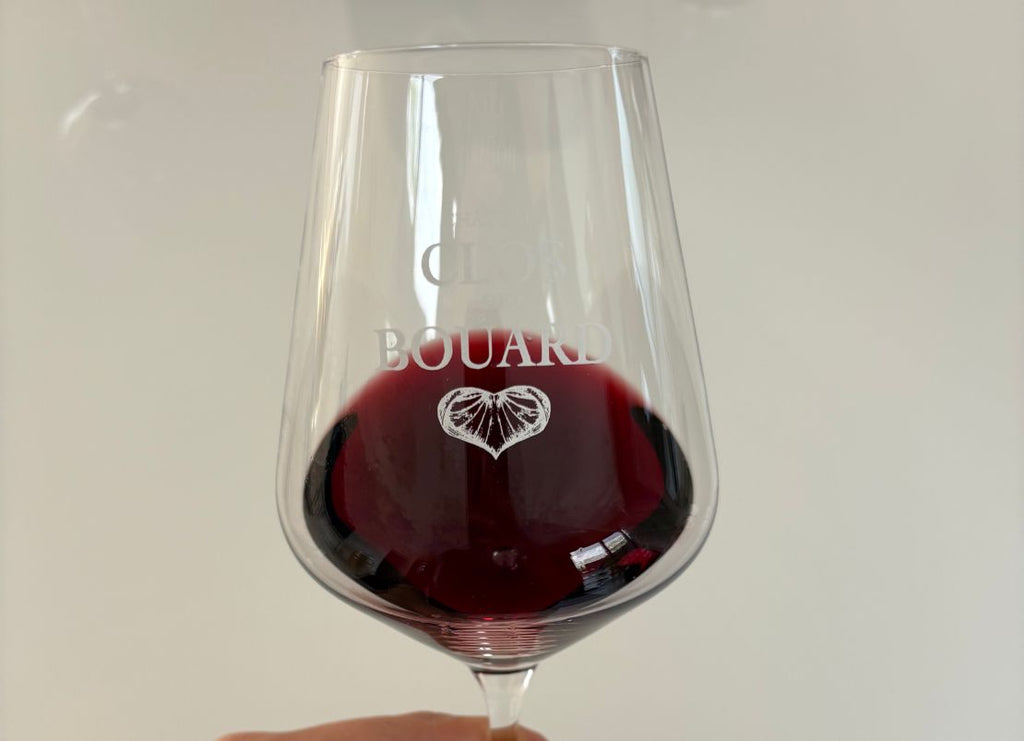
It is produced by Château Clos de Boüard, a Saint-Émilion estate, and brings together the classic Bordeaux varieties Merlot, Cabernet Franc and Cabernet Sauvignon.
The blend is predominantly Merlot, supported by Cabernet Franc and Cabernet Sauvignon.
That matters.
Merlot brings fruit and roundness, while the Cabernet varieties contribute additional structure and aromatic character. It creates a much more familiar starting point for someone accustomed to Right Bank Bordeaux than choosing an anonymous alcohol-free red based purely on its 0.0% label.
Expect ripe red and dark-fruit characteristics, including blackcurrant and blackberry, together with floral and vanilla notes and soft tannins.
Best for: Bordeaux drinkers looking for a serious 0.0% alternative.
Try it with: cheese, pasta and richer savoury dishes.
Moderato Cuvée Originale Le Rouge — a classic French red blend
France | Cabernet Sauvignon, Cabernet Franc & Merlot | 0.0%
Moderato Cuvée Originale Le Rouge takes another classic French approach.
It combines Cabernet Sauvignon, Cabernet Franc and Merlot, with fruit from Gascony.
These are grapes wine drinkers already understand, which makes Moderato a useful introduction to alcohol-free red wine.
Rather than asking yourself whether you “like non-alcoholic wine”, approach it as you would any other bottle: do you enjoy Cabernet and Merlot-based French reds?
If the answer is yes, this is a logical style to explore.
Best for: someone looking for an approachable French 0.0% red made from familiar Bordeaux varieties.
Claouset Zéro Degré — for Merlot drinkers
France | 100% Merlot | 0%
If Merlot is your grape, the choice becomes even simpler.
Claouset Zéro Degré is made from 100% Merlot from Lugaignac in France by Vignobles Siozard, a family with six generations of winemaking history.
Single-variety wines can be particularly useful when you're beginning to explore alcohol-free wine because you have a reference point.
You already know what you enjoy.
Rather than starting with the broad category of “alcohol-free red”, you can start with alcohol-free Merlot.
Best for: Merlot lovers who want a French 0% red.
Virgin Syrah — for Syrah lovers
France | 100% Syrah | 0.0%
Syrah has its own personality, so it deserves more than being treated as simply another “red”.
Virgin Syrah is produced from 100% Syrah from Occitanie in southern France and is crafted by Dominique Laporte, a former Best Sommelier of France.
The wine shows expressive raspberry-led fruit while retaining the identity of Syrah as the starting point.
For someone who normally reaches for Syrah rather than Merlot or Cabernet Sauvignon, this is precisely how we'd recommend approaching alcohol-free wine: follow the grape you enjoy.
Best for: Syrah drinkers looking for a French 0.0% alternative.
Does non-alcoholic red wine actually taste like wine?
Yes — but expectations matter.
A 0.0% red wine will not taste exactly like a conventional 13%, 14% or 15% red.
Alcohol itself affects flavour perception, texture and body. If you remove it, something changes.
That doesn't mean the result can't taste like wine.
A good alcohol-free red can still offer recognizable grape aromas, fruit, acidity, tannin and structure. What you'll often notice is a lighter body and less warmth on the finish.
The most useful approach is therefore not:
“Does this taste exactly like my 14% Bordeaux?”
Instead ask:
“Does this still give me a genuine wine experience that I enjoy?”
That's a much better test.
How do you find a non-alcoholic red wine that isn't sweet?
This is one of the biggest concerns we hear about alcohol-free wine.
And it's understandable.
When alcohol is removed from wine, the perception of balance changes. Alcohol normally contributes body and texture, so producers have to create balance without relying on it.
The first thing to understand is that fruitiness does not automatically mean sweetness.
Blackberry, raspberry, cherry, plum or blackcurrant are aromas and flavours. A wine can show plenty of fruit character without tasting like a sweet beverage.
When shopping, look beyond the words “alcohol-free”.
Consider:
- the grape varieties;
- the producer;
- the wine's origin;
- whether it is a varietal wine or a blend;
- the stated alcohol level;
- and the tasting profile.
If you normally prefer structured dry reds, varieties such as Cabernet Sauvignon, Merlot, Syrah and Tempranillo give you useful starting points.
0.0% wine and <0.5% wine are not necessarily the same thing
This is an important detail that is easily overlooked.
You'll encounter both 0.0% wines and wines containing less than 0.5% alcohol within the broader alcohol-free category.
They shouldn't automatically be treated as identical.
At Dis&Dis, we make the alcohol level clear on each wine so that you can distinguish between wines labelled 0.0% and those containing a small residual amount of alcohol.
If you specifically want zero alcohol, look for bottles marked 0.0% rather than relying only on the general term “alcohol-free”.
For many shoppers, the distinction won't change their choice. For others, it's essential.
Either way, you should be able to make that decision with the correct information.
Is non-alcoholic red wine the same as grape juice?
No.
This misconception probably does more damage to the alcohol-free wine category than almost anything else.
Grape juice is juice. Wine has been fermented.
With dealcoholized wine, the starting point is wine. Alcohol is produced during fermentation and subsequently removed or reduced.
That fermentation creates aromas and flavours that don't exist in ordinary grape juice.
The goal of the winemaker is then to preserve as much of that wine character as possible through the dealcoholization process.
So while some poorly balanced alcohol-free wines can taste too juice-like, that doesn't make alcohol-free wine grape juice.
It means you need a better bottle.
Should non-alcoholic red wine be served at room temperature?
Not necessarily.
In fact, serving alcohol-free red wine slightly cooler can often make it more enjoyable.
The old idea that all red wine should be served at “room temperature” comes from a time when rooms were considerably cooler than many modern homes.
For alcohol-free reds, excessive warmth can make fruit and sweetness feel more prominent.
As a general starting point, try your alcohol-free red at around 14–16°C rather than serving it warm.
If it has been stored at room temperature, place it in the refrigerator briefly before serving.
Then allow it to evolve in the glass.
A few degrees can make a surprisingly large difference.
What glass should you use for non-alcoholic red wine?
Use a proper wine glass.
It may sound like a small detail, but it isn't.
A wine glass gives aromas room to develop and allows you to swirl, smell and taste the wine in exactly the same way you would a conventional red.
Alcohol-free shouldn't mean abandoning everything that makes drinking wine enjoyable.
Temperature, glassware, food and occasion all matter.
Our advice is simple:
Treat good alcohol-free wine like wine.
Does non-alcoholic red wine need to breathe?
It can be worth giving it a little time in the glass.
Pour the wine, swirl it and taste it. Then return to it after several minutes.
Aeration can change how aromas present themselves, particularly in more structured styles.
You don't necessarily need to decant every bottle for hours. But drinking a red wine immediately after opening and extremely cold isn't always the best way to judge it.
Give it a proper glass and a little time.
What food goes with non-alcoholic red wine?
Food pairing doesn't disappear simply because the alcohol does.
Start with the grape variety and structure of the wine, just as you would with conventional wine.
Cabernet and Bordeaux-style blends can work well with richer savoury dishes, pasta, cheese and roasted flavours.
Merlot is versatile and works naturally with comforting dishes, mushrooms, pasta and cheese.
Tempranillo-based wines are worth trying with Mediterranean dishes, grilled vegetables, tapas and savoury food.
Syrah can be interesting alongside aromatic dishes, grilled vegetables and foods with herbs and spice.
Because alcohol-free reds can be lighter in body than their alcoholic equivalents, avoid assuming that the most powerful food pairing will always be the best one.
Balance the intensity of the dish with the wine in your glass.
How to choose the best non-alcoholic red wine for you
Forget rankings for a moment.
Here's the way we'd choose:
If you love Bordeaux: start with Prince Oscar or Moderato Cuvée Originale Le Rouge.
If you love Merlot: try Claouset Zéro Degré.
If you love Cabernet Sauvignon: explore Born to Be Free Red.
If you love Spanish reds: start with Cardio Zero.
If Tempranillo is your grape: try Elivo Zero-Zero Deluxe Red.
If you love Syrah: start with Virgin Syrah.
This is ultimately the change we'd like to see in alcohol-free wine.
People shouldn't have to say:
“I'll have the non-alcoholic one.”
They should be able to say:
“I'd like a Cabernet.”
Or a Merlot.
Or a Syrah.
Or a Tempranillo.
That's when alcohol-free wine truly becomes part of the wine world.
Frequently asked questions about non-alcoholic red wine
What is the best non-alcoholic red wine?
The best bottle depends on the style of red wine you normally enjoy. Bordeaux drinkers can explore Merlot and Cabernet blends such as Prince Oscar and Moderato Cuvée Originale Le Rouge. Merlot drinkers can try Claouset Zéro Degré, while Cabernet Sauvignon, Tempranillo and Syrah lovers can choose wines based specifically on those varieties.
Can you get completely alcohol-free red wine?
Yes. There are red wines available at 0.0% alcohol. However, not every wine sold within the broader alcohol-free category necessarily contains exactly 0.0%, so check the ABV of the individual bottle when zero alcohol is important to you.
What is the difference between non-alcoholic red wine and grape juice?
Grape juice hasn't been fermented into wine. Dealcoholized red wine goes through winemaking and fermentation before its alcohol is removed or reduced. Fermentation creates aromas, flavours and structural characteristics that distinguish wine from ordinary grape juice.
Is there a 0.0% Cabernet Sauvignon?
Yes. Cabernet Sauvignon is available in alcohol-free form both as a single-variety wine and as part of blends. Born to Be Free Red, for example, is made from 100% Cabernet Sauvignon, while Cabernet Sauvignon also appears in wines such as Prince Oscar and Moderato Cuvée Originale Le Rouge.
Is there non-alcoholic Merlot?
Yes. Claouset Zéro Degré is made from 100% Merlot. Merlot is also an important component of several alcohol-free French red blends.
Is there non-alcoholic Syrah?
Yes. Virgin Syrah is made from 100% Syrah from Occitanie in southern France and contains 0.0% alcohol.
Is there non-alcoholic Tempranillo?
Yes. Tempranillo appears in several Spanish alcohol-free reds. Elivo Zero-Zero Deluxe Red combines Tempranillo and Cabernet Sauvignon, while Cardio Zero combines Tempranillo with Mencía and Garnacha Tintorera.
Should non-alcoholic red wine be chilled?
We recommend serving many alcohol-free reds slightly cool, around 14–16°C as a starting point. Serving them too warm can make fruitiness and sweetness seem more pronounced.
How long does non-alcoholic red wine last after opening?
Once opened, treat alcohol-free wine as a perishable wine product. Reseal the bottle, refrigerate it and follow the producer's storage guidance. Because alcohol acts as a preservative, you shouldn't assume an opened 0.0% wine will behave exactly like a conventional alcoholic red.
A better way to drink without alcohol
The most exciting development in alcohol-free wine isn't simply that there are more bottles.
It's that there are more choices.
Cabernet Sauvignon. Merlot. Cabernet Franc. Syrah. Tempranillo. Mencía. Garnacha Tintorera. French blends. Spanish blends. Single-variety wines.
That means choosing not to drink alcohol no longer has to mean stepping outside the world of wine.
At Dis&Dis, that's what interests us.
We look for alcohol-free wines with a sense of grape, place, producer and identity — bottles that give wine lovers something worth discovering rather than simply something to drink instead.
So don't start by asking:
What's the best alcohol-free red wine?
Start with a better question:
What kind of red wine do I love?
Then find its alcohol-free counterpart.
Explore our collection of non-alcoholic red wines and discover your next bottle.
Related post
06
Oct
01
Oct
24
Sep