
Ribeira Sacra: Spain's Most Dramatic Wine Region
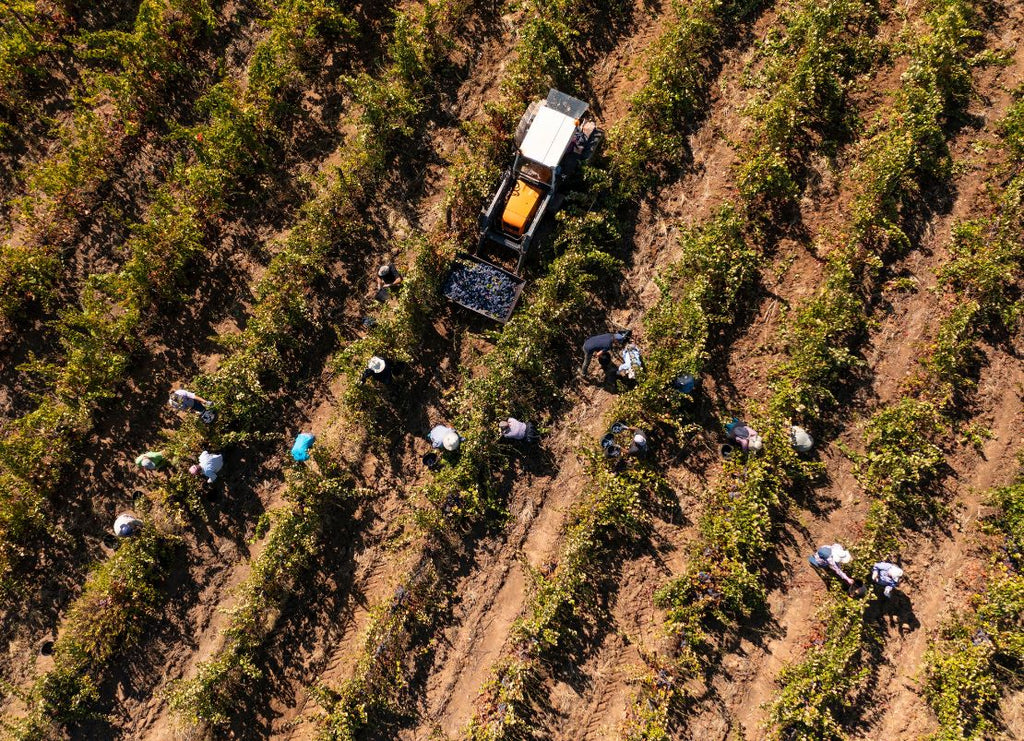
Every September, something extraordinary happens in a remote canyon in Galicia that almost nobody outside of Spain knows about. Workers descend granite slopes so steep that a gradient of 100% is not unusual — a 45-degree angle of rock and schist and ancient terracing — carrying baskets on their backs because no mechanical harvester could survive the terrain. The grapes they're picking are Mencía, a variety grown here since before anyone thought to write it down. The wine they're making is Ribeira Sacra, and it is the most physically demanding wine to produce in Spain.
The world hasn't fully discovered it yet. That is both remarkable and temporary.
Where Ribeira Sacra Is
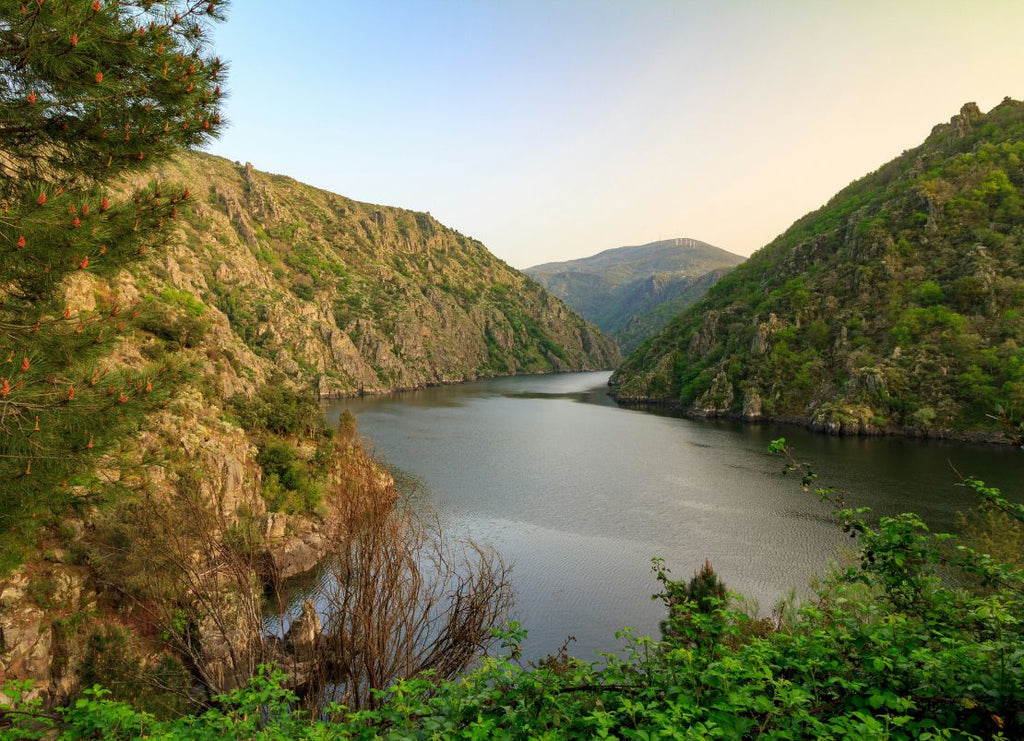
Ribeira Sacra — the Sacred River Bank — occupies a series of dramatic river canyons in southern Galicia, where the Sil and Miño rivers have carved their way through granite bedrock over millennia, creating valley walls that drop hundreds of metres to the water. The vineyards cling to those walls on terraces that were first cultivated by the Romans and later maintained by medieval monasteries whose ruins still punctuate the landscape. The name comes from those monasteries — the sacred buildings that gave the banks their name and the monks who kept the vines alive through centuries of agricultural neglect everywhere else.
It is, by any measure, a landscape that should not be producing wine. The slopes are too steep, the access too difficult, the economics of working by hand in terrain that demands it too unfavourable for any rational agricultural calculation. And yet the wine it produces — when you taste it — makes the logic of staying completely clear.
Heroic Viticulture: What That Actually Means
The term "heroic viticulture" gets used loosely across the wine world to describe challenging growing conditions. In Ribeira Sacra it is not a marketing phrase — it is a classification. The European agricultural system formally recognises heroic viticulture as vineyards with slopes exceeding 30%, and applies it to protect the additional labour costs that hand-working such terrain requires.
In Ribeira Sacra, 30% is where the gentle vineyards begin. The steepest plots reach gradients of 70%, 80%, sometimes 100% — a vertical drop that equals the horizontal distance covered. Nothing with wheels can work these slopes. Every operation — pruning, training, green harvesting, and the September vendimia — is done entirely by hand, by workers who have developed the physical capacity for this kind of labour over years or decades. The grapes come off the vine in baskets, are transferred by hand to collection points, and descend from the terraces by cable system or carried by the same workers who picked them.
The wine that results carries the record of that effort in ways that are genuinely perceptible in the glass: concentration from low yields, mineral intensity from the schist bedrock, and a freshness from the altitude and river influence that the Galician coast brings this far inland. These are not wines made by technology or convenience. They are wines made by persistence.
The Grape That Defines the Region
Mencía is to Ribeira Sacra what Nebbiolo is to Barolo: a variety grown almost nowhere else that produces wines impossible to replicate in other soil. It exists in pockets of Bierzo to the east, and small amounts are found in Portugal under different names, but the identity of the variety — aromatic, floral, with a mineral quality and silky tannins that resemble Pinot Noir more than any other Spanish red — is most fully expressed on Ribeira Sacra's schist terraces above the rivers.
The comparison to Pinot Noir is not marketing. It is what serious sommeliers and wine critics have been writing about Ribeira Sacra Mencía for the past decade, as the region has moved from complete obscurity to genuine international attention. The similarities are real: aromatic red fruit, violet and wild herb notes, fine tannins, a mineral backbone from the geology, and a fragility that demands careful winemaking rather than heavy intervention. Great Mencía is not a wine you can fix in the cellar. It either comes right from the vineyard or it doesn't come right at all.
Three Producers, Three Arguments for the Same Region
Adegas Moure — Abadía da Cova
The Moure family has been farming in Ribeira Sacra since 1958 — before the denominación was officially created, before the region had any international recognition, before anyone outside Galicia had heard of Mencía. They built the winery around a commitment to heroic viticulture that was simply the reality of where they lived rather than a positioning statement. Their organic Abadía da Cova Mencía is the clearest single-varietal expression of what the region tastes like: cherry red, intense aromas of ripe red and black fruits with the floral note that Mencía's signature, mineral and warm on the palate with the currant and blueberry character that the schist soils produce in a good year.
Their 1124 blend goes further — Mencía alongside Caíño, Sousón, Brancellao, and Black Grenache, the full portfolio of native Galician varieties, aged for six months in barrel. Wild herbs, spices, black and red fruit with well-marked tannins and a finesse that the variety only produces when the terroir is right. The number 1124 refers to the year a document was found naming the monastery estate from which the wine takes its name — an 11th-century connection to the same land the vines grow on today.
Rectoral de Amandi
The winery takes its name from a 17th-century rectory at the heart of Amandi, in the province of Lugo — a 1,000-square-metre stone building that houses one of the most significant wine operations in the region. Rectoral de Amandi is Ribeira Sacra's largest producer, with over 2 million bottles per year, and the estate most directly responsible for bringing the denominación to international attention. Their standard Mencía 2020 is the most awarded Galician red wine in national and international competition — a statement backed by consecutive recognition across multiple vintages.
The Manolo Arnoya Barrica steps up in ambition: 91 points from Guía Peñín, Gold from Mundus Vini, Silver from the Challenge International du Vin. Barrel-aged Mencía from the same terroir, with the oak integration that gives it a fuller structure — vanilla and menthol in the finish, velvety tannins, the power that the variety develops when the winemaker gives it time and wood. This is Ribeira Sacra for the buyer who wants to understand what the region is capable of at its most ambitious.
Regina Viarum
The name translates as Queen of the Roads — a reference to the Roman roads that crossed Galicia and brought the first viticulture to these river canyons. The Gómez Araujo family acquired the estate in 2001 and has since built it into one of the DO's most consistent quality producers. Their Mencía 2020 comes from the steep southwest-facing slopes above the village of Doade, hand-cultivated entirely, with six months on lees in stainless steel — no oak, chosen deliberately to preserve the mineral and fruit character that the slate soils produce.
Cherry with violet reflections, ripe cherry and plum on the nose, mineral slate character in the mid-palate, silky and persistent on the finish. The terroir speaking through a wine that refuses to get in the way of what the vineyard is saying.
Why Ribeira Sacra Is the Next Great Spanish Wine Discovery
The trajectory here mirrors what happened to Bierzo twenty years ago — a neighbouring Galician region with the same Mencía grape, the same dramatic terrain, the same obscurity that preceded a wave of critical attention and international buying. Bierzo now commands serious prices and serious respect. Ribeira Sacra, with steeper slopes, more dramatic landscapes, and equally compelling wines, is a vintage behind that curve.
The buyers who discovered Bierzo early got value that the market has since corrected. The buyers discovering Ribeira Sacra now are in the same position — wines of genuine quality from one of Spain's most extraordinary terroirs, available at prices that haven't yet caught up with what's in the glass.
What to Eat With Ribeira Sacra
The kitchen of Galicia is built on the sea and the land in equal measure. Ribeira Sacra Mencía works beautifully against the region's own cuisine: pulpo á feira (octopus with olive oil and paprika), lacón con grelos (pork shoulder with turnip tops), Galician empanadas, and the freshwater river fish — trout, lamprey — that come from the same rivers the vines overlook.
Beyond Galicia: any dish that benefits from a mineral, aromatic red with fine tannins. Lamb, duck, and game pair naturally. The Mencía's freshness also makes it one of the more versatile Spanish reds at the table — lighter than Ribera del Duero or Toro, more aromatic than Rioja, and considerably more food-friendly in a range of contexts than most comparably priced Spanish bottles.
Serve between 15°C and 16°C. Do not over-chill — the aromatics that define the variety fade below 14°C and the mineral quality that the schist builds in becomes more legible as the wine warms slightly in the glass.
Frequently Asked Questions
What is Ribeira Sacra wine? Ribeira Sacra is a Spanish denominación de origen in Galicia, centred on the dramatic river canyons where the Sil and Miño rivers meet. It produces red wines primarily from the Mencía grape, grown on granite and schist slopes so steep that all cultivation must be done by hand.
What does Ribeira Sacra wine taste like? Aromatic and mineral — red fruits, violet, wild herbs, and a distinctive slate-mineral quality from the schist soils. The tannins are fine and silky. Ribeira Sacra Mencía is frequently compared to Pinot Noir for its aromatic delicacy and food-friendly structure.
What is heroic viticulture? A formal European classification for vineyards with slopes exceeding 30%, recognising the additional labour required for hand cultivation. In Ribeira Sacra, slopes can reach 70-100% gradient — terrain where mechanical harvesting is physically impossible.
What is Mencía? A red grape variety grown almost exclusively in northwestern Spain, predominantly in Ribeira Sacra and neighbouring Bierzo. It produces aromatic wines with red fruit, floral notes, mineral character, and fine tannins — and is considered one of Spain's most distinctive and underappreciated native varieties.
How is Ribeira Sacra different from Bierzo? Both regions grow Mencía on dramatic terrain in Galicia and northern Castilla-León, but Ribeira Sacra's slopes are steeper, its river landscapes more dramatic, and its wines tend toward more mineral precision and lighter body. Bierzo is slightly further south and east, with more variable terroir across a wider appellation.
Discover Rectoral de Amandi Mencía 2020 → [https://disndis.com/products/rectoral-de-amandi-mencia-2020]
You might also like: [Rectoral de Amandi Manolo Arnoya Barrica 2020] · [Abadía da Cova Organic Mencía 2019] · [Abadía da Cova 1124 2016] · [Regina Viarum Mencía 2020]
Related post
06
Oct
01
Oct