
Non-Alcoholic Syrah: What Happens to Syrah’s Character Without the Alcohol?
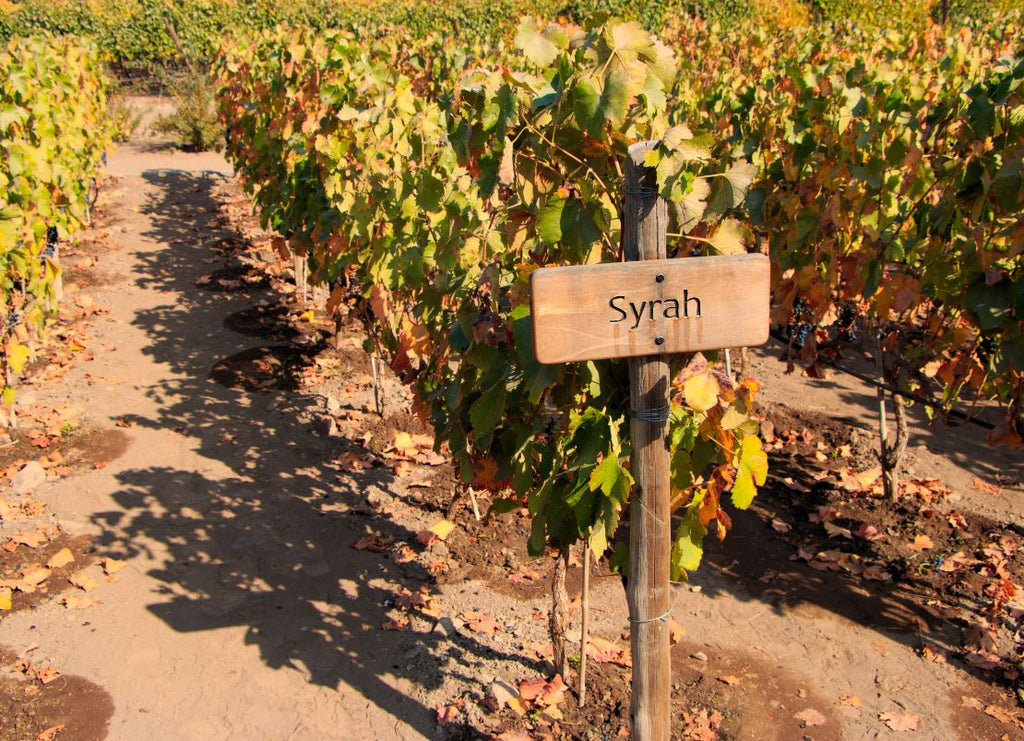
Syrah is a grape with a particularly recognisable personality. Depending on where it is grown and how it is made, it can produce wines with dark fruit, pepper, spice, floral notes and a savoury character, supported by acidity and tannin that give the wine its structure. It is also a variety capable of producing very different expressions, from the celebrated wines of the northern Rhône to warmer-climate interpretations found across southern France and much further around the world.
That combination of aroma and structure makes Syrah especially interesting for alcohol-free winemaking. Removing alcohol inevitably changes the weight, warmth and texture of a red wine, but it doesn't automatically remove the characteristics that come from the grape itself, its fermentation and the decisions made by the winemaker. The real challenge is preserving enough of Syrah's identity that the finished wine remains recognisable and satisfying after dealcoholization.
For a Syrah drinker, this provides a much more useful way to approach alcohol-free wine than simply searching for a generic red without alcohol. If pepper, dark fruit, freshness and the savoury side of Syrah are part of what you enjoy about the grape, those are the characteristics worth looking for in an alcohol-free version. Understanding where those characteristics come from also helps explain why some grape varieties may respond differently to dealcoholization than others.
Syrah's roots are in France
Syrah is historically associated with France's Rhône Valley, particularly the northern Rhône, where it is responsible for some of the country's most distinctive red wines. Appellations such as Hermitage, Côte-Rôtie, Cornas and Saint-Joseph have helped establish Syrah's reputation for producing structured, aromatic wines capable of combining dark fruit with pepper, floral and savoury characteristics. The grape later spread throughout southern France and eventually across the wine world.
Modern genetic research established that Syrah is the natural offspring of two old French grape varieties, Mondeuse Blanche and Dureza. That discovery helped settle some of the more romantic theories that once surrounded the grape's origins and firmly placed its ancestry in southeastern France. The variety known as Shiraz in countries such as Australia is genetically the same grape, although climate and winemaking can produce markedly different styles.
That distinction between grape variety and wine style is important when discussing alcohol-free Syrah. The word “Syrah” tells us which grape is involved, but it doesn't tell us exactly how the finished wine will taste, because origin, ripeness, vineyard conditions and winemaking all contribute to its expression. Removing alcohol adds another variable, making the decisions taken before, during and after dealcoholization particularly important.
What gives Syrah its distinctive character?
One of Syrah's most fascinating characteristics is its aromatic range. Depending on climate and ripeness, the fruit can move from fresher blackberry, blueberry and other dark-fruit expressions towards riper, fuller flavours, while pepper, violet and savoury notes can add complexity. The precise profile varies considerably, which is one reason Syrah can be so rewarding to explore across different regions.
The peppery character for which Syrah is famous has a particularly interesting explanation. A naturally occurring aromatic compound called rotundone is associated with the black-pepper aroma found in Syrah and several other grape varieties, and people differ considerably in their sensitivity to it. This means the pepper note that seems immediately obvious to one drinker may be considerably less noticeable to another.
Syrah also has structural characteristics that matter when alcohol is removed. The grape can provide good colour, acidity and tannin, giving the winemaker components other than alcohol with which to build the finished wine. Those elements cannot replace alcohol entirely, but they can help an alcohol-free Syrah retain a recognisable red-wine structure rather than relying solely on fruit.
Why removing alcohol changes Syrah
Alcohol is an integral part of the sensory experience of conventional wine. It contributes weight and warmth, affects viscosity and influences how aromatic compounds are perceived, while also changing the balance between sweetness, acidity and tannin. When it is removed, the wine doesn't simply become the same Syrah minus the intoxicating effect; the relationship between all of those remaining components changes.
This can be particularly noticeable in red wines because we often associate them with body and texture. A conventional Syrah with significant alcohol can feel broad and warming on the palate, while an alcohol-free version will naturally feel lighter because that source of weight and warmth has disappeared. The challenge for the producer is therefore to create a new equilibrium rather than attempting to pretend that nothing has changed.
Syrah has an advantage in that its identity isn't built on alcohol alone. Colour, tannin, acidity, fruit and distinctive aromatic compounds all contribute to the personality of the grape, giving the producer meaningful material to preserve through the dealcoholization process. The quality of the original wine and the care with which the alcohol is removed consequently become fundamental to the result.
Dealcoholization begins with wine, not grape juice
Understanding the production process helps explain why alcohol-free Syrah shouldn't be confused with Syrah grape juice. In dealcoholized wine, the grapes first undergo fermentation, during which yeast converts grape sugars into alcohol and numerous chemical and aromatic transformations take place. The alcohol is removed or reduced afterwards, meaning the starting point for dealcoholization is wine rather than unfermented juice.
This distinction is particularly important with an aromatic grape such as Syrah. Fermentation contributes to the development and expression of aromas and flavours that simply aren't present in ordinary grape juice in the same way. A careful dealcoholization process therefore tries to preserve those wine-derived characteristics while removing the alcohol that fermentation created.
The difficulty is that alcohol and aroma don't exist independently of one another. Removing ethanol can also affect volatile aromatic compounds, which is why modern producers often work at reduced pressure and lower temperatures or employ other technologies designed to minimise aromatic loss. Alcohol-free winemaking is consequently as much about what the producer manages to keep as what they manage to remove.
Virgin Syrah: a French interpretation from Occitanie
One of the clearest examples in our collection is Virgin Syrah, made from 100% Syrah grown in Occitanie in southern France. It is currently listed at 0% alcohol, giving Syrah drinkers the opportunity to explore the grape without another variety influencing the blend. The wine is associated with Dominique Laporte, a former Best Sommelier of France, bringing a sommelier's perspective to the development of an alcohol-free wine.
The wine shows raspberry-led fruit, providing a useful reminder that Syrah doesn't always have to be dominated by extremely dark or heavy flavours. Origin, growing conditions and winemaking affect the expression of the variety, and a southern French Syrah can show fruit alongside the aromatic and structural characteristics associated with the grape. In an alcohol-free context, preserving freshness becomes particularly important because there is no alcoholic warmth to provide the same sense of weight.
A 100% varietal wine is also educationally useful. When another variety is present in a blend, it can be difficult for a drinker who is still learning about wine to understand which grape contributes which characteristic, whereas a varietal Syrah provides a clearer starting point. If Syrah is already a grape you know and enjoy, Virgin Syrah allows you to consider what remains recognisable when alcohol is removed.
Syrah Nr. 450 offers another interpretation of the grape
Our collection also includes Syrah Nr. 450, which provides another opportunity to explore Syrah in an alcohol-free form. Rather than assuming that two bottles made from the same grape should taste identical, it is more useful to consider how producer decisions, the original wine and the dealcoholization process can influence the final result. Variety gives us a reference point, but it never tells the entire story of a wine.
This is exactly how we approach conventional wine. Nobody expects every bottle labelled Syrah to taste identical, because a northern Rhône Syrah, a southern French Syrah and an Australian Shiraz can be very different despite sharing the same grape variety. Alcohol-free Syrah deserves the same freedom to show differences between producers and styles.
Having more than one expression of a grape is therefore important for the development of the category. If someone tries one alcohol-free Syrah and doesn't enjoy it, that experience tells them about that particular bottle rather than proving that Syrah cannot work without alcohol. The wider the choice becomes, the more consumers can discover which styles suit their own palate.
Does alcohol-free Syrah still have tannins?
Alcohol and tannin are completely different components of wine, so removing alcohol does not automatically mean removing all tannin. Tannins are phenolic compounds extracted principally from grape skins and seeds during winemaking, with oak also capable of contributing tannin when it is used. Because Syrah is a red grape with meaningful tannic structure, tannin can remain part of the finished wine after dealcoholization.
What changes is the way that tannin is perceived. In a conventional wine, tannin exists alongside alcohol, acidity, fruit and other components, and removing the alcohol changes the balance between them. A tannin that felt integrated in the original wine may therefore need to be considered differently once the wine has been dealcoholized.
This is one reason the original wine has to be made with the final alcohol-free product in mind. The producer isn't simply trying to make the most powerful conventional Syrah possible and then stripping out its alcohol at the end. Successful alcohol-free winemaking requires anticipating how the wine's structure will behave after dealcoholization and creating balance accordingly.
What happens to Syrah's pepper and spice when alcohol is removed?
Aromatic preservation is one of the most technically interesting parts of alcohol-free winemaking. Syrah's identity is partly connected with volatile aromatic compounds, and those compounds can be affected during alcohol removal depending on the process used. The producer therefore has to think not only about achieving the desired ABV but also about protecting the aromas that help make Syrah recognisable.
This is why lower-temperature dealcoholization has become so important within the category. Reducing pressure allows alcohol to be separated at temperatures lower than would otherwise be required, helping to limit the damage that excessive heat could cause to delicate aromatic compounds. Different producers use different technologies and techniques, so there is no reason to assume that all alcohol-free Syrah will retain aroma in exactly the same way.
For the drinker, this means aroma is worth paying attention to before taking the first sip. Use a proper wine glass, swirl the wine and spend a little time smelling it rather than judging it immediately by its weight on the palate. Syrah is an aromatic grape, and part of the pleasure of drinking it lies above the glass rather than only on the tongue.
Fruitiness should not be confused with sweetness
Alcohol-free red wine is sometimes dismissed as sweet before the drinker has properly considered what they are tasting. This is partly because removing alcohol changes the wine's balance and can make fruit more prominent, but it is also because we often use fruit vocabulary when describing wine. Blackberry, raspberry, blueberry or plum are descriptions of aroma and flavour; they do not automatically tell us how much sugar a wine contains.
Sweetness is influenced by residual sugar and by the way that sugar interacts with acidity, tannin and the other components of the wine. A wine with noticeable fruit can still taste dry, just as a wine with relatively modest fruit aromas can contain perceptible sweetness. When choosing an alcohol-free Syrah, the technical information and overall tasting profile therefore provide much more useful guidance than simply counting the number of fruit descriptors.
This distinction matters particularly for people moving from conventional dry reds into alcohol-free wine. If you know you dislike sweetness in red wine, look for information about the individual bottle rather than assuming the grape variety itself determines sweetness. Syrah tells us what grape was used; it doesn't tell us the final residual sugar or the complete sensory balance of the wine.
0%, 0.0% and <0.5% remain different declarations
As we continue exploring alcohol-free wine, we think precision around alcohol content is essential. The terms 0%, 0.0% and <0.5% appear across the wider category, but they shouldn't automatically be substituted for one another. A wine should be described using the alcohol declaration verified for that specific product rather than being rounded up or down for convenience.
This matters because different customers choose alcohol-free wine for different reasons. For some, the difference between a wine labelled 0% and one labelled <0.5% may not influence the purchasing decision, while for another person the distinction may be important. Providing the actual product information allows the customer to make that decision without us making assumptions on their behalf.
For that reason, when we describe a Syrah as 0%, we mean that the wine is listed as 0%; we don't automatically rewrite that as 0.0%. Equally, if a future Syrah enters our collection with a declaration of <0.5%, we would present it as <0.5% rather than placing it in the same technical category as a wine labelled zero. Alcohol-free wine deserves the same accuracy that we expect when discussing the ABV of conventional wine.
How should alcohol-free Syrah be served?
Serving temperature has a significant influence on red wine, and alcohol-free Syrah is no exception. A red served too warm can feel broad and heavy, with fruit and sweetness becoming more prominent, while a slightly cooler temperature can emphasise freshness and structure. For many alcohol-free reds, beginning somewhere around 14–16°C is a sensible approach before allowing the wine to develop naturally in the glass.
The glass itself also matters because Syrah has an aromatic personality worth exploring. A proper wine glass gives the wine sufficient surface area and space for aromas to collect, making it easier to notice fruit, floral, peppery or savoury characteristics. There is no need for elaborate ceremony, but serving an alcohol-free Syrah in the same way you would a conventional wine gives it a much fairer opportunity to show what it can do.
It is also worth giving the wine several minutes after pouring. Temperature will gradually rise and oxygen can alter the aromatic expression, so the first sip isn't necessarily the complete picture. Returning to the glass after ten or fifteen minutes can be surprisingly informative, particularly when you are trying a new alcohol-free red for the first time.
What should you eat with alcohol-free Syrah?
Syrah's combination of fruit, spice, acidity and tannin has traditionally made it a versatile food wine. With alcohol-free Syrah, the same basic principles apply, although the lighter body created by the absence of alcohol should be taken into account. The goal is to find a dish with enough flavour to complement the wine without overwhelming it.
Mushrooms, grilled aubergine, roasted vegetables, lentil dishes, Mediterranean herbs and savoury tomato-based dishes can provide useful starting points. Foods containing black pepper, rosemary or other aromatic herbs can also create interesting connections with the spicy and savoury side associated with Syrah. For those who eat meat, moderately flavoured roasted or grilled dishes can work, although an alcohol-free Syrah may be less suited to an extremely rich dish than a powerful high-alcohol version.
Food pairing is ultimately about balance rather than rules. Two alcohol-free Syrahs made by different producers may have different levels of fruit, acidity, tannin and perceived sweetness, so they won't necessarily pair identically. Understanding the individual bottle is more useful than relying on a universal pairing simply because the label says Syrah.
Is alcohol-free Syrah a good choice for someone who normally drinks red wine?
It can be, particularly for someone whose interest in red wine is connected with grape character rather than alcoholic strength. Syrah naturally provides colour, tannin, acidity and a distinctive aromatic profile, giving the winemaker several elements to work with after alcohol has been removed. Those characteristics can help create a wine that remains recognisably red and recognisably Syrah even though its body differs from a conventional version.
Expectations remain important. Someone accustomed to a powerful, ripe, high-alcohol Shiraz shouldn't expect a 0% Syrah to reproduce exactly the same warmth and weight, because those sensations are partly created by the alcohol that is no longer present. A better comparison focuses on fruit, aroma, acidity, tannin, balance and whether the finished wine remains enjoyable at the table.
This is also why we encourage people to explore alcohol-free wine by grape rather than treating the entire category as one product. A Merlot drinker may respond differently to alcohol-free Syrah, just as someone who loves conventional Merlot doesn't automatically love every conventional Syrah. Removing alcohol doesn't remove personal taste.
Frequently asked questions about non-alcoholic Syrah
Can Syrah be made without alcohol?
Yes. Syrah can be fermented into wine and subsequently dealcoholized, allowing producers to create alcohol-free versions while attempting to preserve the grape's aromatic and structural characteristics. The exact final alcohol declaration should always be checked for the individual bottle because terms and ABV levels can differ within the wider alcohol-free category.
Is Syrah the same grape as Shiraz?
Yes. Syrah and Shiraz are names used for the same grape variety, although the choice of name can sometimes signal stylistic traditions or regional conventions. Australia is particularly associated with the name Shiraz, while France traditionally uses Syrah.
Does non-alcoholic Syrah still have tannin?
It can. Tannin comes primarily from grape skins and seeds during red-wine production rather than from alcohol itself, so dealcoholization doesn't inherently remove all tannin. However, removing alcohol changes the balance of the wine and can alter how that tannin is perceived.
Does alcohol-free Syrah taste like ordinary Syrah?
It can retain recognisable Syrah characteristics, but it won't taste identical to a conventional version because alcohol contributes significantly to body, warmth and flavour perception. A well-made alcohol-free Syrah should therefore be evaluated according to how successfully it retains the grape's fruit, aromatic character, acidity and structure. Expecting an exact copy of a 14% wine isn't a particularly useful way to judge it.
Is alcohol-free Syrah sweet?
Not necessarily. Syrah can have pronounced berry and dark-fruit aromas without being sweet, because fruit character and residual sugar are different things. If sweetness is particularly important to you, check the technical information and tasting profile of the individual wine.
What temperature should non-alcoholic Syrah be served at?
A slightly cool serving temperature generally provides a useful starting point for alcohol-free red wine. Around 14–16°C can help maintain freshness and prevent fruit and sweetness from becoming overly prominent, although producer-specific recommendations should always take priority where available. Allowing the wine to warm gradually in the glass also lets you observe how its aromas and texture develop.
Syrah without alcohol still has a story to tell
Syrah has never been defined by one characteristic alone. Its identity comes from the relationship between fruit, tannin, acidity, aroma, place and winemaking, and the grape can produce markedly different wines depending on where and how it is grown. Alcohol forms part of the conventional Syrah experience, but it isn't the sole source of the grape's personality.
Removing alcohol inevitably changes the wine, and we think it is more useful to acknowledge that than to promise that a 0% Syrah will be indistinguishable from a conventional bottle. What makes the category exciting is the attempt to preserve the parts of Syrah that can survive that transformation: its fruit, its colour, its structure, its aromatic character and its ability to accompany food. As dealcoholization technology and winemaking experience continue to develop, producers have increasingly sophisticated tools with which to pursue that goal.
At Dis&Dis, this is why we prefer to talk about alcohol-free wine through the language of wine itself. Merlot taught us about softness and blending, Cabernet Sauvignon about structure, and Syrah takes us into the world of aroma, pepper, spice and savoury character. When we can have those conversations without alcohol being the only thing that defines the bottle, alcohol-free wine becomes a category worth exploring on its own terms.
Explore our alcohol-free red wine collection and discover how Syrah expresses itself without the alcohol.
Related post
24
Sep