
Douro Valley Wine: Beyond Port, Into Portugal's Greatest Dry Reds
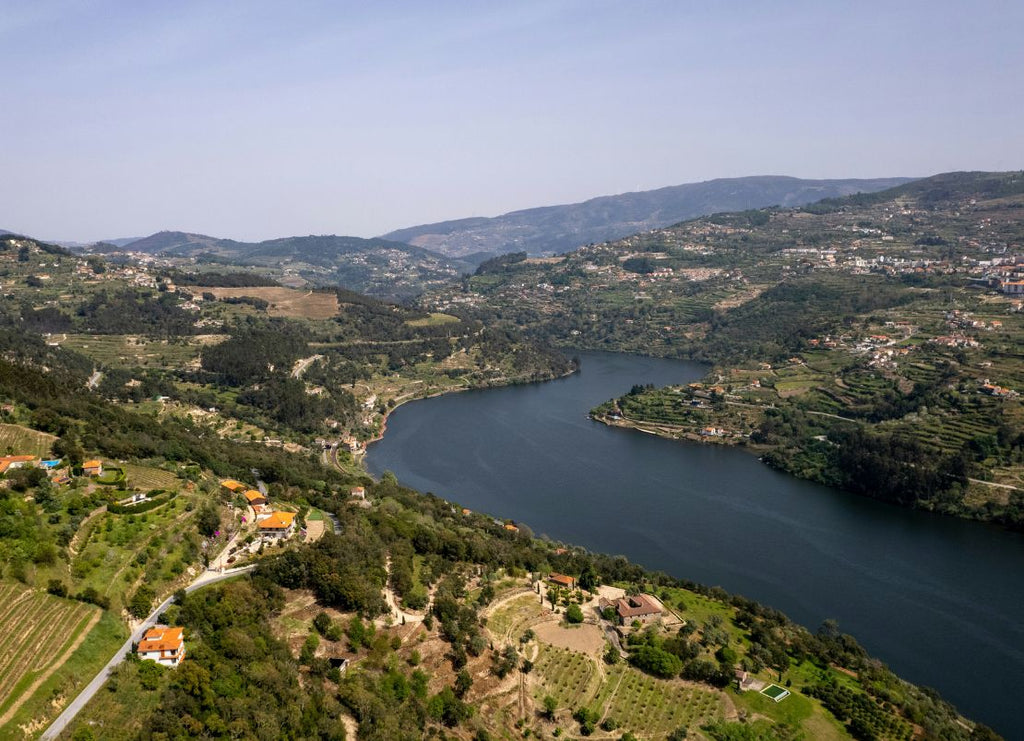
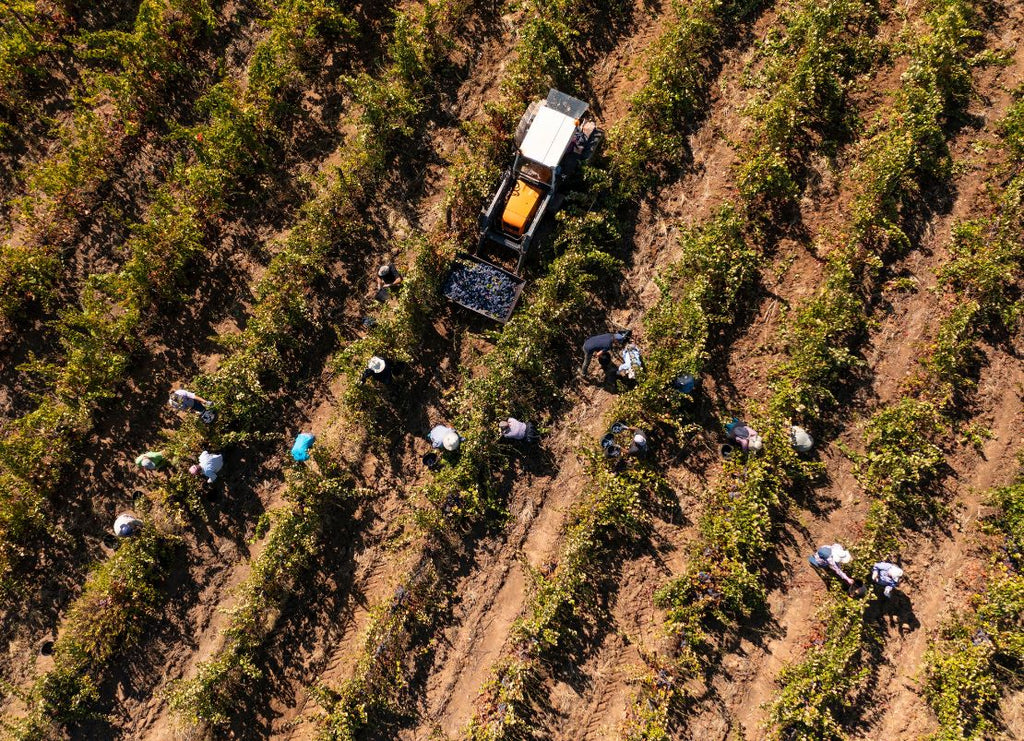
Every September, the Douro Valley does something it has been doing for centuries. Around 200 families descend onto granite terraces above the river — terraces so steep that no machine can work them, carved by hand out of rock over generations — and begin picking grapes in 40°C heat. The harvest is done partly on foot, with treaders still using stone lagares in some quintas, pressing the fruit by body weight in the ancient way. The Douro is the most dramatic winemaking landscape in Europe and one of the oldest demarcated wine regions in the world, officially designated in 1756.
Most people know it for Port.
They're missing the other story.
The World's First Demarcated Wine Region
The Marquis of Pombal, Portugal's powerful 18th-century prime minister, formally demarcated the Douro wine region in 1756 — the first time in wine history that a government had legally defined a region's geographic boundaries and regulated its production. The motivation was partly commercial (protecting Portugal's wine exports to England from fraud) and partly political (centralising an industry that had grown chaotic and inconsistent). The result, 270 years later, is one of the world's most tightly regulated and historically significant appellations.
The Douro Superior, the Cima Corgo, and the Baixo Corgo divide the valley from east to west, with the Cima Corgo — centred around the town of Pinhão — producing the most concentrated and age-worthy wines. The terrain is dramatic throughout: granite and schist slopes, sometimes exceeding 60° inclines, where the vines root into fractured rock rather than soil, pushing metres deep to access water in a landscape that receives almost no rainfall from July to September.
Why Schist Changes Everything
The soil, where it exists between the granite outcrops, is schist — a fine, flaky, dark metamorphic rock that absorbs heat during the day and radiates it back at night. The thermal effect is amplified by the valley's geography: the Marão and Montemuro mountain ranges to the west block the Atlantic moisture that reaches the rest of Portugal, creating a near-desert microclimate in the upper Douro that can feel more like inland Spain than coastal Portugal.
Schist is the reason Douro wines taste like Douro wines. The mineral quality it imparts — dark, almost metallic, with an earthy intensity unlike anything produced in limestone or clay — is not a winemaking decision. It arrives from the geology before the winemaker touches a thing.
The Grapes: A Vocabulary the Rest of the World Barely Knows
The Douro's authorised red grape varieties read like a register of Portuguese winemaking heritage: Touriga Nacional, Touriga Franca, Tinta Roriz (the Douro name for Tempranillo), Tinta Barroca, Tinto Cão, Tinta Miúda. Most are grown almost nowhere outside Portugal. All produce wines with specific, irreplaceable character.
Touriga Nacional is the foundation of the finest Douro reds — Portugal's most noble variety, producing wines of intense colour, dark fruit, violet aromatics, and structural authority. It is the variety that Port was built on, and increasingly the variety that Portugal's finest dry reds are built on too. Low-yielding, demanding, and capable of extraordinary longevity when grown on the right schist slope.
Touriga Franca is the diplomatic partner — less concentrated than Touriga Nacional but more aromatic, producing red fruits and floral notes that add perfume and freshness to blends dominated by the darker, denser varieties.
Tinta Roriz — the same grape as Tempranillo in Spain — behaves differently on Douro schist than it does in Ribera del Duero or Rioja. Drier, darker, with more mineral intensity and less of the vanilla warmth that oak ageing adds in Spanish cellars. The Douro version is the same variety processed through a completely different terroir, producing a genuinely different wine.
Why the World Is Finally Paying Attention to Douro Dry Reds
For most of the 20th century, the Douro's finest grapes went into Port. The economics were simple: fortified wine commanded better prices than table wine, and the cooperatives that controlled much of the valley's production had little incentive to change. The result was that some of the world's most extraordinary red grape material — old-vine Touriga Nacional on schist terraces, ungrafted Tinta Barroca from pre-phylloxera plots — was being fortified and sweetened rather than allowed to express its full character as a dry wine.
The shift began in the 1990s, accelerated by a generation of quintas that began producing serious dry reds alongside their Port wines and discovered that critics and serious buyers noticed immediately. Robert Parker began writing about Douro dry reds. International buyers arrived. The story the valley had been suppressing for decades — that its terroir was capable of producing dry wines that could stand alongside Europe's finest — started being told in the right rooms.
Today, Douro dry reds are among the fastest-growing categories in premium Portuguese wine internationally. The combination of extreme terroir, indigenous varieties, and winemaking ambition that the Port tradition had inadvertently preserved through decades of low intervention produces wines that are genuinely unlike anything else in Europe.
Quinta da Valbom 2013: What 93 Parker Points From the Douro Actually Means
Quinta da Valbom 2013 is the most decorated bottle in our Douro collection: 93 points from Robert Parker, a blend of Touriga Nacional, Touriga Franca, Tinta Roriz, and Tinta Miúda from D.O.C. Douro vineyards, now at over a decade of bottle age. That vintage has had time to develop in ways that make Parker's score on release look conservative rather than generous.
A decade-old Douro red built on Touriga Nacional and schist terroir is a specific experience: the dark fruit of youth has evolved into something earthier and more complex, the tannins have integrated, the mineral quality that the schist imparts becomes more pronounced rather than less as the wine loses its primary fruit. This is exactly the behaviour that the variety and the terroir promise and the bottle age delivers.
Pair at 16-18°C with the food the Douro Valley was built around: slow-roasted kid (cabrito), bacalhau à brás, game, or any deeply flavoured meat dish where the wine's mineral authority meets its match.
The Bernard Magrez Douro Range: Red and White
Ariela Red applies Bernard Magrez's consistent philosophy to a Douro blend of Touriga Nacional, Tinta Roriz, and Touriga Franca: 8 months in oak, intense red fruit, tobacco, and the green aromatics that Touriga Franca contributes as the aromatic thread through the blend. The result is a Douro red that carries the appellation's characteristic intensity at an accessible price — an entry point into what the valley can produce rather than a compromise.
Ariela White is the less obvious discovery: a Douro white from Viosinho, Rabigato, Fernão Pires, and Moscatel, varieties grown in the same schist soils that produce the valley's legendary reds. Douro whites are one of Portugal's most underrated categories — the mineral, floral character that the schist and the valley's extreme temperature differentials produce in white varieties is genuinely distinctive. Floral notes, intense white fruit, peach and melon, with the freshness that altitude and cold nights preserve against the brutal daytime heat. This is not a wine that announces itself. It reveals itself — glass by glass, over the course of a meal.
Port vs. Douro Dry Red: Understanding the Difference
The question comes up consistently: if the same grapes in the same terroir make both Port and Douro dry reds, what actually separates them?
The answer is one decision made mid-fermentation. In Port production, grape spirit (aguardente) is added before fermentation is complete, killing the yeast, stopping the conversion of sugar to alcohol, and preserving residual sweetness alongside the fortifying spirit. The result is a wine of 19-20% ABV and residual sugar measured in grams per litre rather than trace amounts. In Douro dry red production, fermentation runs to completion. No spirit is added. The result is a wine of 13-15% ABV, fully dry, with the same grape material expressing itself through the full fermentation process rather than stopping halfway through it.
What this means in practice: Douro dry reds share the aromatic profile and terroir character of Port — the violet, the dark fruit, the mineral weight — but deliver them in the context of a fully dry, table wine structure. For buyers who have always loved Port but wanted something they could drink through a meal rather than after it, this is exactly that.
Frequently Asked Questions
What is the Douro Valley known for? The Douro Valley in northern Portugal is historically the world's oldest demarcated wine region, officially designated in 1756. It is famous for Port wine and increasingly recognised for producing world-class dry red wines from indigenous varieties including Touriga Nacional and Tinta Roriz.
What does Douro dry red wine taste like? Dark fruit — blackcurrant, plum, blackberry — with a distinctive mineral, almost metallic quality from the schist soils, violet aromatics from Touriga Nacional, and a structured tannin profile that builds for ageing. Wines from the Cima Corgo subzone are typically the most concentrated and age-worthy.
Is Douro wine the same as Port? No — they are made from the same grapes in the same region, but Port is a fortified wine with residual sweetness and higher alcohol, while Douro dry red is fermented to completion, fully dry, and lower in alcohol.
What food pairs best with Douro red wine? Slow-roasted meats, game, lamb, and rich stews are natural pairings. The mineral intensity and structured tannins work best against food with equivalent weight and depth.
Discover Quinta da Valbom 2013 → [https://disndis.com/products/quinta-da-valbom-2013]
Related post
24
Sep