

Prince Oscar: When a Saint-Émilion Estate Goes Alcohol-Free
There's a specific kind of credibility that takes decades to build. The kind that comes from making wine in the same appellation, from the same vines, through the same seasons, until the wine stops being something you produce and starts being something you are.
Château Clos de Boüard has that credibility. It is one of Saint-Émilion's most celebrated estates — a Right Bank Bordeaux property whose traditional red wines carry the weight of a serious classification and the character of a specific piece of clay-limestone ground that has been producing Merlot and Cabernet Franc for generations.
Prince Oscar is what happened when that estate decided to make a wine without alcohol.
Why the Estate Behind a Wine Matters More Than the Category
Most alcohol-free wine is made by producers who began with the intention of making alcohol-free wine. They select grapes, ferment them, remove the alcohol, and arrive at a product designed from the beginning to work without the alcohol being present. The results range from technically competent to genuinely impressive — but the starting point is always the same question: how do we make something drinkable without alcohol?
Château Clos de Boüard started from a completely different question: we know how to make Saint-Émilion wine. What happens if we apply that same knowledge, those same grapes, that same terroir, to a wine that ends at 0%?
The distinction matters in the glass. A wine made by people who have spent decades understanding what Merlot and Cabernet Franc taste like on specific Saint-Émilion soils carries a different kind of structural intelligence — an understanding of how the varieties behave, how the blend works, what the tannins need — than a wine made by someone approaching the same grape varieties purely as raw material for an AF product.
Saint-Émilion: Why the Terroir Is the Starting Point
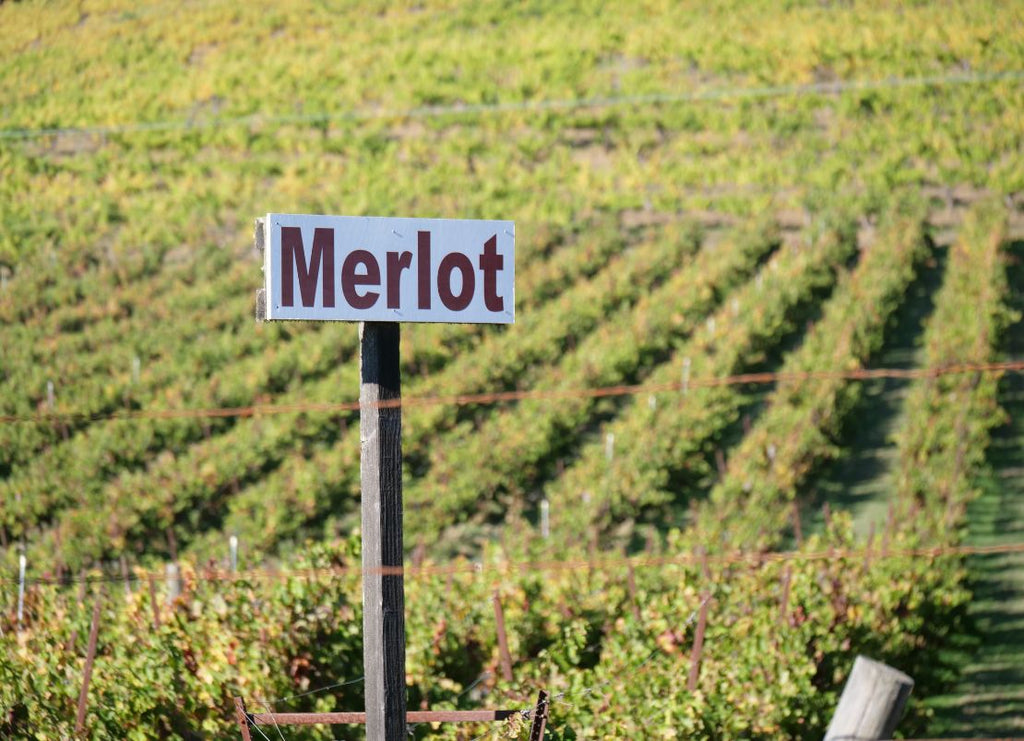
Saint-Émilion sits on the Right Bank of Bordeaux, where the Dordogne River creates a cooler, more clay-rich growing environment than the gravelly Left Bank Médoc. Merlot — lower in tannin, higher in natural plum and cherry fruit, ripening earlier than Cabernet Sauvignon — dominates the Right Bank precisely because clay-limestone soils retain the moisture that Merlot needs and produce the variety's most complete expression.
Prince Oscar's blend is 80% Merlot, 15% Cabernet Franc, and 5% Cabernet Sauvignon — a Right Bank structure in which the Merlot provides the body and fruit, the Cabernet Franc contributes the aromatic lift and herbal complexity that the variety adds in great Saint-Émilion blends, and the small Cabernet Sauvignon component adds structural definition. This is how serious Saint-Émilion wines are built. Prince Oscar doesn't adapt that logic for an AF product — it starts from that logic and removes the alcohol at the end.
15,000 Bottles: The Scarcity That Signals Seriousness
Prince Oscar is produced in a limited edition of 15,000 bottles per vintage. That number is not a marketing decision — it reflects the reality of sourcing fruit from a single estate in a specific Saint-Émilion appellation and producing with the care that the terroir demands. You cannot scale up Prince Oscar by sourcing more fruit from somewhere else; the point is that it comes from Château Clos de Boüard, and from nowhere else.
For context: a significant Bordeaux château typically produces between 100,000 and 300,000 bottles annually across its full range. 15,000 bottles is a small-production release by any standard — and for an alcohol-free wine, it is vanishingly rare. The vast majority of AF wines are produced at scale, using fruit sourced from multiple regions, with volume as the primary commercial driver. Prince Oscar inverts that logic entirely.
What You're Actually Tasting
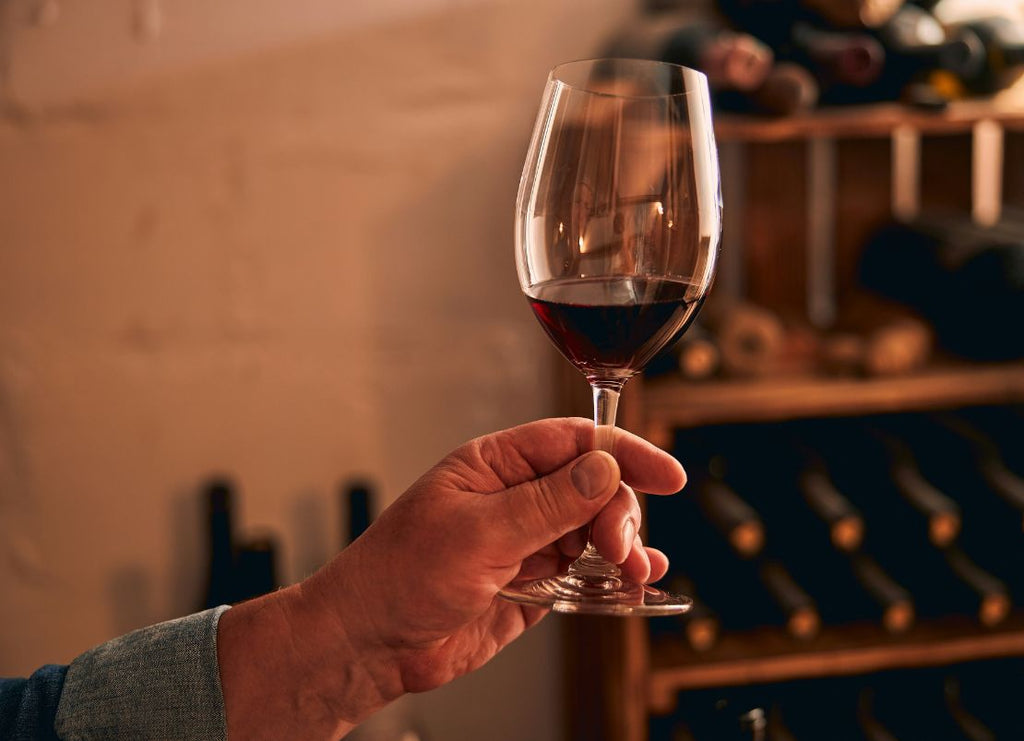
Pour Prince Oscar and the first thing you notice is the colour: deep ruby, not the pale, diluted red that many AF wines produce when the de-alcoholisation process strips pigment alongside alcohol. The colour holds because the wine was built with the tannin structure and phenolic density of a serious Bordeaux red before the alcohol was removed.
On the nose: ripe red fruits, blackcurrant, a hint of blackberry, floral notes, and the vanilla warmth that comes from oak barrel ageing — the same oak character you would expect from a classified Saint-Émilion wine, present because Prince Oscar was aged in oak like a traditional wine, not fermented and immediately processed.
On the palate: rich, round, and smooth, with the mix of ripe fruit and spice that the Right Bank produces in good vintages. A touch of black pepper in the mid-palate. Smooth tannins — and this is the detail that matters — with a long finish.
That finish is the clearest signal that what you're tasting is different from most AF reds. Length in a wine comes from phenolic complexity — from tannins that persist beyond the fruit, from the structural elements that the winemaking built in before any de-alcoholisation happened. Prince Oscar has that length because Château Clos de Boüard built it into the wine from the beginning, not because it was added back afterward.
The Estate Also Makes a Traditional Saint-Émilion
This is the detail that completes the story. Château Clos de Boüard's traditional red wines — Château Clos de Boüard 2017 and Dame de Boüard 2017 — are also in our collection. This is not coincidence or cross-promotional convenience. It is the most honest possible answer to the question of whether Prince Oscar represents a genuine winemaking commitment: the same estate, the same approach, the same terroir — one bottle with alcohol, one without.
A buyer who has tasted the traditional Clos de Boüard reds knows what the estate is capable of. Prince Oscar is that capability directed at a different outcome. A buyer new to AF wine who starts with Prince Oscar is starting at the highest possible point of entry into the category.
Who This Wine Is For
The buyer who chooses Prince Oscar is not primarily making a lifestyle statement. They are choosing a wine whose quality can be discussed in the same conversation as the estate that produced it — because the estate that produced it has spent decades earning the right to that conversation.
That means: someone who has always loved Bordeaux and needs or wants to drink without alcohol. A host whose guests include both drinkers and non-drinkers who refuses to serve different-quality wines to different guests. A corporate gift buyer who needs something that lands with a serious wine connoisseur. Someone who is pregnant, in recovery, in training, or simply choosing not to drink tonight — and refuses to accept a lesser experience as the price of that choice.
Prince Oscar is not for the buyer who thinks alcohol-free wine is inherently a compromise. It is for the buyer who knows it doesn't have to be.
Frequently Asked Questions
What is Prince Oscar wine? An alcohol-free red wine made from the fruit of Château Clos de Boüard, one of Saint-Émilion's celebrated Bordeaux estates. Produced in a limited edition of 15,000 bottles, it uses 80% Merlot, 15% Cabernet Franc, and 5% Cabernet Sauvignon from Right Bank clay-limestone vineyards.
Is Prince Oscar actually alcohol-free? Yes — 0.0% ABV, produced by de-alcoholising a fully fermented and oak-aged wine to preserve its structural complexity before removing the alcohol.
What does Prince Oscar taste like? Deep ruby in colour, with ripe red fruits, blackcurrant, blackberry, floral notes, and vanilla from oak ageing. Round and rich on the palate, with smooth tannins and a long finish.
What food pairs with Prince Oscar? Cheese boards, red meats, and pasta dishes with rich sauces — the same food that a classified Saint-Émilion red would accompany. The wine's body and tannin structure support food pairing in a way that lighter AF reds cannot.
Why is Prince Oscar more expensive than other alcohol-free wines? The price reflects the provenance: fruit from a classified Saint-Émilion estate, limited production of 15,000 bottles, oak ageing, and the winemaking precision of a producer who also makes serious traditional Bordeaux. It is priced as a Saint-Émilion wine, not as an AF product.
Discover Prince Oscar → [https://disndis.com/products/prince-oscar-non-alcoholic-red-wine]
You might also like: [BERTIC0%T No Alcohol Red Wine] · [Moderato Cuvée Originale Le Rouge]
Related post
24
Sep