
What Is Godello? Spain's Greatest White Secret
There is a question that serious wine drinkers ask when they first encounter a great Godello, and it is always some version of the same thing: why have I never heard of this before?
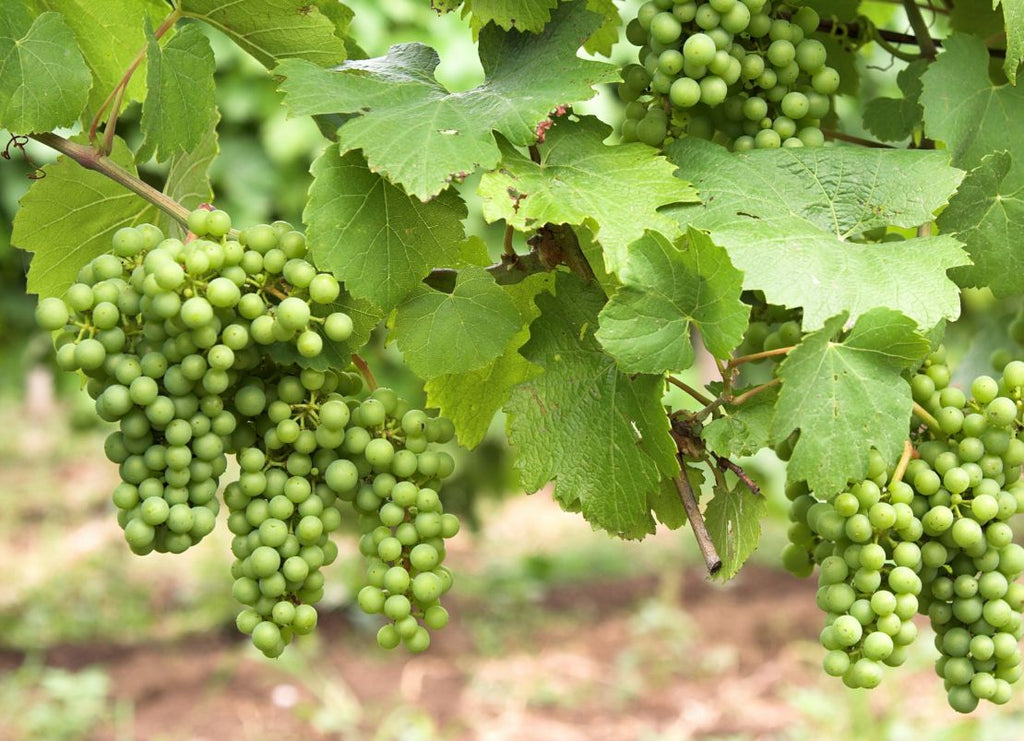
It is a fair question. Godello produces white wines of a complexity, depth, and ageing potential that most of the world's celebrated white grapes would not be ashamed of. It grows in the spectacular terraced vineyards of northwest Spain — in valleys carved by rivers, on soils of granite and slate, in a landscape so dramatic it looks like a stage set. The wines it produces taste exactly like where they come from: mineral, precise, textured, with a longevity that surprises people who think Spanish white wine is a category defined by youth and immediacy.
And yet outside Spain, outside the circles of people who pay close attention to Iberian wine, Godello remains largely unknown. The world has not caught up yet. That is not a problem — it is an opportunity.
This is what you need to know.
Godello produces wines of a complexity and depth that most celebrated white grapes would not be ashamed of. The world has not caught up yet.
The grape and where it grows
Godello is a white grape variety native to northwest Spain, grown primarily in three denominations: Valdeorras and Ribeira Sacra in Galicia, and Bierzo in the neighbouring region of Castilla y León. Each of these places produces Godello with a slightly different character, shaped by differences in soil, altitude, and microclimate.
Valdeorras — the name means 'Valley of Gold' — is widely considered Godello's spiritual home. The wines here are the most classically structured: firm acidity, pronounced minerality, stone fruit and white peach on the nose, with a characteristic texture that is neither lean nor fat but something more interesting in between. The best Valdeorras Godeollos age for a decade or more, developing a complexity that has led more than one commentator to reach for Burgundy as a comparison — which is meaningful, because Burgundy is the standard most ambitious white wine in the world is measured against.
Ribeira Sacra sits further east, in one of the most visually dramatic wine landscapes in Europe. The vineyards here are planted on near-vertical slate terraces above the Sil and Miño rivers — some of the steepest cultivated slopes on the continent, worked entirely by hand because no machinery can operate at the required angle. The Godello from Ribeira Sacra tends to be slightly more aromatic than the Valdeorras style, with greater floral lift and a more immediate appeal in youth.
Bierzo, just across the border in Castilla y León, is better known for its Mencía reds, but Godello is grown here too — and produces wines of real distinction, with the variety's characteristic mineral precision softened slightly by the more continental influence of the interior.
Shop Godello from Bierzo →
How it nearly disappeared
For most of the 20th century, Godello was disappearing. This is not a story of neglect — it is a story of rational economic decisions that accumulated into a near-catastrophe.
After the phylloxera epidemic devastated European vineyards in the late 19th century, replanting happened quickly and with a ruthless pragmatism. Varieties that produced small yields, that were difficult to cultivate, that were unfamiliar to international markets — these were passed over in favour of high-yielding, commercially reliable alternatives. Godello was not commercially reliable by the standards of the 1950s and 1960s. It was low-yielding, late-ripening, and prone to disease. Farmers who needed to survive could not afford to grow it.
Older plants were grubbed up. Knowledge of how to vinify the variety began to disappear with the winemaking generation that held it. By the 1970s, Godello was on the verge of extinction as a commercial variety. A few elderly farmers in Valdeorras were still growing it — for their own consumption, not for sale — but commercially it had essentially ceased to exist.
What happened next is one of the most important rescue stories in Spanish wine. A small group of winemakers in Valdeorras — principally the team at Godeval and a handful of allied producers — recognised what was being lost and began the work of preserving it. They collected cuttings from the surviving old plants, planted new vineyards, and slowly, laboriously, rebuilt the commercial case for a grape that the market had largely written off.
It took decades. But it worked.
A small group of winemakers in Valdeorras collected cuttings from the last surviving plants and rebuilt the case for a grape the market had written off. It took decades. It worked.
What Godello tastes like
The answer to this question depends on where the wine comes from, how old the vines are, and how the winemaker has chosen to work with it — which is one of the indicators of a genuinely serious grape variety. The range of expression available to a skilled winemaker is broad.
At its most essential, Godello is a wine of mineral precision and textural interest. The acidity is firm but not aggressive. The alcohol tends to be moderate — typically 12–13.5% — which gives the wine a freshness and digestibility that richer white varieties from warmer climates cannot match. The aromatics are relatively restrained in youth: stone fruit, white peach, sometimes a floral note, with an underlying minerality that varies in character depending on whether the soils are predominantly granite (as in Valdeorras) or slate (as in Ribeira Sacra).
What develops with age is more interesting. Godello is one of the relatively few white varieties that genuinely improves with several years in bottle. At three to five years, the wines develop a texture that is difficult to describe without sounding vague — a kind of weight and presence that is not fat, not oaky, but simply more complete. The mineral character deepens. The fruit recedes and is replaced by something more savoury and complex. Fine examples at ten years old can be extraordinary.
Winemakers who choose to ferment or age Godello in oak — particularly in large-format old barrels — produce wines of even greater textural complexity, though the best of these are careful to use the wood as a tool rather than an ingredient. The goal is always the expression of the grape and the place, not the barrel.
Explore our Godello collection — from entry-level to old vine expressions →
How Godello compares to the whites you already know
The comparisons that tend to be made are with Burgundian Chardonnay on one side and with Albariño on the other — which tells you something useful about where Godello sits in the white wine landscape.
Like Chardonnay, Godello is a variety that responds exceptionally well to thoughtful winemaking, rewards ageing, and has a natural affinity with oak when handled carefully. The structural similarity — firm acidity, moderate alcohol, mineral backbone, capacity for texture — is real. The flavour profiles are different, but the fundamental winemaking proposition is comparable.
Like Albariño, Godello is a Galician native that thrives in the granitic soils and Atlantic-influenced climate of northwest Spain. Both produce wines of mineral precision and food affinity. But they are not the same: Albariño is more immediately aromatic, lighter in body, and better drunk young in most cases. Godello is more structured, more complex, and significantly more interesting at the dinner table when the food is substantial.
The honest comparison, though, is not with any other grape. The honest comparison is with wines from Burgundy, the Rhône, or Alsace that have similar structural ambitions — and that comparison almost always reveals that Godello, at its best, is playing in the same league at considerably lower prices.
Burgundy Chardonnay: €40–200+ for entry-to-mid tier. Godello at comparable quality: typically €15–35. The value gap is real and unlikely to stay this wide as the variety's reputation grows internationally.
What to eat with Godello
Godello is one of the most versatile food wines made anywhere in Spain. The combination of firm acidity, moderate alcohol, and mineral precision makes it a natural partner for almost anything savoury — but it performs particularly well with a specific set of dishes.
Seafood: Godello is extraordinary with the shellfish and fish of the Galician coast — percebes, navajas, grilled rodaballo, bacalao in any preparation. The mineral saline quality of Valdeorras Godello specifically has an almost oceanic quality that amplifies everything from the sea.
Roast chicken and white meats: A more structured, possibly oak-influenced Godello is one of the best white wines for roast chicken. The texture holds up to the fat in the skin; the acidity cuts through it.
White asparagus: One of the classic pairings. The bitter, earthy character of white asparagus and the mineral precision of Godello are almost perfectly calibrated for each other.
River fish: Trout, salmon, and the freshwater fish of the Galician rivers are natural companions. The wines are made in this landscape; they taste like it, and they pair with what lives in it.
Aged cheeses: A serious old-vine Godello at two to four years can hold its own against aged Manchego, Idiazábal, or a medium-mature hard cheese. The wine has enough structure to stand up to the salt and fat.
How to start exploring Godello
The first question is whether you want to start with the grape or the place. If you want the grape at its most expressive and affordable, begin with a Valdeorras Godello from a serious producer — ideally a wine that has two to three years of bottle age, because the variety rewards even modest cellaring more than most whites.
If you are already familiar with Ribeira Sacra through its Mencía reds, the Ribeira Sacra Godello is the natural next step — the same dramatic landscape, the same slate soils, the same hand-worked viticulture, expressed in a white wine of considerable elegance.
If you are the kind of wine drinker who wants to understand what a variety can become rather than what it tastes like on release, find an old-vine Godello with a few years of age and drink it alongside something from Burgundy. It is an instructive comparison, and it will tell you something about why the people who know Galician wine well tend to be both passionate and proprietary about it.
The world will catch up eventually. Get there first.
Get there first. The world will catch up eventually — it always does with the wines that deserve it.
Explore the Godello collection at disndis.com
Related reading: Beyond Albariño — Galicia's Native White Wines · The Grapes That Almost Disappeared · Ancient Vines Collection
Written by the Dis&Dis editorial team · May 2026 · The Discovery Files
Related post
06
Oct
01
Oct