
How Wine Scores Work: Parker, Decanter, James Suckling — Decoded
There's a number on almost every serious wine label, or on the shelf card next to it, or in the description of every bottle on this site. 92 points. 95 points. Gold Medal. And most buyers, even fairly experienced ones, treat those numbers as roughly interchangeable — a higher number means a better wine, a gold medal means someone important approved it.
That's a reasonable starting point. It's also incomplete in ways that matter when you're spending real money on a bottle.
Here's what each score actually means, who's behind it, and how to use them together to make a better buying decision.
Robert Parker and the 100-Point Scale
Robert Parker didn't invent the 100-point wine scoring system — it existed before him — but he's the reason it became the global standard. Starting in the late 1970s through his publication Wine Advocate, Parker applied the scale so consistently, and with such commercial consequences, that the entire wine industry eventually reorganised around it. A 90+ Parker score could make a career. A low score could empty a warehouse.
The scale runs from 50 to 100, though in practice everything below 80 is rarely published.
The meaningful thresholds are:
- 90–95: Outstanding — a wine of superior character and style
- 96–100: An extraordinary wine of profound complexity
Parker himself reviewed primarily Bordeaux, the Rhône, and a handful of other regions he covered deeply. Wine Advocate now employs a team of critics covering different regions — William Kelley handles Bordeaux and Burgundy today, not Parker personally, which matters if you see a "Parker points" claim on a recent vintage from those regions. The methodology remains the same; the palate behind the score is different.
In our own collection: Château Pavie Macquin carries 97 Parker points alongside 95 from James Suckling and 95 from Wine Spectator — three separate critics agreeing at the same level, which is a stronger signal than any single score alone. Finca Cascorrales 2015, our rarest Ribera del Duero, holds 91 Parker points on a wine made in 951 bottles from century-old vines — a score that understates the rarity of the raw material.
James Suckling: The Global Benchmark for Italian and Spanish Wine
James Suckling worked at Wine Spectator for 30 years before launching his own eponymous platform, where he and his team now taste and score tens of thousands of wines annually. His scale is also 100-point, his thresholds similar to Parker's, but his coverage skews significantly toward Italy and Spain — regions where his palate is considered among the most authoritative in the world.
The practical difference between a Suckling score and a Parker score isn't quality — both are respected — it's regional expertise. A 95 Suckling on a Ribera del Duero carries weight because he has tasted thousands of comparable bottles in that specific category. A 95 Suckling on a Bordeaux Grand Cru exists alongside dozens of other credible scores for the same wine and should be read in that context.
Where Suckling is particularly useful for our catalogue: Señorío San Vicente 2017, our single-vineyard Rioja made from Maturana Tinta, carries high Suckling scores alongside Parker recognition — a wine where both critics independently reached the same conclusion about a rescued native variety almost nobody else was bottling.
Decanter: Medals, Not Numbers
Decanter World Wine Awards is the world's largest wine competition, with entries from over 50 countries judged by panels of Masters of Wine and Masters of Sommeliers. Unlike Parker and Suckling, Decanter doesn't publish a numerical score as its primary output. It awards medals:
- Bronze: 75–84 points — recommended
- Silver: 85–89 points — commended
- Gold: 90–94 points — outstanding
- Platinum: 95+ points — the highest tier, fewer than 1% of entries
The key difference from critics' scores: a Decanter medal is a committee decision, not a single palate. A panel of between three and eight qualified judges must reach consensus at the relevant threshold. That makes a Platinum meaningfully harder to earn than a high score from a single critic — but it also means it reflects a consensus of excellence rather than one individual's preferences.
Our Herdade dos Lagos Platinum Medal wine is one of the clearest examples of this in our collection: a Portuguese estate that had to satisfy a panel of international experts, not just impress a single reviewer.
Guía Peñín: The Authority on Spanish Wine
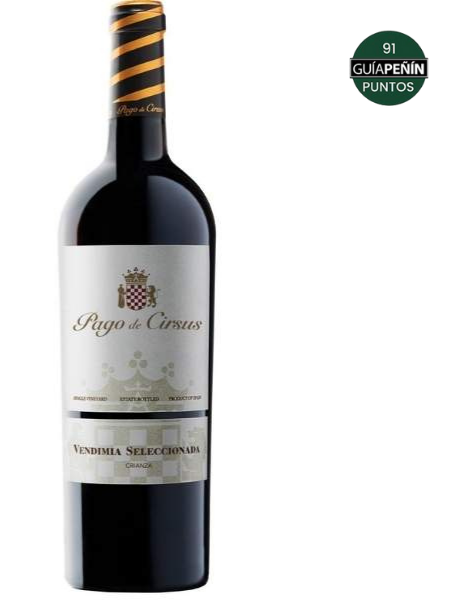
For Spanish wine specifically, Guía Peñín is the reference that matters most domestically and increasingly internationally. Published annually since 1990, it covers Spanish wines more comprehensively than any international publication — tens of thousands of entries from regions that Parker and Suckling may visit once a year at best.
The scale is again 100-point, but with slightly different cultural thresholds: 90+ in Peñín is considered excellent, and the guide has historically been the first publication to recognise quality in emerging Spanish regions before international critics caught up.
Teso La Monja in Toro, with 95 Parker points and 98 Peñín points on a 100% Tinta de Toro from 115-year-old vines, is a case where both the domestic and international authorities reached the same conclusion — a useful double-check when assessing a wine outside the mainstream appellations.
Concours Mondial de Bruxelles: Competition Medals at Scale
The Concours Mondial de Bruxelles is one of the world's largest wine competitions, held annually with entries from across the globe. Unlike critics' scores, medals here are awarded by blind tasting panels drawn from over 50 countries — sommeliers, wine buyers, and educators rather than individual critics.
A Grand Gold Medal at Concours Mondial requires a score of 92+ with unanimous agreement across the panel. Gold requires 90+ with strong consensus. The blind format removes the producer's reputation from the equation entirely, which makes these medals a useful signal for lesser-known estates and emerging regions — exactly the kind of wines we're most interested in.
Our own Bidaia Txakoli holds a Best International White Wine award from Concours Mondial — a result for a wine from a region so obscure that most of the panel probably couldn't have named it before tasting.
How to Actually Use Scores When Buying
The most useful approach is triangulation: look for wines where multiple independent sources — different critics, different competitions — have reached similar conclusions. A 94 from Parker and a 93 from Suckling and a Gold from Decanter on the same bottle is a meaningfully stronger signal than a 97 from one source with no corroboration.
Score inflation is real. Both Parker and Suckling have been criticised for scoring generously, particularly at the 90–93 range, which means a 90 today carries less information than it once did. Pay more attention to wines scoring 95+ from either critic, and to Decanter Platinum medals, where the bar is genuinely harder to clear.
Finally: a score tells you about quality, not about whether you'll enjoy it. A 97-point heavily extracted Bordeaux and a 97-point lean, mineral Chablis are both excellent wines in completely different ways. Use scores as a filter, not as a decision.
Frequently Asked Questions
What does a 90-point wine score mean? On the standard 100-point scale used by critics including Robert Parker and James Suckling, 90–95 points indicates an outstanding wine of superior character. Most reputable critics don't publish scores below 80.
Is a Decanter Gold Medal the same as 90 Parker points? Not directly comparable — a Decanter Gold requires 90–94 points with panel consensus from multiple qualified judges, while a Parker score is one critic's individual assessment. Both are credible; they measure differently.
Is Robert Parker still reviewing wine? Parker retired from active reviewing. Wine Advocate now employs a team of regional critics; William Kelley covers Bordeaux and Burgundy.
What is Guía Peñín? Spain's most comprehensive annual wine guide, published since 1990. For Spanish wine specifically, it is considered the most authoritative domestic reference and covers far more Spanish producers than any international publication.
Why do some wines have multiple scores from different critics? Top estates routinely submit bottles to multiple publications and competitions. Convergence across multiple independent sources is generally a stronger quality signal than a single high score.
Discover our full award-winning collection →
You might also like: [Château Pavie Macquin] · [Finca Cascorrales 2015] · [Señorío San Vicente 2017] · [Château Leoville Barton 2013]
Related post
06
Oct
01
Oct