
Priorat: Spain's Most Extreme Wine Region
There are two wine regions in Spain that hold the country's highest quality classification. One of them is Rioja, which most people know. The other is Priorat, which most people outside of Spain are still discovering — and which produces wines of a concentration, mineral intensity, and structural authority that the rest of the Spanish wine world simply cannot replicate.
The reason is a rock.
Llicorella: The Soil That Makes Everything Possible
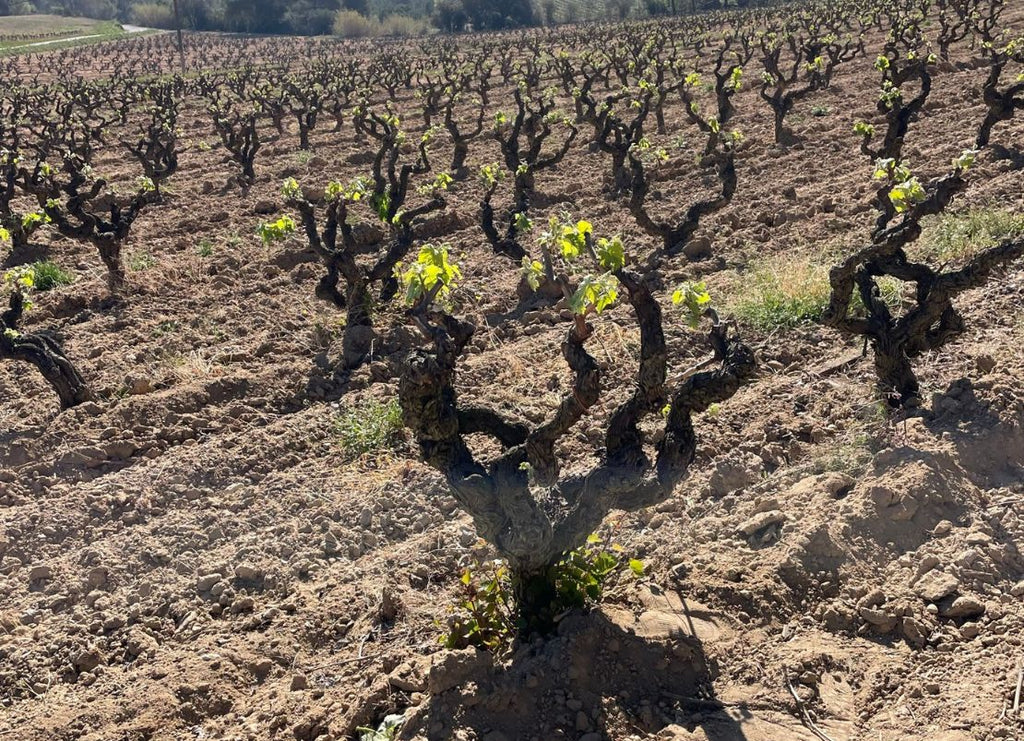
Priorat sits in the mountains of southern Catalonia, in a landscape that looks, at first, like it should be impossible to farm at all. The hillsides are steep enough to require terraces. The summers are punishing. The soils are almost entirely llicorella — a specific combination of black slate and quartz that has been fracturing and crumbling here since the Carboniferous period, somewhere around 300 million years ago.
Llicorella is not a forgiving soil. It retains almost no water, forces vine roots to push ten, fifteen, twenty metres deep in search of moisture, and reflects heat back onto the bunches from below during the day while cooling rapidly at night. A vine planted in llicorella has no easy options: it either adapts to the difficulty or it dies. The ones that survive produce tiny quantities of intensely concentrated fruit — grapes that carry everything the soil withheld from them in every berry.
That concentration is the source of Priorat's character. It is not something a winemaker adds in the cellar. It arrives from the vineyard already formed, already irreversible.
A Region Abandoned, Then Rediscovered
For most of the 20th century, Priorat was producing barely a million bottles a year, most of it consumed locally and sold cheaply. The terraced hillsides were expensive to maintain by hand — no machine can work them — and the economics of bulk wine production made the effort seem pointless. The appellation had been granted DO status in 1954, but by the 1970s it was effectively a wine region that the world had forgotten.
What happened next is one of the more unlikely stories in modern wine. In 1979, a young winemaker named René Barbier arrived in the Priorat village of Gratallops and recognised something in the llicorella slopes that the local bulk producers had stopped seeing: a terroir genuinely capable of producing world-class wine. Through the 1980s, he began quietly acquiring abandoned parcels and convincing a small group of fellow believers to do the same. In 1989, five of them — the founding members of what would become known as the "Gratallops Gang" — simultaneously released their first vintages. The wine press noticed immediately.
Priorat received DOCa status — Spain's highest quality classification, previously held only by Rioja — in 2009. It remains one of only two appellations in the country to hold it.
Clos Figueras: A British Family, a French Pioneer, and 18 Hectares of Slate
When René Barbier had spent a decade establishing Priorat's credentials, he did something characteristic: he looked at the surrounding hillsides and started pointing people toward the abandoned terraces that still hadn't been claimed.
In October 1997, on Barbier's recommendation, Charlotte and Christopher Cannan acquired the first 10 hectares of what would become Clos Figueras. Three years later they added a further 8 hectares, completing an estate of 18 hectares on the classic llicorella slopes of Gratallops — the same village, the same soils, the same south-facing exposure that Barbier had identified two decades earlier as the heart of what Priorat was capable of.
The estate takes its name from the fig trees that grow at its edges — figuerals in Catalan — and it has spent the years since 1997 quietly producing wines that express what that specific piece of ground actually is, rather than what the market at any given moment expects Priorat to taste like.
Two Bottles, One Terroir
The red, Serras del Priorat 2019, is the estate's most accessible and most immediately expressive wine — and it is built on vines between 30 and 80 years old, which in Priorat is a meaningful number. Older vines produce less fruit and concentrate more intensity into what they do produce; in llicorella, where the soil is already doing everything it can to limit yield and force concentration, old vines amplify that effect rather than adding a different dimension to it. The blend is Grenache for the generosity and warmth of Priorat's sun-baked slopes, Carignan for the mineral backbone and longevity that the slate soils build into the variety, Syrah for dark fruit depth and structural authority, Cabernet Sauvignon for the aromatic complexity and the long, broad finish that makes this wine feel complete. At 15% ABV it is not a wine that pretends to be anything other than what it is: a Priorat from terraces that earn their DOCa status with every vintage.
The white, Serras del Priorat Blanco 2020, is the proof of something else entirely: that the same llicorella soils, the same uncompromising terroir, produce white wines of equal distinction when the varieties are right. Garnacha Blanca and Viognier on slate — citrus, peach, and that quiet mineral signature that the appellation's soils place in every wine regardless of colour. 92 points from James Suckling. A white wine that carries the full weight of where it comes from.
What to Expect in the Glass
Priorat reds are not subtle. They are deep in colour, concentrated in fruit, built for food and for ageing, and they carry that saline, mineral edge from the llicorella that distinguishes them from any other Spanish red regardless of how much Grenache or Cabernet Sauvignon they contain. Pair them with game, slow-roasted lamb, aged cheese, or anything built around depth and richness rather than delicacy.
Priorat whites at this level pair best with seafood, creamy pastas, grilled fish, and the kind of food that benefits from a wine with both weight and acidity — not the light, refreshing style of a coastal white, but the mineral, structured style of a wine that grew in a terroir that forced it to mean something.
Frequently Asked Questions
What makes Priorat different from other Spanish wine regions? Priorat is one of only two Spanish appellations with DOCa status — the country's highest quality classification — and its wines are defined by llicorella slate soils that force vines to extreme depth, producing small quantities of intensely concentrated, mineral fruit.
What is llicorella? A combination of black slate and quartz found throughout Priorat's vineyards, formed approximately 300 million years ago. It retains almost no water, reflects heat back onto the vines, and forces roots deep in search of moisture — the primary reason for Priorat's characteristic mineral intensity.
What grape varieties are used in Priorat? Grenache and Carignan are the appellation's traditional red varieties; Cabernet Sauvignon and Syrah are also widely planted. For whites, Garnacha Blanca and Viognier are among the varieties that express the terroir's mineral character most clearly.
How does Priorat compare to Rioja? Both hold Spain's highest quality classification (DOCa), but they are stylistically very different: Rioja is built on Tempranillo with American oak ageing giving its characteristic warmth; Priorat is built on slate-grown Grenache and Carignan producing wines of darker, more mineral concentration.
Discover Serras del Priorat 2019 →
You might also like: [Serras del Priorat Blanco 2020]
Related post
06
Oct
01
Oct