
How to Build a Wine Cellar: A Collector's Guide
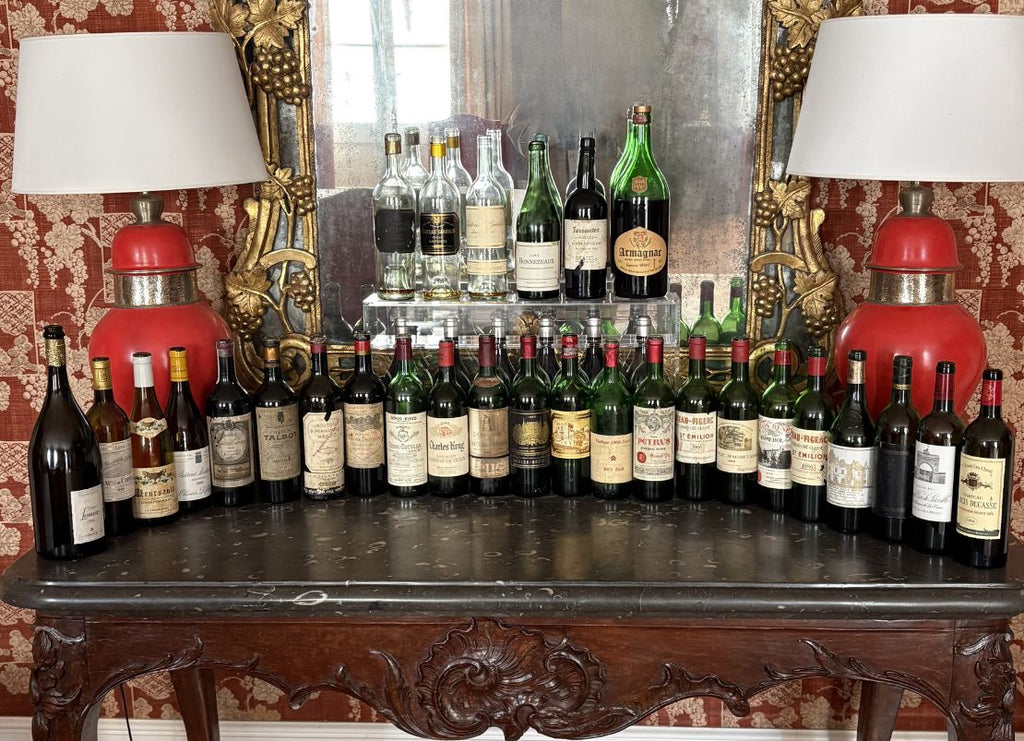
The photograph at the top of this article shows a collection that took years to assemble. Petrus. Château Figeac. Charles Krug. Bonnzeaux. Vintage Armagnac. The bottles are not arranged for show — they are arranged because someone needed to see all of them at once, to take stock, to make decisions about what comes next.
That is what building a personal cellar actually looks like at a certain point: not a beautifully lit wine rack with a dozen matching bottles, but a working collection in progress. Bottles at different stages of their lives, from different regions, acquired at different times for different reasons. Some ready now. Some that need five more years. Some that needed to be opened three years ago.
This guide is for people who are either beginning that journey or who are already somewhere on it and want to think more clearly about where it is going. It is not a buying guide for investment-grade fine wine. It is a guide to building a collection that you will actually enjoy — one that has depth, intention, and enough range to serve every occasion and every mood.
A personal cellar is a set of decisions about what deserves patience, what deserves attention, and what the future version of yourself will want to find waiting.
Start with a philosophy, not a list
The most common mistake collectors make early in the process is buying bottles without a guiding principle. You taste something excellent at a restaurant. You buy it. You read a review that gives 97 points to something unusual. You buy it. A friend recommends a producer you have never heard of. You buy it. Three years later you have 80 bottles that have no relationship to each other, no coherent ageing curve, and no clear answer to the question: what is this collection actually for?
Before you buy anything, answer three questions. They are not complicated, but the answers will shape every decision you make afterward.
First: what do you drink? Not what you think you should drink, or what the critics rate highest, but what you actually open on a Tuesday evening, at a Sunday lunch, when a friend arrives unexpectedly. A cellar that does not reflect your real drinking life will never feel satisfying to build or to use.
Second: what do you want to learn? Collecting wine is also education, and the most interesting cellars belong to people who have used them to go deep on something — a specific region, a specific producer, a specific variety across multiple vintages. The cellar is the classroom.
Third: what is the occasion you are building toward? A cellar that exists to serve dinner parties is built differently from one that exists to track the evolution of a single producer's wine across a decade. Both are valid. Neither is served by random accumulation.
The structure of a working cellar
A functioning personal cellar needs three tiers of wine, in rough proportion. The exact percentages depend on how much you entertain and how patient you are, but the structure is consistent across almost every serious collector.
Drinking now — 40% of the cellar. Wines that are ready and enjoyable today. These are the bottles you open on a weeknight, for guests who arrive without warning, for lunches that do not require ceremony. They should not all be cheap — some of your best discoveries will be wines that are drinking perfectly right now — but they should be reliably good and accessible. Rotate these constantly.
Short-term ageing — 35% of the cellar. Wines with two to five years of development still ahead of them. Structured reds, serious whites with the acidity to evolve, Cava Gran Reservas that will reward patience. This is the heart of the cellar — the wines you are watching develop, tasting periodically, waiting for the right moment.
Long-term ageing — 25% of the cellar. The wines you will open in ten years or more. Fine Rioja Reservas and Gran Reservas from the best vintages, serious Ribera del Duero, age-worthy Galician whites, any fine Bordeaux or Burgundy you have acquired. These require genuine patience and genuine faith in the wine's capacity to improve. Buy only what you know can age.
The ratio shifts as you become more experienced. Collectors who have been at it for twenty years often find their drinking-now tier depleted and their long-term tier dominant — which requires discipline to replenish before the cellar becomes a museum rather than a living collection.
The worst cellar is not the smallest one. It is the one that nobody opens. Build it to be used, not to be admired.
What to buy — the regions that reward ageing
Not all wines improve with time. The majority of wine produced globally is made to be consumed within two or three years of release. Buying a fresh, fruit-forward Albariño and ageing it for a decade is not an act of patience — it is a waste of a bottle that was already at its best.
The wines worth ageing have three things in common: sufficient tannin or acidity to act as a structural preservative, enough fruit concentration to sustain development, and a producer who has made the wine with longevity in mind. Those criteria narrow the field considerably.
Rioja — the great Spanish ageing category
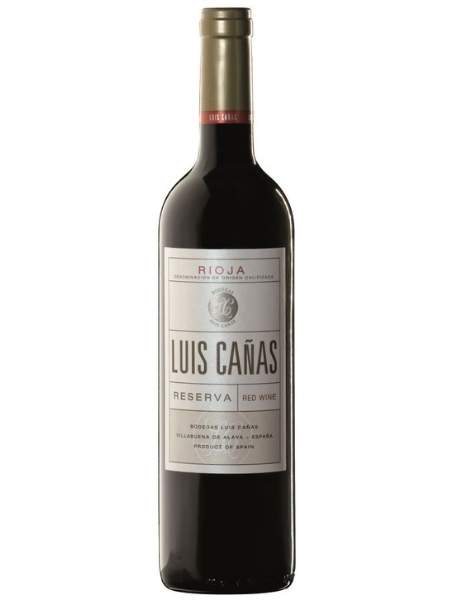
Rioja Reserva and Gran Reserva from serious producers represent some of the best value in the cellaring world. The Tempranillo-based structure, the measured use of oak, the natural acidity of the terroir — all of these conspire to produce wines that evolve slowly and gracefully over ten to twenty years in bottle. The best Gran Reservas from exceptional vintages (2001, 2004, 2010, 2019 are the benchmarks of recent decades) will be opening magnificently at fifteen years. The investment required is a fraction of comparable Bordeaux.
Ribera del Duero — concentration and altitude
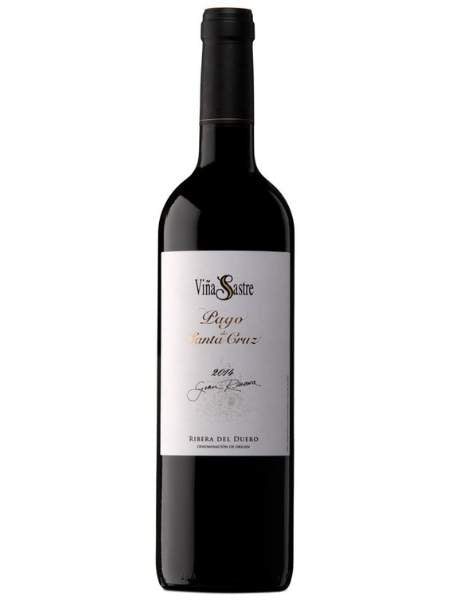
At 900 metres above sea level, the continental climate of Ribera del Duero produces Tempranillo (here called Tinto Fino or Tinta del País) of a different character than Rioja — darker, more concentrated, with a firmer tannin structure that requires time to integrate. The best producers make wines that need a minimum of five years and reward ten or more. Finca Cascorrales, at 91 points from Robert Parker, represents the kind of serious, cellar-worthy expression that can be found in the collection without the fine wine price tag.
Galician whites — the white wines that age
White wine in the cellar is undervalued by most collectors, and Galician whites are the most undervalued of all. A serious Godello from Valdeorras or Ribeira Sacra — made from low-yielding vines on granite and slate, fermented slowly and bottled with care — will develop in bottle for eight to twelve years, acquiring a textural complexity and savoury depth that its youth gives no hint of. The best old-vine expressions are among the most interesting whites in Europe at any price.
Cava Gran Reserva — the patient sparkling
Gran Reserva Cava from the family estates of Sant Sadurní d'Anoia is the most consistently underestimated category in the collection. Llopart, documented on the same land since 1385, produces Gran Reserva expressions aged between four and thirteen years in the bottle before release. These wines continue to develop in bottle for years after purchase. Opening a Gran Reserva at ten years from vintage is an experience that bears no resemblance to the fresh commercial Cava most people know. It is autolytic, complex, precise — and costs a fraction of Champagne at the same quality level.
Shop age-worthy wines from the Dis&Dis collection →
The vintage question — when does it matter and when doesn't it
The importance of vintage is one of the most misunderstood topics in wine, because its significance varies enormously by region, by producer, and by price point.
For everyday drinking wine in the €10–25 range from producers working well-managed vineyards, vintage variation matters less than winemaker skill and picking decisions. A competent producer in a good region will make a reliable wine most years. The variation is real but not dramatic enough to drive purchasing decisions.
For wines in the €30–70 range that you are buying specifically to age, vintage matters considerably more. In this bracket, the difference between a wine from an exceptional year and one from a merely good year can be the difference between a bottle that opens magnificently at twelve years and one that peaks at six and begins to fade. The research here is worthwhile.
For fine wine above €70, vintage is critical and the specialist knowledge required to navigate it is substantial. This is where the critics' scores become most useful — not because Parker's 97 points tells you how a wine tastes, but because it tells you that in his professional judgement, the vintage conditions produced something exceptional enough to warrant serious cellaring.
The practical principle: for everything in your drinking-now tier, vintage is a secondary consideration. For your ageing tiers, learn the great vintages for the specific regions you are collecting, and weight your buying accordingly. You are not building a cellar of average years.
You are not building a cellar of average years. Learn the great vintages for the regions you care about and weight your buying accordingly.
Storage — the non-negotiable requirements
Wine storage is where collectors with excellent taste and poor planning ruin expensive bottles. The requirements are not complex, but they are absolute.
Temperature: 12–14°C constant. This is the single most important variable. Temperature fluctuation — not just heat, but the cycling between warm and cool — is the primary cause of premature wine ageing. A cellar that stays at a steady 14°C is infinitely preferable to one that swings between 10°C in winter and 22°C in summer.
Humidity: 60–80%. Low humidity dries out corks, allowing air infiltration and oxidation. High humidity grows mould on labels — aesthetically unpleasant but harmless to the wine. 70% is the target.
Darkness: UV light degrades wine rapidly. All serious storage is in darkness or near-darkness. If you are using a display rack with lighting, the light must be off when you are not accessing the collection.
Vibration: a minor factor in short-term storage, significant over decades. Do not store age-worthy wine adjacent to appliances, mechanical systems, or anything that vibrates consistently. The disturbance to the wine's slow chemical evolution is cumulative.
Position: bottles stored horizontally keep the cork in contact with the wine, preventing drying. Bottles with screw caps can be stored in any position without consequence.
For collectors without a dedicated cellar space, a temperature-controlled wine cabinet is the practical solution. Entry-level units holding 50–100 bottles at stable temperature represent a reasonable investment for serious collectors. Dual-zone units allow separate temperature settings for reds and whites. For a collection above 200 bottles, professional off-site storage is worth considering — several providers in Spain, the UK, and Germany offer bonded warehouse storage with insurance and inventory management.
How to build the inventory — what to buy and in what quantities
The question of how many bottles to buy of any given wine is one that collectors rarely think about systematically until they have made several expensive mistakes.
The guiding principle is this: buy enough to track the wine's evolution across multiple openings. A single bottle of an age-worthy wine tells you what it tastes like on the day you open it. Six bottles of the same wine, opened at intervals of two to three years, tells you its entire life story — when it was closed and tannic, when it opened into complexity, when it peaked, when it began to fade. That knowledge is the real asset a cellar builds.
For everyday drinking wines in the shorter-term ageing tier: six to twelve bottles of anything you like enough to drink regularly. These cycle through.
For serious ageing wines: a minimum of six bottles, ideally twelve. Open the first at release to establish a baseline. Open subsequent bottles every two to three years. Resist the temptation to open the last bottle — it is always worth more than you think it is.
For genuinely exceptional wines from outstanding vintages: buy as many as your budget allows and your storage permits. These will not decrease in interest. They will not be available at the same price in ten years.
The wines in our collection that belong in a serious cellar
The Dis&Dis collection was built around precisely the criteria that matter to a serious collector: genuine terroir expression, established producers with long track records, award credentials from independent critics, and price-to-quality ratios that represent real value.
Several bottles in the collection are, without qualification, cellar-worthy.
The triple critical consensus wine at €98 — 95 points simultaneously from Robert Parker, James Suckling, and Wine Spectator — represents the highest critical verification available. Triple consensus across three independent major publications on a single wine happens perhaps a dozen times a year across global production. Buy twelve. Open the first now to calibrate. Cellar the rest for ten years.
Cuesta del Herrero at €19 — 97 points, Decanter Best in Show — is the most compelling value proposition in the collection for the collector. Best in Show at Decanter is the highest single award the competition gives. The wine costs €19. That discrepancy between price and critical standing will not persist indefinitely. Buy a case.
The Taron Cepas Centenarias — vines planted in 1895 in Rioja, fourth-generation family, €22 — is a wine of genuine historical depth. Pre-phylloxera old vines produce wines of a concentration and complexity that younger vineyards cannot replicate. The structure requires time. Buy six and do not open any of them for three years.
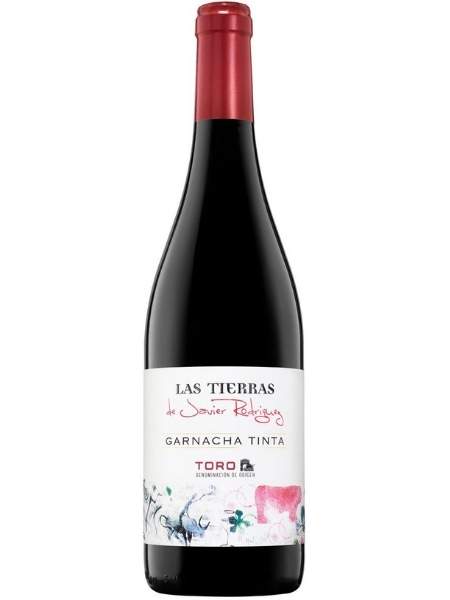
Barranco del San Ginés — the only 100% Garnacha de Toro in commercial existence, from pre-phylloxera vines tended since 1935 — is a wine of extraordinary concentration and Toro's characteristic force. Five to ten years minimum.
For serious Galician whites with ageing potential: the old-vine Godello expressions in the collection, particularly from Valdeorras. Open one now to understand what you are cellaring. Wait three years for the next.
Shop award-winning and age-worthy wines from disndis.com →
Cuesta del Herrero. 97 points. Decanter Best in Show. The wine costs €22. The discrepancy between that price and that critical standing will not persist indefinitely. Buy a case.
The hardest lesson — knowing when to open
Every serious collector has a story about a bottle opened too early or too late. The wine that was astringent and closed when opened at four years and would have been magnificent at eight. The Rioja Gran Reserva kept for twenty years that peaked at twelve and had been slowly fading for the last eight.
There is no perfect formula. The judgement of when to open a wine develops through experience — through opening bottles at different stages and paying close attention to what you find. The collector who has been at it for twenty years opens a bottle and can tell within the first sip whether it has years ahead of it or whether tonight is the night. That knowledge is not available from a critic's score or a producer's drinking window suggestion. It is earned.
The practical guidance for collectors still building that experience: err toward opening earlier rather than later, particularly with Spanish reds. The producers and critics who set drinking windows for these wines are calibrating for professional cellars with perfect storage conditions. Home cellars are almost never perfect. The window is usually shorter than the guidance suggests. If you are uncertain, open a bottle and decide.
And when the bottle is magnificent — when it is exactly where it should be, having arrived precisely at the moment you needed it — remember that you made that happen. The choice to buy it, to store it, to wait. That is what building a cellar is.
Explore the award-winning and age-worthy collection at disndis.com
Award Winners · Ancient Vines · Rioja & Ribera del Duero · Galician Whites
Related reading: The Grapes That Almost Disappeared · What Is Godello? · Beyond Albariño · 97pts Decanter at €22 — The Award Winners Collection
Written by the Dis&Dis editorial team · June 2026 · The Discovery Files
Related post
06
Oct
01
Oct