
Our Organic and Biodynamic Wine Collection: A Buyer's Guide
The word organic on a wine label has been used so loosely, for so long, that it has almost stopped meaning anything. You'll find it on supermarket brands doing the minimum required for certification, and you'll find it on wines where it represents a genuine, decades-long commitment to farming a specific piece of land without chemicals — wines whose character you can actually taste the difference in.
What follows is our own collection: the organic and biodynamic bottles we carry, what they actually are, and why we chose them.
What Separates Organic From Biodynamic
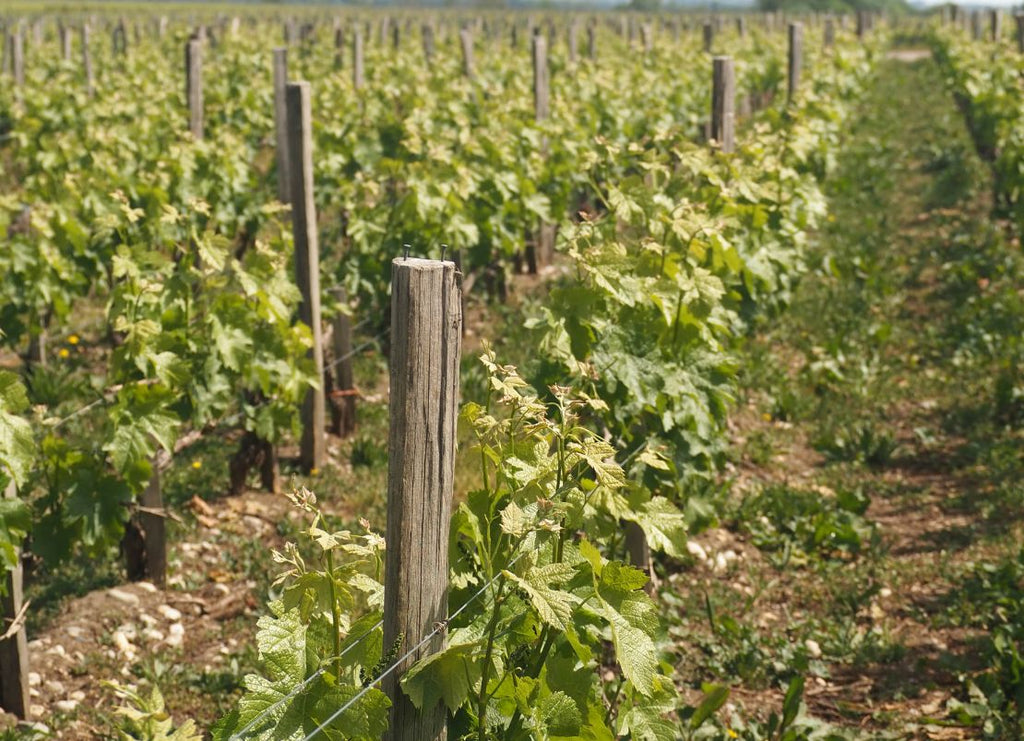
Before the bottles: a quick distinction worth keeping clear. Organic wine means no synthetic herbicides, pesticides or fertilizers in the vineyard, and restricted use of additives in the winery — the same standard applies across the EU and is verifiable through certification bodies like Ecocert. Biodynamic goes further. It treats the vineyard as a self-contained living system, following a farming calendar tied to lunar and astronomical cycles, using preparations made from plant and mineral materials, and prohibiting a wider range of winery interventions. Biodynamic certification, typically through Demeter, is considerably harder to obtain and maintain.
Neither is automatically better than the other. What both share is a grower who has made a deliberate, usually costly choice to farm differently than the industrial default — and that's usually reflected in the wine.
Biodynamic Bordeaux: Two Estates, Two Classifications
Clos Puy Arnaud 2017, Castillon Côtes de Bordeaux — Thierry Valette converted this estate to biodynamic farming at a time when such a choice in Bordeaux was genuinely unusual, building a reputation for wines that redefine what the region can taste like: fresh, fruit-driven, with silky tannins and long finishes rather than the extracted power Bordeaux is still often associated with. Castillon sits at the eastern edge of the appellation, where the soil is different and the style tends to be lighter, and biodynamic farming here produces something vivid and precise rather than heavy.
Ceres de Haut-Bages Libéral 2020, Haut-Médoc — The parent estate, Château Haut-Bages Libéral, is a 1855-classified Pauillac property adjacent to Château Latour, and Ceres is its certified organic expression: 100% Merlot from eight hectares in Vertheuil, macerated for 24 days, aged in concrete rather than oak, with no added sulphites. The estate converted to biodynamic practices in 2008 — a decade-long process before certification was granted. The label, a hand-drawn depiction of a vine by artist François Houtin, signals from the shelf that this is a wine made with an unusual level of intentionality.
Biodynamic Navarra: The Same Family, Two Completely Different Wines
Bodegas Emilio Valerio farms 40 hectares in Dicastillo, Navarra, on land with a documented viticultural history stretching to the 14th century. Every wine they make is biodynamic, with minimal intervention in the winery.
Emilio Valerio San Martin Organic 2013 — A biodynamic Garnacha red from those same ancient vineyards, which at more than a decade old demonstrates exactly what the estate's winemaking philosophy is built for: longevity, complexity, and the kind of evolution that comes from genuinely low-intervention farming rather than winemaking technique.
Emilio Valerio Aintzioa Organic 2016 — The same estate's sweet white, made from Malvasia, producing aromas of wet earth, white flowers, truffle, and musk that have no equivalent elsewhere in our collection. The fact that a 2016 still drinks beautifully in 2024 is not accidental — it is the direct result of biodynamic farming and minimal sulphite use giving the wine the structure to evolve rather than simply age.
Organic Catalonia: A Garnacha Peluda on the Edge of Extinction
La Pilosa 2017, Terra Alta — Herència Altés is the project of Núria Altés and Rafael de Haan, built around the rescue and preservation of Garnacha Peluda, a genetically distinct, near-extinct strain of Garnacha that survives in only a few corners of Terra Alta. Certified organic, hand-harvested, aged in Austrian foudre. Just 6,000 bottles per vintage. International critics have singled it out specifically for the freshness that organic farming preserves in a grape variety that would otherwise read as simply powerful — the balance between 15% alcohol and genuine acidity is something the viticulture makes possible, not something the winery engineers around it.
Organic Valencia: A Vino de Pago at 800 Metres
Finca Terrerazo Bobal Organic 2018, Utiel-Requena — Bodega Mustiguillo's flagship is a certified organic wine made from Bobal grapes planted between 1945 and 1970 at 800 metres altitude, and it holds Vino de Pago status — the highest quality classification in the Spanish wine hierarchy. The combination of ancient vines, high altitude, and organic farming produces a wine of Mediterranean intensity — spiced dark fruit, black cherry, mineral structure — with the freshness that altitude and organic viticulture together allow. That it holds Spain's rarest classification while also being certified organic is not a contradiction: it's the point.
Organic Cava: Two Routes From the Same Appellation
Alta Alella Laietà Organic Cava and Privat Brut Reserva Organic Cava represent two different approaches to the same category. Alta Alella brings the elegance of a Demeter-certified estate with a long sparkling wine tradition; Privat comes from a family winery with roots in Font Rubí going back to 1859, building its Brut Reserva from Xarel·lo, Macabeo and Parellada. Both are certified organic and both carry it as a natural expression of how the estate farms, rather than as a marketing decision made after the wine was already designed.
Organic Portugal: Old Methods, New Attention
Herdade dos Lagos, Alentejo — A German family arrived in Portugal's Alentejo forty years ago, planted 1,000 hectares, and built an organic wine project from the ground up with none of the historical expectation that traditional Portuguese estates carry. The result is certified organic Alentejo made with old-vine integrity and the kind of precision that comes from a family with no inherited shortcuts to take. Their Platinum Medal at the Decanter World Wine Awards for their Aragonez, Syrah, and Alicante Bouschet blend is the clearest signal of where they've arrived.
Frequently Asked Questions
What is the difference between organic and biodynamic wine? Organic certification requires farming without synthetic chemicals; biodynamic adds a whole-farm philosophy, a lunar farming calendar, and stricter winery intervention limits, certified through Demeter.
Is biodynamic wine always better than organic? Not automatically — both represent a genuine commitment to non-chemical farming. Biodynamic certification is harder to obtain and maintain, but quality depends on the producer, not the certification level alone.
Does organic wine contain sulphites? Certified organic wine typically contains lower sulphite levels than conventional wine, though sulphites occur naturally in all wine. Some certified organic wines, like Ceres de Haut-Bages Libéral, are made with no added sulphites at all.
Explore our full organic and biodynamic collection →
You might also like: [La Pilosa 2017] · [Finca Terrerazo Bobal Organic 2018] · [Clos Puy Arnaud 2017]
Related post
06
Oct
01
Oct