
What Is Vino de Pago? Spain's Rarest Wine Classification, Explained
Most wine classifications certify a place. Rioja is a region. Champagne is a region. Even Spain's own DOCa tier — held by only two zones, Rioja and Priorat — certifies an area large enough to contain hundreds of different producers making hundreds of different wines.
Vino de Pago does something stranger. It certifies a single estate.
Introduced into Spanish wine law in 2003, the designation exists for individual vineyards whose soil, microclimate, and winemaking are distinctive enough to stand entirely on their own — outside any regional appellation, answerable to no one else's blending rules or yield limits. There are fewer than 25 of them in the whole of Spain. Most wine drinkers, even fairly serious ones, have never knowingly tasted one.
Why a Single Vineyard Gets Its Own Classification
To understand why Vino de Pago exists, it helps to understand what it's reacting against. A regional appellation like Rioja or Ribera del Duero sets rules for an entire zone — permitted grape varieties, maximum yields, aging requirements — designed to produce a recognizable regional style across dozens or hundreds of wineries. That system works well when the goal is consistency at scale. It works less well for an individual estate whose land simply doesn't behave like its neighbors.
Vino de Pago was built for exactly that estate. To qualify, a property must grow, vinify, age, and bottle its wine entirely within its own boundaries — no outsourced grapes, no blending with fruit from elsewhere — and must demonstrate that its soil and microclimate are genuinely distinct from the surrounding region. It is, in effect, Spain's version of a French monopole: a wine whose quality is guaranteed not by a committee's regional standard, but by one specific, named piece of ground.
We carry wines from two of these estates, and each one earned its certification for a completely different reason.
Dehesa del Carrizal: Wine From a Geological Accident
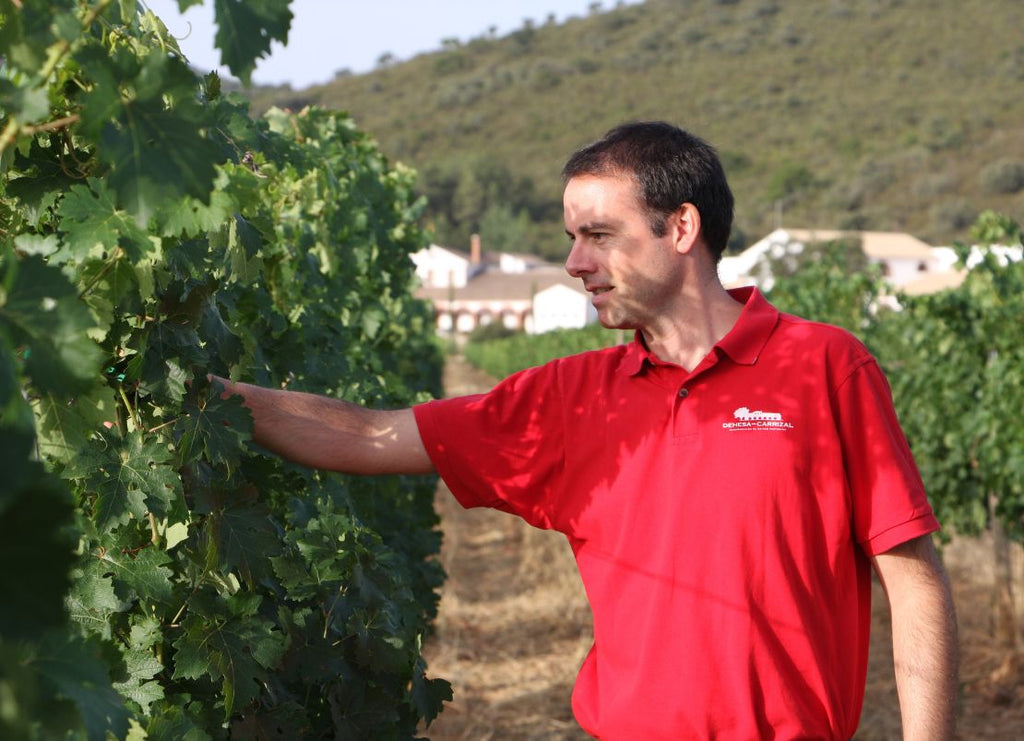
Dehesa del Carrizal sits in the Montes de Toledo, near Cabañeros National Park, on a stretch of land called a raña — a slope formed by ancient erosion that carried clay and quartz sand down from the surrounding hills, a process that traces back to the Cambrian period. That unusual composition, combined with a microclimate shaped by both the Mediterranean and the distant influence of the Atlantic, produces a level of acidity in the grapes that the estate's owners say is found nowhere else nearby. It's a vineyard defined by geology that happened millions of years before anyone planted a vine there.
The estate makes both reds and a barrel-fermented Chardonnay, and at the top of the range sits Colección Privada — a small-production wine, just 4,000 bottles, where each grape variety is vinified separately, aged for ten months in new French oak, then blended only after an 18-to-20-month search for the precise balance the estate is after. Not every barrel makes the cut. The ones that don't simply don't become Colección Privada.
Pago de Cirsus: Where the Family Name Is the Whole Point
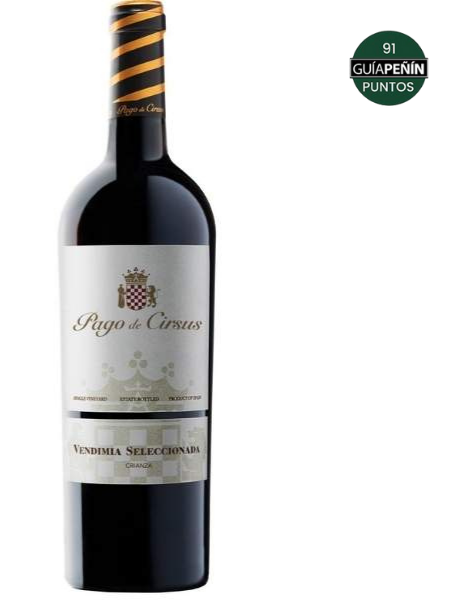
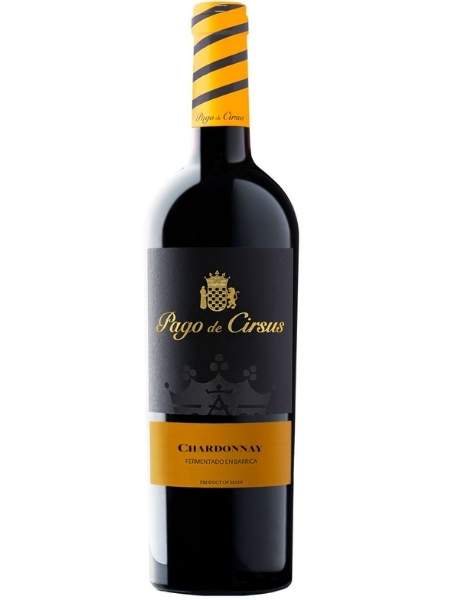
Pago de Cirsus sits in Navarra's Ribera Baja, on a 200-hectare property called Finca Bolandín, where the Ebro River, the cold Cierzo wind, and the Moncayo mountain range converge to create what the estate's own winemakers describe as a uniquely demanding growing environment. Owned by the Gómez-Mangione family, the estate received its DOP Pago Bolandín certification in 2014 — the highest quality classification a Spanish wine can hold — after demonstrating that its terrain, microclimate, and century-old winemaking traditions met the standard.
Every grape grown at Pago de Cirsus is also bottled there, a requirement of the classification but also, in this case, a point of genuine family pride. The estate's Cuvée Especial ferments directly in French oak barrels for fourteen months, a technique chosen specifically to draw out the elegance the estate believes its soil is capable of.
Why This Matters If You're Buying, Not Studying
You don't need to memorize Spain's classification pyramid to appreciate what Vino de Pago signals on a label. In practice, it tells you three things at once: the grapes in your glass came from one specific, legally verified piece of land; nothing was blended in from anywhere else; and the estate cared enough about proving that distinction to go through a certification process most producers never bother with.
That's a different kind of guarantee than a regional appellation offers. A DO tells you a wine fits a regional style. A Vino de Pago tells you a wine couldn't have come from anywhere else on earth.
Frequently Asked Questions
Is Vino de Pago higher than DOCa? They occupy similar territory at the top of Spain's quality pyramid, but they certify different things — DOCa certifies an entire region (only Rioja and Priorat hold it), while Vino de Pago certifies a single estate.
How many Vino de Pago estates exist in Spain? Fewer than 25, with the majority concentrated in Castilla-La Mancha, though the designation is open to any region that can prove a qualifying estate.
What's required to become a Vino de Pago? The estate must grow, vinify, age, and bottle its wine entirely on its own property, and must demonstrate that its soil and climate are genuinely distinct from the surrounding area.
Discover Dehesa del Carrizal Colección Privada 2017 →
You might also like: [Dehesa del Carrizal Chardonnay 2018] · [Pago de Cirsus Cuvée Especial 2017]
Related post
06
Oct
01
Oct